Welkotrivax Trading Platform Alternatives 2026: Reliable Options for Online Traders
Code has a smell. So do trading platforms. When I look at a broker, I don’t start with a promo page—I start with the trust boundary: who regulates them, where client money sits, and what happens when something breaks at 2 a.m. For traders researching Welkotrivax, the common pattern is an offshore-style CFD setup: forex and CFDs first, a proprietary WebTrader plus mobile app, and headline leverage that can go as high as 1:500. That mix can be tempting, but it also expands your failure modes—execution disputes, withdrawal friction, and limited investor protection if the operator sits outside top-tier oversight.
This guide to Welkotrivax alternatives is written for a US/EU-focused audience that cares about verifiable controls: FCA/ASIC/CySEC/NFA oversight, segregated client funds, negative balance protection (where applicable), and platform tooling that supports disciplined risk. I’ll also call out practical differences that matter in real trading: spread vs. commission (round-turn cost is what hits your P&L), slippage during fast markets, and whether you’re trading real shares/ETFs or only price-tracking CFDs with no shareholder rights.
Consider this the “secure migration path” version of broker shopping. You’ll see regulated options vs Welkotrivax, plus a clean sequence for moving accounts without locking up funds or losing records. CFDs are leveraged products; the goal is not more leverage—it’s fewer surprises.
Disclaimer: This article is for informational purposes only and does not constitute investment advice. Trading leveraged products (including CFDs) involves a high risk of loss and may not be suitable for all investors.
Key Takeaways (TL;DR)
- Offshore-style CFD brokers typically offer high leverage (often ~1:500) and basic WebTrader stacks; regulated brokers trade that “flexibility” for stronger client-money rules and enforceable dispute channels.
- Compare brokers using round-turn cost (spread + commission + swap), not marketing leverage or “from 0.0” headlines; small pip differences scale fast for active strategies.
- Stocks/ETFs at many CFD-first platforms are often CFDs only; multi-asset firms like IBKR and Saxo are designed for real ownership and deeper market access.
- Migration works best when you KYC the new broker first, then withdraw via the original deposit method (AML), while exporting history for tax and reconciliation.
What Is Welkotrivax and How Does Its Trading Platform Work?
From a risk model perspective, Welkotrivax fits the offshore CFD-broker template: it appears to operate under a Seychelles-style regulatory environment (not FCA/ASIC/CySEC/NFA), focusing on forex and CFDs with a retail-friendly onboarding flow. The product set usually targets traders who want quick access to major FX pairs, indices, and commodities, plus a menu of crypto CFDs. The trade-off is structural: fewer statutory protections, less transparency around execution model, and a weaker safety net if a dispute turns into “support tickets forever.” If you’re evaluating platforms like Welkotrivax, treat the jurisdiction and client-money handling as first-class requirements, not footnotes.
Welkotrivax Web Trading Platform: Core Features and Tools
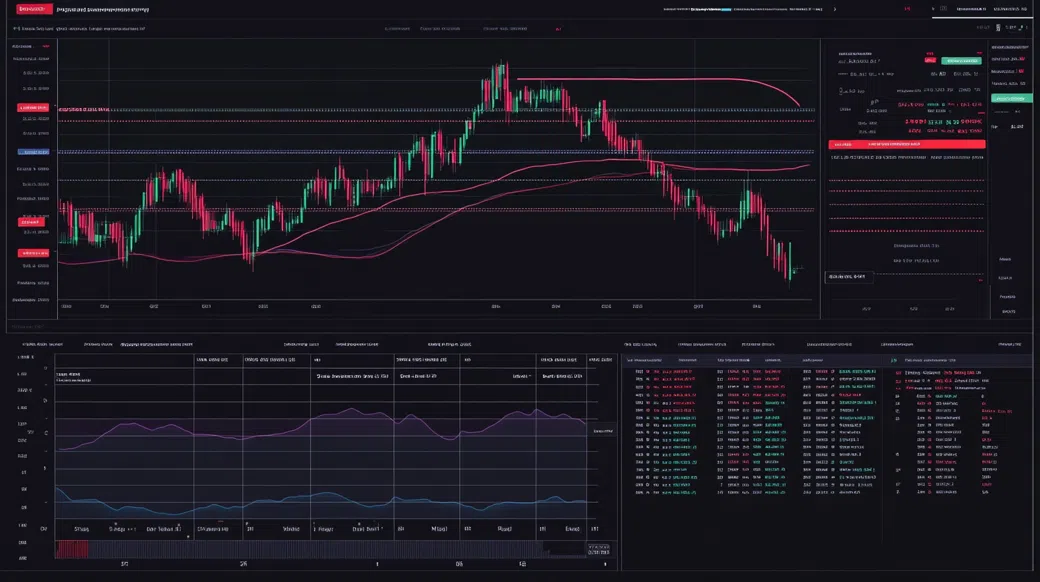
The platform stack is typically a proprietary WebTrader with an iOS/Android companion app. Expect functional charting (multi-timeframe, common indicators, drawing tools) and the basics for order entry (market/limit/stop; sometimes trailing stops). Where this class of WebTrader often feels thin is workflow: fewer advanced order types, limited depth-of-market visibility, and unclear execution analytics when slippage happens. Mobile parity is usually decent for monitoring and closing risk, but strategy work—templates, multi-chart layouts, rule-based execution—tends to be constrained compared to MT4/MT5 or cTrader ecosystems.
Trading Fees, Spreads, and Account Types at Welkotrivax
Cost-wise, a typical “Standard” style account in this category tends to price EUR/USD around ~2.0 pips (variable), with trading costs embedded in the spread. Some brokers in the same segment advertise “Raw/ECN” tiers that can show 0.0–0.4 pips plus a commission (often around $6 round-turn per lot), but you should verify how that is applied and whether execution quality matches the label. Add swap/overnight financing to your model if you hold positions past rollover; it’s a quiet P&L leak for carry-unaware traders. Also watch for withdrawal charges or processing thresholds—fees there don’t show up in a spread comparison screenshot.
When Do Traders Start Looking for Welkotrivax Alternatives?
Most switches happen after a “trust event,” not after a bad trade. A platform can be profitable and still be operationally fragile. If your goal is capital preservation under leverage, competitors to Welkotrivax that sit under FCA/ASIC/CySEC/NFA supervision can reduce tail risk: clearer segregation rules, formal complaint routes, and in some regions investor-compensation schemes. Welkotrivax alternatives also become relevant when your strategy needs tooling the WebTrader doesn’t expose—execution controls, automation, or better reporting for audits and taxes.
- You need MT4/MT5 or cTrader for automation (EAs/cBots), but the current WebTrader doesn’t support your deployment model or logs.
- Withdrawal processing becomes unpredictable, or the broker requires extra documents at cash-out that weren’t asked for at deposit time.
- Your trading journal shows spread widening and slippage during news spikes, but you can’t verify the execution model (market maker vs STP/ECN/DMA) with meaningful reporting.
- You want real stocks/ETFs (ownership, corporate actions) instead of stock CFDs that only track price and can have different financing costs.
How to Choose a Reliable Alternative to the Welkotrivax Trading Platform
I treat broker selection like choosing a production dependency: assume failure, then ask what breaks and who is accountable. Alternatives to the Welkotrivax trading platform should be evaluated by safety controls first, then fit-to-strategy, then cost. If two brokers look similar on spreads, pick the one with better enforcement, clearer disclosures, and a platform stack you can test and monitor.
Regulation, Safety, and Investor Protection
Start with the regulator’s public register: FCA (UK), ASIC (Australia), CySEC (Cyprus/EU), or NFA/CFTC (US). These frameworks typically require segregated client funds and ongoing supervision. In the UK, FCA-regulated firms can fall under FSCS coverage (up to £85,000 in eligible cases). In Cyprus, CySEC investment firms may be covered by the ICF (up to €20,000, subject to eligibility). If a broker can’t be verified in a register, you’re relying on promises rather than enforcement.
Available Markets and Instruments
Map instruments to your actual needs. FX and index CFDs cover many short-term strategies, but longer-horizon portfolios often need real stocks/ETFs, options, or futures. If you hedge on regulated futures venues, you’ll want a broker built for that workflow, not a CFD wrapper. For crypto exposure, decide whether you need CFDs (price exposure) or real coins (custody/on-chain transfers). This is where many Welkotrivax alternatives diverge sharply.
Trading Costs: Spreads, Commissions, and Other Fees
Look past “from 0.0.” Your comparable metric is round-turn cost: spread + commission + any expected slippage, then add swap if you hold overnight. A 0.5–1.0 pip difference in effective cost can dominate results for active FX traders. Also read the fee schedule for inactivity, withdrawals, and currency conversion—these are operational costs, not market costs, and they can be larger than a month of spreads for smaller accounts.
Platforms, Tools, and Execution Quality
Platform choice is an engineering choice. MT4/MT5 ecosystems are strong for EAs and broad broker support; cTrader is popular for depth-of-market and cleaner execution tooling; proprietary platforms can be excellent but are harder to port between brokers. Execution model matters: market makers internalize flow; STP/ECN/DMA routes differently and can change slippage behavior under stress. If you’re coming from Welkotrivax, demand evidence you can test: order timestamps, fill policies, and clear margin-call/stop-out logic.
Support, Education, and Overall User Experience
Support is part of risk management. Check hours (24/5 vs limited), response speed, and whether support can answer technical questions (margin, swaps, platform logs) without scripts. For global users, language coverage and clear KYC/AML instructions reduce payment friction. Finally, ensure the mobile app supports risk actions—closing positions, adjusting stops, and viewing margin—without hiding critical data behind “simple mode.”
Welkotrivax and Different Asset Classes: When Alternatives May Be Better
Welkotrivax Forex and CFD Trading
In the Welkotrivax-style setup, forex and CFDs are the center of gravity: roughly a few dozen FX pairs, a handful of commodities, and major indices, often paired with leverage up to 1:500. That leverage is not a feature I’d optimize for; it’s a multiplier on operational mistakes and volatility. A more meaningful comparison is execution quality and all-in cost. FX/CFD specialists like Pepperstone and IC Markets are widely used by traders who care about tight pricing and platform choice (MT4/MT5/cTrader), with Raw-style accounts that generally pair low spreads with transparent commissions. For newer traders, IG and CMC Markets can be easier to audit from a safety standpoint due to top-tier regulation and mature reporting, even if the experience is less “high leverage, high adrenaline.”
Welkotrivax Stock and ETF Trading
Many CFD-first brokers either don’t offer real equities/ETFs or provide them only as CFDs. That distinction matters: CFDs don’t confer shareholder rights, can have financing costs, and are subject to different protections than holding the underlying. If your plan includes building a long-term portfolio alongside active FX, multi-asset firms are the cleanest substitute for Welkotrivax. Interactive Brokers (IBKR) is built for real stocks, ETFs, options, futures, and FX, with routing and reporting that professional users expect. Saxo Bank also targets multi-asset access with strong platform tooling for portfolio views and risk analytics. If you specifically want stock CFDs rather than ownership, FCA-regulated CFD houses like CMC Markets can still be a safer wrapper than offshore venues.
Welkotrivax Crypto Trading
Crypto access in offshore CFD platforms is usually crypto CFDs—price exposure only, no on-chain withdrawal, no self-custody, and no ability to use the asset in smart contracts. That can be fine for short-term directional trading, but it’s not “owning crypto.” If your requirement is regulated, broker-held exposure, several Welkotrivax alternatives offer crypto CFDs under stricter oversight (availability depends on region). IG is a common pick in markets where its crypto CFD offering is permitted, and Plus500 also provides crypto CFD exposure in certain jurisdictions. If you need actual coins for on-chain usage, that’s typically an exchange/custodian conversation, not a CFD broker choice—separate the custody risk from the trading-risk budget.
Best Welkotrivax Alternatives for 2026: Comparison of Top Trading Platforms
Interactive Brokers (IBKR): Key Facts and How It Compares to Welkotrivax
Regulation: SEC/FINRA (US), FCA (UK), IIROC (Canada) (entity depends on region)
Markets: Stocks, ETFs, options, futures, bonds, FX, funds (product access varies by country)
Fees: FX pricing is typically tight on major pairs; commissions and exchange fees apply on many products (varies by venue and plan)
Platform: Trader Workstation (TWS), IBKR Desktop/Web, mobile; APIs for automation/integration
Best For: Multi-asset traders who want real market access and strong reporting
Pepperstone: Key Facts and How It Compares to Welkotrivax
Regulation: FCA (UK), ASIC (Australia), CySEC (Cyprus), DFSA (Dubai)
Markets: FX and CFDs (indices, commodities; crypto CFDs where permitted)
Fees: Standard accounts often price majors around ~1.0+ pip; Raw-style accounts can run ~0.0–0.3 pips plus commission (varies by platform/entity)
Platform: MT4, MT5, cTrader, TradingView integration (availability varies)
Best For: System traders optimizing for platform choice and execution tooling
Saxo Bank: Key Facts and How It Compares to Welkotrivax
Regulation: FCA (UK), MAS (Singapore), DFSA (Dubai) (entity depends on region)
Markets: Stocks, ETFs, options, futures, FX, bonds, CFDs
Fees: Pricing depends on service tier; FX spreads are typically competitive on majors, with commissions/fees on exchange-traded products
Platform: SaxoTraderGO, SaxoTraderPRO
Best For: Portfolio-focused traders who want a bank-style custody and research workflow
IG: Key Facts and How It Compares to Welkotrivax
Regulation: FCA (UK), ASIC (Australia), MAS (Singapore)
Markets: CFDs (FX, indices, commodities, shares), spread betting (UK/IE), some stock dealing in certain regions
Fees: Costs are usually spread-based for CFDs; majors can be competitive, while less-liquid markets widen (region/product dependent)
Platform: IG web platform, mobile apps; MT4 available in many regions
Best For: Risk-aware retail traders who want mature protections and clear disclosures
IC Markets: Key Facts and How It Compares to Welkotrivax
Regulation: ASIC (Australia), CySEC (Cyprus) (group may also include offshore entities)
Markets: FX and CFDs (indices, commodities; crypto CFDs where permitted)
Fees: Raw-style accounts often pair ~0.0–0.3 pip spreads on EUR/USD with a per-lot commission; Standard accounts typically wider (entity/platform dependent)
Platform: MT4, MT5, cTrader
Best For: High-frequency FX traders who measure costs in pips and milliseconds
Plus500: Key Facts and How It Compares to Welkotrivax
Regulation: FCA (UK), CySEC (Cyprus), ASIC (Australia), MAS (Singapore)
Markets: CFDs (FX, indices, commodities, shares; crypto CFDs where permitted)
Fees: Primarily spread-based; costs vary by instrument and volatility; additional fees may apply for inactivity or guaranteed stops (where offered)
Platform: Proprietary Plus500 WebTrader and mobile app
Best For: Beginners who prefer a simplified CFD interface with strong regulation
Comparison Summary
| Platform | Regulation | Main Markets | Typical Costs | Best For |
|---|---|---|---|---|
| Interactive Brokers (IBKR) | SEC/FINRA, FCA, IIROC (by entity) | Real stocks/ETFs, options, futures, FX, bonds | Venue-based commissions; tight FX pricing on majors (plan dependent) | Multi-asset traders who want real market access and strong reporting |
| Pepperstone | FCA, ASIC, CySEC, DFSA | FX + CFDs | Raw: ~0.0–0.3 pips + commission; Standard: ~1.0+ pip (varies) | System traders optimizing for platform choice and execution tooling |
| Saxo Bank | FCA, MAS, DFSA (by entity) | Real stocks/ETFs, options, futures, FX, CFDs | Tiered pricing; FX spreads competitive on majors; exchange fees/commissions apply | Portfolio-focused traders who want a bank-style custody and research workflow |
| IG | FCA, ASIC, MAS | CFDs (plus spread betting in UK/IE) | Mostly spread-based; majors competitive; wider in less-liquid markets | Risk-aware retail traders who want mature protections and clear disclosures |
| IC Markets | ASIC, CySEC (group varies) | FX + CFDs | Raw: ~0.0–0.3 pips + commission; Standard wider (entity dependent) | High-frequency FX traders who measure costs in pips and milliseconds |
| Plus500 | FCA, CySEC, ASIC, MAS | CFDs | Spread-based; volatility-sensitive; possible inactivity/extra feature fees | Beginners who prefer a simplified CFD interface with strong regulation |
How to Safely Move from Welkotrivax to Another Broker
A broker migration is basically a controlled key rotation: you keep optionality while reducing the chance of funds getting stuck mid-transfer. Start by validating the destination broker’s regulatory footprint, then stage the move so you’re never forced to trade or withdraw under time pressure. Remember that leveraged CFDs can amplify losses during the transition if you leave positions open and volatility spikes. If you still have exposure on Welkotrivax, treat the transfer week as a risk-off window.
- Confirm the new broker’s authorization directly on the regulator’s register (FCA Register, ASIC Connect, CySEC list, or NFA BASIC) and match the legal entity name, not just the brand.
- Create the new account and complete KYC/AML early (ID + proof of address). Getting verified first prevents a “can’t withdraw because you can’t deposit” deadlock.
- Rebuild your risk settings on the new platform: leverage caps, margin alerts, default stop-loss behavior, and negative balance protection terms (where applicable).
- Close or reduce open positions before moving money. Brokers generally do not transfer positions between each other; you’ll typically exit and re-enter if you want the same exposure.
- Withdraw funds using the original deposit rail when possible (card-to-card, bank-to-bank). This is a common AML control and it can affect processing time.
Ready to Explore Welkotrivax?
If you’re still evaluating the platform, compare its current onboarding, fees, and regional eligibility against the regulated substitutes in this guide. Check the trading stack (WebTrader vs MT4/MT5/cTrader), then verify how withdrawals and KYC work before committing meaningful capital.
Visit WelkotrivaxFAQ: Welkotrivax Alternatives and Trading Platforms
What is the best alternative to Welkotrivax in 2026?
The best option depends on whether you need real multi-asset access or mainly FX/CFDs. For real stocks/ETFs plus derivatives, Interactive Brokers (IBKR) is hard to beat on market access and reporting. For FX/CFD traders who want MT4/MT5/cTrader, Pepperstone or IC Markets are common picks among cost-sensitive, execution-focused users. This article’s broker list is a practical set of Welkotrivax alternatives for different strategy profiles.
Is Welkotrivax a safe broker/platform?
Welkotrivax appears to operate under an offshore-style framework (commonly associated with jurisdictions like Seychelles) rather than FCA/ASIC/CySEC/NFA supervision. That doesn’t automatically mean “scam,” but it usually means fewer enforceable protections, less robust compensation coverage, and weaker dispute resolution pathways. If safety is the priority, regulated options vs Welkotrivax typically provide clearer client-fund segregation rules and formal oversight.
Can I trade stocks, futures, or crypto with Welkotrivax?
With offshore CFD platforms, forex and CFDs are usually the main offering, and stocks/ETFs (if available) are often CFDs rather than real ownership. Futures access is commonly not offered in the same way a multi-asset broker provides exchange-traded futures. Crypto exposure is often via crypto CFDs—price exposure only, not on-chain coins—so it won’t fit users who need custody or blockchain transfers. If you need those features, Welkotrivax trading platform alternatives 2026 like IBKR or Saxo are better aligned.
What should I check before switching from Welkotrivax to another platform?
Before switching, verify the new broker’s legal entity on the regulator register, then read the client-money and negative balance protection terms for your region. Next, compare round-turn trading costs (spread + commission + swap) and confirm platform fit (MT4/MT5/cTrader vs proprietary). Finally, stage the move: KYC the new account first, export statements for taxes, then withdraw using the original deposit method where possible. That checklist is what separates “best Welkotrivax alternatives 2026” from random broker shopping.
About the Author: Samuel White is a Seoul-based smart contract developer who approaches broker selection like security architecture: verify the regulator, minimize trust assumptions, and demand observable execution and reporting. He writes about trading infrastructure and risk controls for retail and advanced users who care more about safeguards than hype.