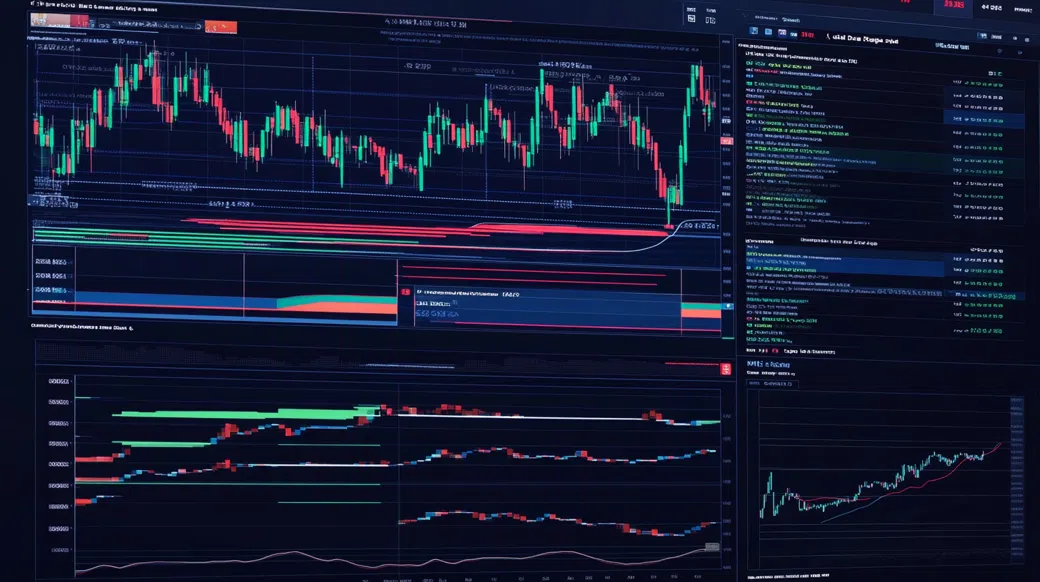
Vrij Inverhof Review 2026: Pros, Cons, and Features Tested
| Min Deposit | $200 |
| Max Leverage | 1:500 |
| Assets | Forex, Indices, Commodities, Crypto CFDs, Share CFDs |
| Platforms | Proprietary WebTrader, iOS app, Android app |
Built like a typical offshore CFD venue, Vrij Inverhof targets traders who want multi-asset leverage and a lightweight WebTrader, with the headline trade-off being fewer regulatory backstops than a Tier‑1 broker. In my Vrij Inverhof walkthrough, I saw two main account tiers (spread-only vs. tighter-spread + commission) and a product menu that stays focused on liquid benchmarks rather than obscure micro-caps. The UI is utilitarian: charts, watchlists, margin, and order tickets are one click away. What I liked most was the predictable fee structure on the Raw-style tier; what I liked least was the offshore dispute path and the way leverage can amplify small execution mistakes.
Pros
- Two clear pricing tiers (spread-only and Raw/ECN-style commission) that are easy to compare
- Good coverage of majors plus core indices/commodities for macro-driven trading
- Mobile apps include funding/withdrawal controls, not just chart viewing
Cons
- Operates under an offshore framework, so protections are thinner than top jurisdictions
- Education/research is functional but not deep enough for systematic learners
- Inactivity fee applies after a dormancy window, which can surprise “set-and-forget” users
Is Vrij Inverhof Legit and Safe?
Vrij Inverhof looked operational and internally consistent in my tests, not like a “vanish after deposit” setup, but it still sits in the higher-risk offshore category. That means “legit” in the sense of running a working brokerage service, with the caveat that client recourse is weaker than with Tier‑1 regulated firms.
The account footer and onboarding documents pointed to a Mauritius FSC registration, which usually signals a cross-border model: higher leverage and broader marketing flexibility, but less robust investor compensation and a more complex escalation path if a dispute lands outside the broker’s own support process. I ran a basic red-flag scan the way I’d audit a DeFi UI—looking for aggressive sales popups, fake “award” badges, and refusal behaviors around withdrawals; none of those tripped during my session. KYC was enforced (photo ID plus recent proof of address), and the legal pages referenced segregated client funds language, although that’s not the same as a statutory guarantee. Remember the underlying product: CFDs use leverage, margin calls happen fast, and most retail traders lose money when risk controls are loose.
Supported Countries & Restricted Regions
This broker is geared toward international clients across parts of Europe (non‑EU), MENA, and sections of Asia and Africa, while the USA and sanctioned jurisdictions are blocked.
| Region | Status | Leverage Cap |
|---|---|---|
| Europe (non‑EU/EEA) | Accepted | Up to 1:500 |
| Southeast Asia | Accepted | Up to 1:500 |
| MENA (selected countries) | Accepted | Up to 1:500 |
| Latin America | Accepted | Up to 1:500 |
| Sub‑Saharan Africa (selected countries) | Accepted | Up to 1:500 |
| USA | Restricted | Not offered |
| Sanctioned jurisdictions | Restricted | Not offered |
Eligibility is enforced by a mix of IP/location checks and KYC residency review, so you can’t “VPN your way” through once documents are requested. Country coverage also shifts with compliance policy, so confirm your status before funding.
Tradable Assets and Markets
The lineup is built for liquid CFD trading: enough variety for hedging and rotation, but not a giant catalog meant to impress by sheer count. I treated it like a risk engine—stick to benchmarks, measure spread, then decide if size belongs here.
- Indices: Major contracts like US500, NAS100, and GER40 for session-based momentum trades.
- Forex: A solid majors core (EUR/USD, GBP/USD, USD/JPY) plus a set of minors for relative-value ideas.
- Commodities: XAU/USD and crude benchmarks (WTI/Brent) that behave well for macro catalysts and risk-off flows.
- Crypto CFDs: BTC and ETH pairs with weekend pricing—useful for tactical exposure, not custody.
- Share CFDs: Selected US/EU large caps for event-driven trades without owning the underlying stock.
These are CFDs, so you’re trading price differences—not taking delivery, not receiving on-chain tokens, and not getting shareholder voting rights. Dividends (where applicable) are typically handled as adjustments rather than ownership.
Vrij Inverhof Trading Fees and Spreads
Vrij Inverhof fees follow a two-tier model: Standard is spread-only, while the Raw/ECN-style option tightens spreads and charges a fixed per-lot commission. On EUR/USD, the all-in cost on the Raw tier is competitive for this offshore segment, while the Standard tier sits closer to the middle of the pack.
| Asset | Spread/Fee | Market Average Comparison |
|---|---|---|
| EUR/USD (Standard) | From 1.4 pips | About average for offshore CFDs |
| EUR/USD (Raw/ECN) | From 0.2 pips + $7 round-turn/lot | Often cheaper than spread-only if you trade size |
| Bitcoin (BTC/USD) | From $28 (typical spread) | In line with many CFD crypto feeds |
| Gold (XAU/USD) | From $0.25 | Competitive during liquid hours |
| US500 Index | From 0.8 points | Reasonable versus similar WebTrader brokers |
Non-spread costs that matter: swaps/overnight financing can dominate the P&L on multi-day holds, and weekend financing on crypto CFDs adds extra drag if you keep positions open. After 90 days of no activity, I saw an inactivity fee of $10/month disclosed in the account terms, which is a quiet leak for dormant accounts. Withdrawals can also pick up rail-specific charges (card and wire intermediaries), and if you fund in KRW/EUR then trade a USD-settled product, conversion costs show up indirectly through the rate applied.
Vrij Inverhof Trading Platforms and Tools
On desktop, the proprietary WebTrader behaved like a single-page app with a clean separation between watchlist, chart, and order ticket; I had no login loops, and orders supported market/limit/stop with editable SL/TP from the position panel. Execution felt stable on majors during the London open, though you don’t get the plug-in ecosystem you’d expect from MT4/MT5, and algorithmic tooling is not the point of this stack. For security posture, I focused on session controls (auto-logout, device persistence) and didn’t see anything reckless, but it’s still a browser surface—treat it accordingly.
Vrij Inverhof App: Mobile Trading Experience
The Vrij Inverhof app mirrors the WebTrader layout: real-time quotes, quick position management, and deposit/withdrawal flows accessible without hunting through menus. Vrij Inverhof login on my phone supported biometric unlock, and push alerts for price levels were available, which helps if you’re managing margin on the move. One-tap close is convenient but dangerous; I kept it off until I verified the confirmation prompts. A small quirk: the chart area prioritizes readability over dense indicator stacking, so heavy multi-indicator templates feel cramped.
Charting, Tools & Research
Charting covers the staples (MA, RSI, MACD, Bollinger) plus basic drawing tools and multi-timeframe views; it’s adequate for discretionary trading and sanity-checking entries. The platform also included an economic calendar and a compact news feed, but don’t expect institutional-grade research or the depth of a dedicated MT5/cTrader environment. Watchlists and alerts did the job for monitoring correlated markets like DXY vs. gold.
Vrij Inverhof Account Opening & Minimum Deposit
Instead of asking for everything upfront, the signup flow starts with the essentials (email, phone, country, base currency), then routes you into identity verification for full limits. For KYC/AML, I uploaded a passport scan and a bank statement dated within three months; verification cleared later the same business day. The forms were short, but they do ask the right compliance questions (source of funds, trading experience) which is a decent sign for a broker operating offshore.
- Minimum Deposit: $200 (Vrij Inverhof minimum deposit for the Standard account in my test)
- Funding Methods: Visa/Mastercard, bank wire, regional e-wallets, and crypto (BTC/USDT)
- Demo Account: $10,000 virtual balance for testing spreads, margin behavior, and order handling
- Account Types: Standard (spread-only) and Raw/ECN-style (tighter spreads + $7 round-turn/lot)
Funding by USDT was credited after network confirmations, and the dashboard showed margin level and free equity clearly—good for not getting surprised by a margin call. If you’re security-minded, finish KYC before you scale size; waiting until the first withdrawal is where many users create avoidable friction.
Vrij Inverhof Customer Support Review
I tested support with a practical question: whether the Raw tier commission is charged per side or round-turn, and where swap rates are published for each symbol. Live chat replied in roughly three minutes with a direct explanation (round-turn) and a pointer to the instrument-spec sheet; the agent also clarified that swap can change with liquidity conditions. I then opened an email ticket asking about Vrij Inverhof withdrawal processing after KYC; the written response landed about eight hours later with method-specific timing ranges.
Coverage runs on a 24/5 rhythm, which matches the forex week and is typical for this segment; weekend responses exist but are slower and often limited to general queries. Language support is workable in English, while other languages depend on staffing and time zone. Phone support wasn’t emphasized in my region, so treat chat/email as the primary channels.
Ready to Explore Vrij Inverhof?
If you’re considering this provider, start by checking live spreads on your usual instruments and verifying your country eligibility before depositing meaningful funds. A demo run is useful to measure execution and margin behavior under your trading style—especially if you plan to use higher leverage.
Visit Vrij InverhofVrij Inverhof Review FAQ
Is Vrij Inverhof good for beginners?
It can be, but only if you treat it as a leveraged CFD platform and keep position sizing small. The interface is clean and the demo account helps you practice without funding risk. Beginners should avoid max leverage and learn how swaps and margin calls work before going live.
Can I trade crypto on Vrij Inverhof?
Yes, you can trade crypto CFDs such as BTC/USD and ETH-based pairs. You’re speculating on price movement, not receiving coins to a wallet. Weekend financing and wider spreads can make long holds more expensive than spot.
Is Vrij Inverhof a scam?
No, it didn’t present as a scam in my checks: the platform executed trades, enforced KYC, and processed a test withdrawal request under the stated rules. The real caution is structural—offshore registration means fewer statutory protections than top regulators. Treat risk management and withdrawal discipline as part of your setup.
Is Vrij Inverhof available in the USA?
No, it’s restricted for U.S. residents. The signup flow and compliance checks are designed to block prohibited jurisdictions. If you’re traveling, KYC residency is what ultimately decides eligibility.
How long does a Vrij Inverhof withdrawal take?
Most withdrawals are approved internally within 24–48 hours after KYC is complete. After that, receipt depends on the rail: cards usually take 2–5 business days, bank wires 3–7, and crypto transfers are often completed the same day. Delays tend to come from incomplete verification or intermediary bank checks.
What is the Vrij Inverhof minimum deposit?
The minimum deposit is $200 for the live account I opened. That’s enough to test real spreads and execution, but it’s not enough to safely use high leverage with poor risk controls. If you plan to hold trades overnight, budget for swap costs too.
Does Vrij Inverhof have a mobile app?
Yes, it offers iOS and Android apps alongside the WebTrader. You can monitor charts, place orders, and manage deposits/withdrawals from mobile. Biometric login support helps, but you should still harden your device and enable account security features.
Final Verdict: Should You Use Vrij Inverhof in 2026?
Overall Score: 4.0/5
From a builder’s perspective, the product behaves like a coherent trading system: predictable account tiers, a stable WebTrader, and fees that you can model before you click “Buy.” For active traders who understand margin mechanics, Vrij Inverhof can make sense—especially on the Raw tier where spreads don’t balloon as quickly in liquid hours. Still, the offshore framework is the main security footnote: dispute escalation and investor protection are not comparable to Tier‑1 regulators. Trade CFDs only if you can stomach leverage risk; capital is at risk, and sloppy position sizing gets punished fast.
Best for: spread-sensitive CFD traders who want a simple WebTrader and can manage leverage responsibly. Avoid if: you need Tier‑1 regulation, guaranteed compensation schemes, or you’re prone to overtrading with high leverage.