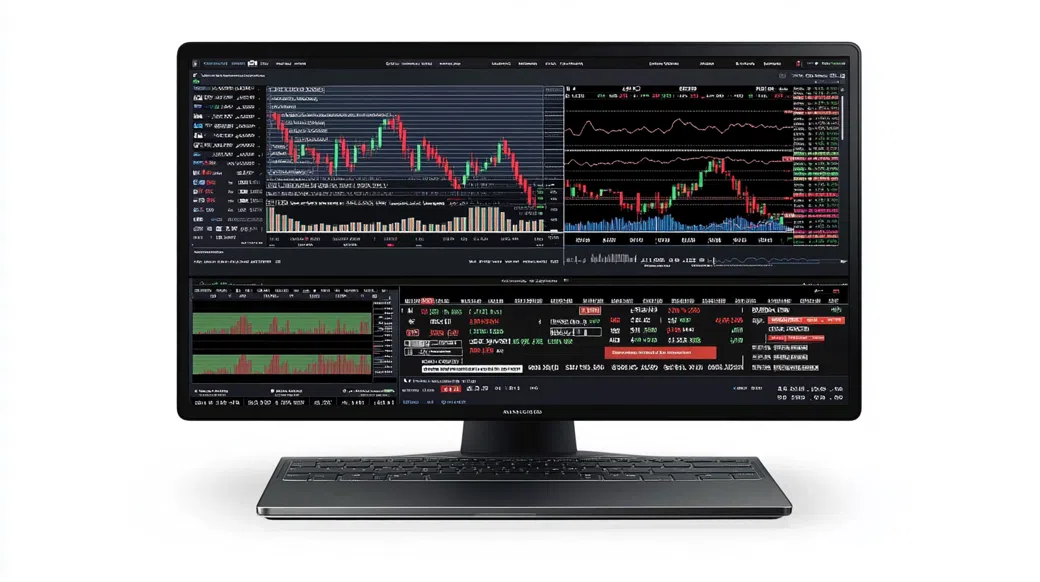
Vrai Bitfex Trading Platform Alternatives 2026: Reliable Options for Online Traders
Code has a way of making risk visible. If a system can’t prove its guarantees—segregation of funds, enforceable oversight, transparent execution—then you’re left trusting a black box. That’s the lens I use when people ask about offshore CFD venues and, specifically, where to look for Vrai Bitfex alternatives in 2026. From what’s typically observable with brokers in this category, Vrai Bitfex operates as a CFD-first provider offering forex and CFDs (often including crypto CFDs), delivered through a proprietary WebTrader plus a mobile app. The commercial pitch is usually familiar: higher leverage (often up to 1:500), a relatively low entry point (commonly around a $250 minimum deposit), and a fast onboarding flow that feels lighter than the big names.
That convenience can be expensive in ways a spread table doesn’t show. Offshore registration (commonly seen under frameworks such as the Seychelles FSA) tends to mean fewer hard backstops if a dispute happens—execution complaints, withdrawal delays, or abrupt product changes. Even when day-to-day trading “works,” the risk is asymmetric: you can win a trade and still lose access to proceeds if operations go sideways. This is why US/EU traders often prioritize regulated options with known investor-protection mechanics, audited processes, and clearer rules around negative balance protection. If you’re currently evaluating Vrai Bitfex, treat this article as a practical map to safer substitutes—not a hype list.
Disclaimer: This article is for informational purposes only and does not constitute investment advice. CFDs and other leveraged products carry a high risk of loss, and you can lose more than your initial margin in some jurisdictions and product setups.
Key Takeaways (TL;DR)
- For US/EU risk controls, prioritize brokers supervised by FCA/ASIC/CySEC/NFA and verify the license on the regulator’s public register before funding.
- Compare “all-in” round-turn trading cost (spread + commission + slippage), not advertised maximum leverage—execution quality often dominates P&L for active strategies.
- If you want real stocks/ETFs (ownership, corporate actions), pick a multi-asset venue like IBKR or Saxo; many offshore CFD platforms offer equities only as CFDs.
- Migrate safely by KYC-verifying the new account first, exporting trade/tax history, then withdrawing via the original payment method to satisfy AML rules.
What Is Vrai Bitfex and How Does Its Trading Platform Work?
Instead of pretending every broker is the same, it helps to classify Vrai Bitfex by what it appears to be: an offshore-style CFD trading venue focused on forex and CFD instruments rather than a full multi-asset brokerage. In practice, that usually means you’re trading contracts priced off an underlying market, not taking delivery of assets. The target user tends to be retail traders who want quick access, higher leverage, and a simple web interface. For US residents, access is commonly restricted, while availability may vary across Canada and sanctioned jurisdictions due to compliance constraints.
Vrai Bitfex Web Trading Platform: Core Features and Tools
On the platform side, the typical stack here is a proprietary WebTrader paired with iOS/Android apps—enough to place orders and manage margin, but not always enough to run systematic workflows. Charting is usually serviceable (common timeframes, basic indicators, and drawing tools), yet it may feel shallow if you’re used to MT4/MT5 or cTrader ecosystems with deep plug-in libraries. Order entry generally covers market and limit orders, sometimes stops and trailing stops, with an account dashboard for deposits, withdrawals, and open-position monitoring. Execution “speed” is hard to evaluate without controlled tests; what matters is how frequently slippage appears during volatile prints and whether fills are consistent across sessions—an area where competitors to Vrai Bitfex can be more transparent.
Trading Fees, Spreads, and Account Types at Vrai Bitfex
Cost structures in this segment often come in two flavors: a spread-only account and a “raw/ECN-style” tier that adds commission. A reasonable expectation for a Standard-style EUR/USD spread is around 2.0 pips, while raw pricing—if offered—can show 0.0–0.4 pips plus roughly $6–$8 round-turn commission. You’ll also want to inspect swap/overnight financing (especially for multi-day holds), plus any non-trading fees like inactivity charges or withdrawal handling. If you’re comparing platforms like Vrai Bitfex, keep a log of your effective spread at execution time; posted “from” numbers don’t capture what you actually pay.
When Do Traders Start Looking for Vrai Bitfex Alternatives?
Withdrawal confidence is the first breakpoint I watch for—because it’s the one test you can’t “paper over” with a nice UI. If you start feeling friction around funding, payout timing, or documentation requirements that change midstream, it’s rational to explore Vrai Bitfex alternatives before you increase exposure. Costs and platform limits come next: a proprietary terminal can be fine for discretionary trading, but it becomes a constraint when your strategy depends on automation, detailed reporting, or specific order-handling behavior under stress. High leverage (often marketed up to 1:500) is not a feature by itself; it’s a margin amplifier, and it punishes sloppy risk management.
- You need MT4/MT5 or cTrader for EAs, custom indicators, or a reproducible strategy stack that a basic WebTrader can’t host.
- Your filled price deviates from your expected price during news or thin liquidity, and the slippage pattern looks one-sided over many trades.
- You want investor-protection scaffolding (segregated client funds, formal complaints channels, compensation schemes) that offshore setups often don’t provide.
- Your portfolio plan expands beyond FX/indices into real stocks/ETFs, options, or futures—products that are frequently absent or CFD-only on offshore venues.
How to Choose a Reliable Alternative to the Vrai Bitfex Trading Platform
Think of switching as a threat-modeling exercise: identify what can break (custody, execution, compliance, platform reliability), then pick the broker that reduces those failure modes for your strategy. The “best” pick isn’t universal; a long-term investor, a scalper, and an options trader each have different acceptable risks and tooling requirements. This is the mental model behind choosing alternatives to the Vrai Bitfex trading platform without chasing shiny leverage numbers.
Regulation, Safety, and Investor Protection
Start with the regulator and verify the license on the official register—FCA (UK), ASIC (Australia), CySEC (Cyprus/EU), or NFA/CFTC (US). Strong frameworks usually require segregated client funds, tighter marketing rules, and clearer complaint escalation. Compensation schemes can matter in edge cases: the UK’s FSCS can cover eligible clients up to £85,000, and Cyprus’ ICF can cover up to €20,000 (eligibility and product scope vary). That’s not a profit guarantee; it’s a last-resort backstop when a firm fails.
Available Markets and Instruments
Match the broker’s inventory to what you actually trade. FX and index CFDs are widely available, but “stocks” may mean equity CFDs (no shareholder rights, no voting, and different fee dynamics). If you need real shares and ETFs for longer horizons, a multi-asset broker with DMA access is usually the cleaner design. For futures and options, platform and permissions matter as much as product availability—risk checks, margin models, and order routing differ by venue.
Trading Costs: Spreads, Commissions, and Other Fees
Use round-turn cost as your unit: spread paid + commissions + the expected slippage for your trade size and session. Swap/overnight fees can dominate for carries or multi-day holds, so don’t ignore them. Inactivity and withdrawal fees are “small” until you do lifecycle math across a year. Offshore-style venues can advertise low spreads but still cost more in practice if execution quality is inconsistent or if fees are applied unpredictably.
Platforms, Tools, and Execution Quality
MT4/MT5 and cTrader matter when you need automation, robust backtesting workflows, and a large ecosystem of tools. Proprietary platforms can be stable, but they’re also single-vendor surfaces—less portable if you switch. Execution model is not trivia: market maker vs STP/ECN/DMA changes how orders are internalized, how re-quotes appear, and what “price improvement” even means. If you’re assessing Vrai Bitfex against regulated options vs Vrai Bitfex, look for published execution statistics, order types (including guaranteed stops where available), and clear negative balance protection policies.
Support, Education, and Overall User Experience
Support quality shows up during the worst moments: platform outages, margin calls, and compliance reviews. Check service hours aligned with your trading session, language coverage, and whether tickets are logged with reference IDs. Education is optional for pros but useful for tooling—platform tutorials, margin explanations, and product-specific risk notes. Mobile parity matters more than people admit; if the app can’t manage risk controls quickly, your operational risk rises.
Vrai Bitfex and Different Asset Classes: When Alternatives May Be Better
Vrai Bitfex Forex and CFD Trading
Forex and CFD coverage is typically the “home territory” for offshore brokers: roughly a few dozen FX pairs, a handful of commodities, and a standard set of index CFDs. Vrai Bitfex-style pricing commonly posts EUR/USD around 2.0 pips on a spread-only tier, with leverage marketed up to 1:500. The catch is that leverage is symmetric but volatility isn’t; a small move against you can liquidate margin quickly, and spreads can widen exactly when you need them not to. Regulated FX/CFD specialists like Pepperstone and OANDA tend to win on tooling and consistency: MT4/MT5/cTrader support (Pepperstone), well-documented pricing and risk controls (OANDA), and clearer jurisdictional protections. For active traders, execution quality—slippage distribution, rejections, and fill stability—often matters more than headline “tight spreads.”
Vrai Bitfex Stock and ETF Trading
If your roadmap includes equities, read the fine print: many offshore CFD venues expose “stocks” only through CFDs, which means you’re not holding the underlying security. That has practical consequences—no direct shareholder rights, different financing costs, and different tax reporting in some jurisdictions. This is where multi-asset brokers become the top substitutes for Vrai Bitfex. Interactive Brokers (IBKR) is built for breadth (stocks, ETFs, options, futures, FX, bonds) and is widely used by professionals who care about routing, reporting, and permissions. Saxo Bank is another strong choice for multi-asset access with a mature platform stack and research-grade reporting. If “real shares” are the requirement, a broker that offers DMA execution and custody-like protections is a fundamentally different product than a CFD-only venue.
Vrai Bitfex Crypto Trading
Crypto is where terminology becomes a trap. Offshore platforms often offer crypto CFDs—price exposure without on-chain ownership—so you can’t withdraw to a wallet, stake, or verify reserves. That can still be valid for short-term hedging, but it’s not the same as holding BTC/ETH. For regulated exposure, brokers such as IG can provide crypto CFDs in certain jurisdictions, with stricter controls and clearer risk warnings than many offshore setups. If your goal is spot ownership, that’s a different category (crypto exchanges and custody solutions) and should be evaluated with an even harsher security model. For traders comparing brokers similar to Vrai Bitfex, be explicit about the instrument: CFD versus underlying, margin rules, and weekend spread behavior.
Best Vrai Bitfex Alternatives for 2026: Comparison of Top Trading Platforms
Interactive Brokers (IBKR): Key Facts and How It Compares to Vrai Bitfex
Regulation: SEC/FINRA (US), FCA (UK), IIROC (Canada) (entity depends on residency)
Markets: Stocks, ETFs, options, futures, FX, bonds (broad multi-asset access)
Fees: FX pricing is typically commission-based with tight spreads; stock/ETF commissions vary by region and plan
Platform: Trader Workstation (TWS), IBKR Desktop, mobile app, APIs
Best For: Multi-asset traders who want real markets, not just CFDs
Pepperstone: Key Facts and How It Compares to Vrai Bitfex
Regulation: FCA (UK), ASIC (Australia), CySEC (Cyprus), DFSA (Dubai)
Markets: FX and CFDs (indices, commodities; offering varies by entity)
Fees: EUR/USD often ~0.0–0.3 pips + commission on Razor/Raw-style accounts; ~1.0+ pip on Standard-style pricing
Platform: MT4, MT5, cTrader, TradingView (availability varies)
Best For: Algorithmic and high-frequency FX workflows
Saxo Bank: Key Facts and How It Compares to Vrai Bitfex
Regulation: FCA (UK), MAS (Singapore), DFSA (Dubai) (entity depends on location)
Markets: Stocks, ETFs, bonds, options, futures, FX, CFDs
Fees: Costs depend on tier and product; FX spreads can be competitive on major pairs, with commissions on some products
Platform: SaxoTraderGO, SaxoTraderPRO
Best For: Portfolio-style trading with strong reporting and risk controls
OANDA: Key Facts and How It Compares to Vrai Bitfex
Regulation: CFTC/NFA (US), FCA (UK), ASIC (Australia), IIROC (Canada)
Markets: Primarily FX; CFDs available in certain regions (entity-dependent)
Fees: Typically spread-only pricing; majors often around ~0.6–1.2 pips depending on market conditions and region
Platform: OANDA web/mobile platforms, MT4 (availability varies)
Best For: Risk-first FX traders who value transparent pricing
IG: Key Facts and How It Compares to Vrai Bitfex
Regulation: FCA (UK), ASIC (Australia), MAS (Singapore)
Markets: CFDs (indices, FX, shares where available), spread betting in the UK (where permitted), crypto CFDs in certain jurisdictions
Fees: Spread-based for many CFDs; typical FX spreads are often around ~0.6–1.2 pips on majors depending on product and conditions
Platform: IG web platform, mobile app (plus integrations in some regions)
Best For: Broad CFD coverage with a long operating history
Comparison Summary
| Platform | Regulation | Main Markets | Typical Costs | Best For |
|---|---|---|---|---|
| Interactive Brokers (IBKR) | SEC/FINRA, FCA, IIROC (by entity) | Real stocks/ETFs, options, futures, FX, bonds | Commission-based; tight FX pricing; region-specific equity fees | Multi-asset traders who want real markets, not just CFDs |
| Pepperstone | FCA, ASIC, CySEC, DFSA | FX + CFDs (indices/commodities) | Raw ~0.0–0.3 pips + commission; Standard ~1.0+ pip | Algorithmic and high-frequency FX workflows |
| Saxo Bank | FCA, MAS, DFSA (by entity) | Stocks/ETFs, options, futures, FX, CFDs, bonds | Tiered pricing; competitive FX majors; product-dependent commissions | Portfolio-style trading with strong reporting and risk controls |
| OANDA | CFTC/NFA, FCA, ASIC, IIROC | FX-first; some CFD access (region-dependent) | Often ~0.6–1.2 pip spreads on majors (conditions vary) | Risk-first FX traders who value transparent pricing |
| IG | FCA, ASIC, MAS | CFDs across FX/indices/shares (where offered), crypto CFDs (where permitted) | Often ~0.6–1.2 pip spreads on majors; CFD pricing varies by market | Broad CFD coverage with a long operating history |
How to Safely Move from Vrai Bitfex to Another Broker
A broker switch is operational work, not a button click. Treat it like deploying a contract upgrade: staged rollout, careful record-keeping, and rollback awareness. The cleanest approach is to stand up the new account first, validate pricing/execution with small size, then unwind exposure on the old venue. If you’re moving from Vrai Bitfex, don’t assume positions can be transferred; most retail CFD setups require you to close and reopen exposure, which can add market risk during the gap.
- Verify the new broker’s authorization on the regulator’s own database (FCA Register, ASIC Connect, CySEC register, or NFA BASIC) and confirm the exact legal entity matches the onboarding documents.
- Open the new account and complete KYC/AML checks (ID plus proof of address) before you start withdrawals elsewhere; many brokers won’t accept deposits until verification is done.
- Export your trade history, account statements, and funding ledger for tax and dispute purposes; store them offline in a format you can parse later.
- Flatten open positions on the old platform, then re-enter on the new broker if you still want the exposure; plan for spread widening and slippage during volatile sessions.
- Withdraw funds using the original deposit method where possible (a common AML rule), and keep screenshots/receipts for each withdrawal request and completion.
Ready to Explore Vrai Bitfex?
If you’re still evaluating the platform, compare it against the regulated options vs Vrai Bitfex in this guide using the same checklist: entity verification, execution model, true costs, and product scope in your region. Small tests beat assumptions—especially with leverage involved.
Visit Vrai BitfexFAQ: Vrai Bitfex Alternatives and Trading Platforms
What is the best alternative to Vrai Bitfex in 2026?
The best choice depends on what you’re trying to trade and how you manage risk. For real multi-asset access (stocks/ETFs/options/futures plus FX), Interactive Brokers is a strong candidate; for FX/CFD trading with MT4/MT5/cTrader tooling, Pepperstone is often a better fit. In other words, “best Vrai Bitfex alternatives 2026” is a strategy question, not a brand question.
Is Vrai Bitfex a safe broker/platform?
Vrai Bitfex appears to fit the offshore/unregulated-or-lightly-regulated CFD category, commonly associated with jurisdictions such as the Seychelles FSA, which generally offers fewer investor-protection mechanisms than FCA/ASIC/CySEC/NFA regimes. That doesn’t automatically mean fraud, but it does mean your recourse and protections may be thinner if something breaks. If safety is your priority, favor regulated brokers with segregated client funds, negative balance protection (where applicable), and established complaint pathways.
Can I trade stocks, futures, or crypto with Vrai Bitfex?
Vrai Bitfex is typically positioned around forex and CFDs, and crypto exposure—when offered—is commonly via crypto CFDs rather than on-chain ownership. Real stocks/ETFs and exchange-traded futures are often missing or only available as CFDs on similar offshore venues. If you need real equities or listed derivatives, brokers like IBKR or Saxo are more appropriate substitutes for Vrai Bitfex.
What should I check before switching from Vrai Bitfex to another platform?
Before switching, confirm the new broker’s regulator and entity on the official register, then validate product availability for your country and account type. Next, compare round-turn costs (spread + commission + expected slippage) and confirm platform support (MT4/MT5/cTrader vs proprietary). Finally, export your records and only then unwind positions and withdraw funds—treat the migration as a controlled operational change, not an impulse move.
About the Author: Samuel White is a Seoul-based smart contract developer who approaches trading platforms the way he approaches production systems: assume failure modes exist, then design around them. He writes as a financial journalist and active trader focused on execution quality, custody risk, and the practical details that decide whether you can get your money back.