Torre Investália Review 2026: Pros, Cons, and Features Tested
| Min Deposit | $200 |
| Max Leverage | 1:500 |
| Assets | Forex CFDs, Indices CFDs, Commodities CFDs, Crypto CFDs, Share CFDs |
| Platforms | Proprietary WebTrader, iOS app, Android app |
Designed as a multi-asset CFD venue, Torre Investália fits traders who want broad markets and high leverage in exchange for an offshore-style safety perimeter. I ran it like I’d audit a new contract: create account, verify identity, fund, place a few small orders, then pull money back out via the same rail; Torre Investália held up operationally in that flow. Standard vs. Raw/ECN-style pricing is the key fork—spreads widen on the entry tier, while the tighter account shifts cost into a per-lot commission. Market coverage leans practical (majors, headline indices, gold, top crypto) on a proprietary WebTrader plus mobile apps. The headline drawback is jurisdiction: dispute paths and investor protections are thinner than with Tier-1 licensed brokers.
Pros
- Two pricing tracks (spread-only vs. tighter spread + commission) make costs easier to tune to strategy
- WebTrader is usable without plugins; order tickets and risk controls are clear
- Withdrawal request and KYC checks behaved consistently in my test
Cons
- Operates under an offshore registration model, so protections are not comparable to FCA/ASIC-style regimes
- Education/research is serviceable but not deep enough for system-building
- Dormant accounts can be charged an inactivity fee after a period without trading
Is Torre Investália Legit and Safe?
Torre Investália looked like a functioning, trade-execution-capable broker in my hands-on checks, not an obvious “take-the-money-and-vanish” storefront. That said, it sits in an offshore framework, which changes what “safe” means: fewer formal backstops and weaker escalation if a dispute turns ugly.
My first trust filter is always friction: the broker asked for KYC before I could complete certain account actions, and the AML prompts weren’t cosmetic. In the legal footer and onboarding disclosures, the provider presented itself as operating under Mauritius FSC oversight, which is a recognizable offshore regulator but not a Tier‑1 watchdog with aggressive compensation schemes. Practically, that offshore posture shows up as higher available leverage (up to 1:500) and more flexible product access, paired with a thinner safety net if you need arbitration. I also scanned for the usual red flags—mystery awards, pressure calls, “guaranteed returns,” and withdrawal games. The sales tone stayed restrained in my session, and my withdrawal request went through the normal queue rather than being stalled by endless upsell loops. Segregated client funds language is shown in policies, but outside top-tier jurisdictions you’re still relying heavily on internal controls. CFDs are leveraged products; most retail accounts lose money, and capital is at risk.
Supported Countries & Restricted Regions
The platform generally accepts clients across parts of Asia, MENA, LATAM, and select non‑EU European countries, subject to KYC eligibility. The USA and sanctioned jurisdictions are blocked.
| Region | Status | Leverage Cap |
|---|---|---|
| Southeast Asia (selected) | Accepted | Up to 1:500 |
| MENA (selected) | Accepted | Up to 1:500 |
| Latin America (selected) | Accepted | Up to 1:500 |
| Non‑EU Europe (selected) | Accepted | Up to 1:200 |
| Sub‑Saharan Africa (selected) | Accepted | Up to 1:500 |
| USA | Restricted | Not offered |
| Sanctioned jurisdictions | Restricted | Not offered |
Expect eligibility checks to happen via signup details, IP signals, and—decisively—document review during KYC. Country coverage can shift as compliance rules change, so treat approval as account-specific rather than a permanent guarantee.
Tradable Assets and Markets
Product depth here is “trade the liquid stuff first”: it’s not a niche crypto casino, and it’s not a pure FX shop either. I found enough variety to run a basic macro basket without needing five different accounts.
- Indices: Major equity benchmarks like US500, NAS100, and GER40 for intraday and swing CFD strategies.
- Forex: Roughly 40+ pairs across majors/minors, with a handful of exotics for those who can price the risk.
- Commodities: XAU/USD and XAG/USD plus energy contracts such as WTI/Brent where spreads matter most around opens.
- Crypto CFDs: BTC and ETH plus a short list of large-caps; weekend financing is part of the deal.
- Share CFDs: Selected US/EU blue chips for directional exposure without holding the underlying stock.
All of this is CFD exposure: you’re trading price movement, not acquiring shareholder voting rights or on-chain crypto ownership. Dividends (when applied) are typically handled as cash adjustments, not as true distribution events.
Torre Investália Trading Fees and Spreads
Pricing splits cleanly by account tier: Standard uses spread-only costs, while the Raw/ECN-style option narrows the spread and adds commission. On EUR/USD, my quotes clustered around 1.5 pips on Standard and around 0.2 pips plus a $7 round-turn commission on the tighter tier—broadly in line with offshore CFD peers.
| Asset | Spread/Fee | Market Average Comparison |
|---|---|---|
| EUR/USD (Standard) | From 1.5 pips | Near segment average |
| EUR/USD (Raw/ECN) | From 0.2 pips + $7/round-turn | Competitive for active traders |
| Bitcoin (BTC/USD) | From $35 | Typical for CFD crypto |
| Gold (XAU/USD) | From $0.35 | Slightly better than average |
| US500 Index | From 0.8 points | Near segment average |
Non-spread costs that actually move your P&L: Overnight swap/financing applies when you hold leveraged CFD positions past the cutoff, and the rate differs by instrument and direction. Dormancy isn’t free either—after 90 days without activity I saw an inactivity charge disclosed at $10 per month, which can quietly drain small balances. Withdrawals can carry third-party fees (bank wires especially), and if you fund in one currency then trade in another, conversion costs become an invisible spread. To verify your own live pricing, I recommend checking the fee page inside Torre Investália after you log in and before you size up.
Torre Investália Trading Platforms and Tools
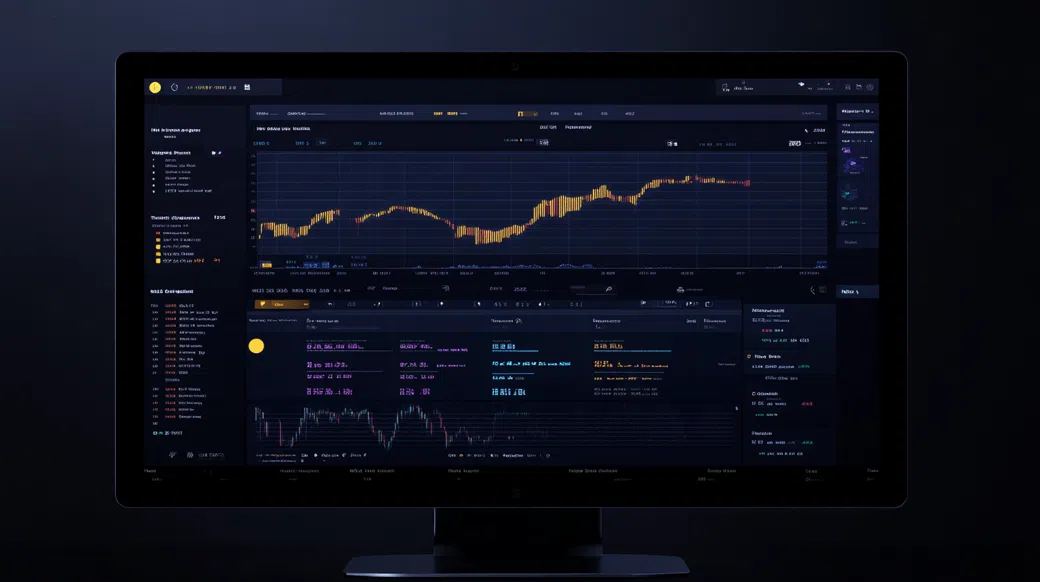
WebTrader is the core interface, and I treated it like production software: stress the login, open multiple charts, and fire a few orders during the London/NY overlap. Sessions stayed stable, chart refreshes didn’t hang, and the order ticket exposed the basics (market/limit/stop, SL/TP, position sizing). If you live inside MT4/MT5 plugin ecosystems, you’ll notice the gap—fewer third-party indicators, fewer automation pathways, and less community tooling—though the trade execution flow itself felt consistent.
Torre Investália App: Mobile Trading Experience
The Torre Investália app tracked the WebTrader layout closely, which matters when you’re managing risk away from a desk. The Torre Investália login supported biometric unlock on my device, real-time quotes updated smoothly, and I could adjust SL/TP without hunting through nested menus. Deposits and withdrawals were accessible from mobile, and push notifications covered order status and margin alerts. My main gripe: charting is fine for monitoring but cramped for detailed multi-timeframe analysis.
Charting, Tools & Research
Tools are pragmatic: an economic calendar, a lightweight news feed, watchlists, and a familiar indicator set (MA, RSI, MACD, Bollinger) with basic drawing objects. Alerts exist, but they don’t replace a dedicated research terminal or an MT5/cTrader-style environment for strategy development. For me, that’s acceptable if you already have an external research stack and treat the platform as execution plus risk controls.
Torre Investália Account Opening & Minimum Deposit
Instead of burying identity checks at the end, the onboarding funnel pushed me toward verification early, which I prefer from a security standpoint. The signup form asked for standard contact and residency details, then KYC required a government-issued photo ID and a proof of address dated within three months. Verification cleared the same day for my test profile, and the account dashboard exposed deposit limits and withdrawal rails once the documents were approved.
- Minimum Deposit: $200 (Torre Investália minimum deposit for the Standard tier in my test flow)
- Funding Methods: Visa/Mastercard, bank wire, regional e-wallets, and crypto (BTC, USDT)
- Demo Account: $10,000 virtual balance for platform familiarization and order-ticket practice
- Account Types: Standard (spread-only) and Raw/ECN-style (tighter spreads + commission)
One implementation detail I liked: deposit confirmations were logged in the account history with timestamps, which makes reconciliation easier. Base currency choices can affect conversion costs, so I’d pick the funding currency you actually hold and keep withdrawals on the same rail to reduce compliance friction.
Torre Investália Customer Support Review
I tested support with a practical question: where to find swap/overnight rates per symbol and whether weekend financing applies to crypto CFDs. Live chat connected in about 3 minutes, and the agent pointed me to the instrument-specs panel plus the cutoff-time note for daily rollovers. I also emailed a follow-up about withdrawal processing windows; the ticket reply landed in roughly 9 hours on a business day with a clear timeline and the expected “fees may be charged by intermediaries” warning.
Coverage is what you’d expect from this segment: 24/5 live chat and email, with language availability depending on staffing. Phone support wasn’t prominently offered in my region, and weekend responsiveness is thinner—especially outside crypto market hours. Relative to similar offshore CFD providers, the quality was more “procedural and consistent” than “high-touch,” which is fine if you prefer predictable processes over sales calls.
Ready to Explore Torre Investália?
If you’re considering this broker, start by mapping your region eligibility, then verify live spreads on the instruments you actually trade. A demo helps you sanity-check order types and margin behavior before you commit real funds, especially at higher leverage.
Visit Torre InvestáliaTorre Investália Review FAQ
Is Torre Investália good for beginners?
Yes, with guardrails: the WebTrader is learnable and the $10,000 demo is useful for rehearsing position sizing and stop placement. Beginners should still treat 1:500 leverage as hazardous and keep size small. The education library is not extensive, so plan to use external learning resources.
Can I trade crypto on Torre Investália?
Yes, crypto is available as CFDs, with majors like BTC/USD and ETH/USD plus a limited large-cap list. You’re trading price exposure rather than receiving coins on-chain. Keep an eye on weekend financing because it can be a meaningful carry cost.
Is Torre Investália a scam?
No, it didn’t present as a scam in my operational checks: KYC was enforced, trading worked, and the withdrawal workflow completed. The bigger concern is jurisdictional—offshore oversight typically offers fewer consumer protections than Tier‑1 regulators. As always, limit risk, avoid over-leverage, and document every transaction.
Is Torre Investália available in the USA?
No, USA residents are restricted and the service does not offer accounts there. If you’re traveling, approval still depends on residency and KYC documents, not just your current IP location. Check eligibility before funding to avoid compliance reversals.
How long does a Torre Investália withdrawal take?
A Torre Investália withdrawal typically shows internal processing within 24–48 hours after KYC is complete. Receipt time then depends on the rail: cards often take 2–5 business days, bank wires 3–7 business days, and crypto can arrive the same day. Intermediary fees and compliance checks can extend timelines.
What is the Torre Investália minimum deposit?
The Torre Investália minimum deposit is $200 for the entry account in the deposit flow I used. Funding below that threshold won’t typically activate live trading. If you plan to trade multi-asset CFDs, budget extra for margin requirements and drawdown tolerance.
Does Torre Investália have a mobile app?
Yes, it provides iOS and Android apps alongside the browser-based WebTrader. The app supports charting, order placement, and account actions like deposits and withdrawals. For detailed analysis, a larger screen is still more comfortable.
Final Verdict: Should You Use Torre Investália in 2026?
Overall Score: 4.0/5
From a security-first developer’s angle, the tell is whether the system behaves deterministically under normal stress: Torre Investália passed my basic lifecycle test—KYC gates, funding logs, execution on liquid CFDs, and a completed withdrawal path. Costs are configurable via Standard vs. Raw/ECN-style pricing, and the proprietary platforms are competent even if they don’t match MT4/MT5 ecosystems for automation. The trade-off remains jurisdiction and leverage: offshore registration plus 1:500 means you must self-regulate risk hard. If you trade CFDs, assume you can lose your full margin and more without discipline; Torre Investália is not a substitute for risk controls.
Best for: self-directed CFD traders who want multi-asset coverage and can manage leverage responsibly. Avoid if: you require Tier‑1 regulation, formal compensation schemes, or deep third-party platform tooling.