Slide +Ark Aloxi Trading Platform Alternatives 2026: Reliable Options for Online Traders
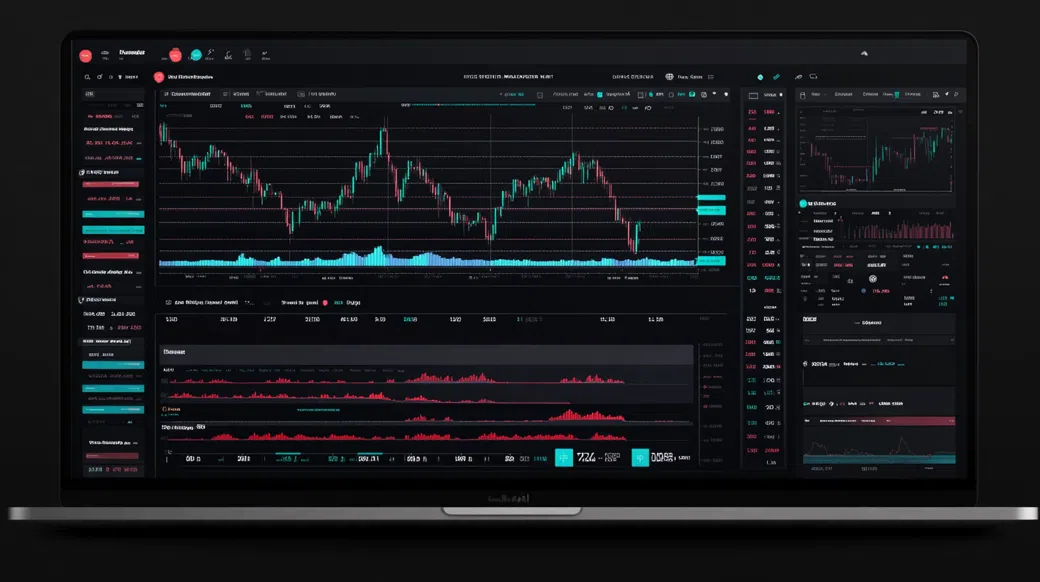
Code has a nice property: you can audit it. Trading platforms rarely give you that luxury, so you audit everything else—jurisdiction, custody, execution, and the boring operational stuff that only matters when something breaks. Slide +Ark Aloxi sits in the offshore CFD bucket (commonly structured through Seychelles FSA-style frameworks), typically offering a proprietary WebTrader plus a mobile app, with headline leverage that can run high (think up to 1:500). The product mix usually skews toward forex pairs, indices, commodities, and crypto CFDs, not true spot crypto or exchange-traded equities.
For many traders, the question in 2026 isn’t “can I place an order?” but “what happens under stress?”—fast markets, partial fills, widening spreads, and withdrawals that suddenly take longer than a blockchain finality window. That’s where Slide +Ark Aloxi becomes a starting point for evaluation rather than a destination. The practical path is to map your strategy to a venue that can prove its controls: tier-1 regulation, segregated client funds, transparent execution model, and platform tooling that matches your workflow (MT4/MT5/cTrader, robust reporting, and stable mobile parity).
This guide to Slide +Ark Aloxi alternatives focuses on regulated, globally known brokers (US/EU emphasis) and explains what to compare: cost-of-trade (spread + commission + swap), asset access (real stocks vs CFDs), and safety rails like negative balance protection and compensation schemes. It’s not about hype; it’s about reducing tail-risk in a leveraged product environment.
Disclaimer: This article is for informational purposes only and does not constitute investment advice. CFDs and other leveraged products carry a high risk of loss and may not be suitable for all investors.
Key Takeaways (TL;DR)
- If you need real stocks/ETFs (not equity CFDs), multi-asset venues like Interactive Brokers or Saxo Bank can close the product gap.
- Compare total round-turn trading cost (spread + commission) and swap/overnight fees; headline leverage is not a cost metric and can amplify drawdowns.
- Migrate safely by KYC-verifying the new broker first, exporting statements for taxes, then withdrawing via the original funding route to avoid AML friction.
What Is Slide +Ark Aloxi and How Does Its Trading Platform Work?
From a trader’s perspective, Slide +Ark Aloxi behaves like an offshore, CFD-first venue aimed at retail users who want quick onboarding and broad CFD exposure. The typical setup in this category uses a proprietary front end, offers forex and index/commodity CFDs, and may add crypto CFDs for speculation. Because it’s not positioned as a full multi-asset prime broker, the “own the underlying” experience (exchange-traded shares, custody, voting rights) is usually not the core design goal. If you’re evaluating brokers similar to Slide +Ark Aloxi, treat it as a leveraged derivatives gateway first, and then ask what protections exist when margin calls, slippage, or disputes hit.
Slide +Ark Aloxi Web Trading Platform: Core Features and Tools
Expect a browser-based WebTrader with basic-to-mid charting rather than a deep workstation environment. Chart layouts are typically serviceable—common timeframes, a library of indicators, and drawing tools for structure—but not on the level of institutional analytics. Order entry usually covers market/limit/stop with visible margin impact; more advanced conditional logic can be limited compared with MT5 or cTrader. Execution “feel” is the hard part to quantify without trade logs: in fast conditions you’ll want to monitor requotes, slippage, and order timestamps. Mobile apps often mirror the web experience for watchlists, simple charting, and account management, but power features can diverge.
Trading Fees, Spreads, and Account Types at Slide +Ark Aloxi
Costs in this segment are commonly spread-led. A typical EUR/USD spread is often presented around ~2.0 pips on a standard-style account, while “raw” tiers—if offered—tend to advertise near-zero spreads plus a commission (often in the $5–$8 per round-turn range). Overnight financing (swap) is where many strategies quietly bleed, especially if you hold index or crypto CFDs across sessions. Also watch for operational fees: withdrawal charges, currency conversion markups, and inactivity rules. Put differently: competitors to Slide +Ark Aloxi can look similar on the surface, but your monthly P&L often gets decided by the hidden line items.
When Do Traders Start Looking for Slide +Ark Aloxi Alternatives?
Leverage can make a platform feel powerful right up until it makes a small error expensive. Most switches happen after a trader notices friction: inconsistent fills, unclear execution labeling (market maker vs STP), or policies that become visible only during withdrawals. For risk-managed traders, the main driver toward Slide +Ark Aloxi alternatives is usually control—clear regulatory oversight, predictable funding flows, and tooling that supports repeatable execution rather than “tap-to-trade” vibes.
- Needing MT4/MT5 or cTrader for an EA/automation workflow that a proprietary WebTrader can’t run reliably.
- Hitting a strategy limit because spreads widen around news and the platform doesn’t provide granular execution reports to diagnose slippage.
- Wanting investor-protection structure (segregated funds, formal complaint paths, compensation schemes) instead of offshore-only dispute channels.
- Realizing your portfolio plan requires true stocks/ETFs or options/futures access rather than equity exposure via CFDs.
How to Choose a Reliable Alternative to the Slide +Ark Aloxi Trading Platform
Think of the selection process like reviewing a smart contract: you’re not searching for “features,” you’re searching for failure modes. Platforms like Slide +Ark Aloxi can be fine for certain speculative use-cases, but for a long-lived trading stack you want verifiable guardrails—who regulates it, where client money sits, what happens in negative balances, and how the execution model behaves when liquidity thins.
Regulation, Safety, and Investor Protection
Start with the regulator’s own register: FCA (UK), ASIC (Australia), CySEC (Cyprus/EU), and NFA/CFTC (US) are the common reference points for retail oversight. Investor-protection schemes matter because they’re a defined backstop, not a promise—FSCS in the UK can cover eligible claims up to £85,000, while Cyprus’s ICF can cover up to €20,000 (eligibility rules apply). Also confirm segregated client funds language, negative balance protection (especially for EU/UK retail), and whether the broker discloses group entities clearly.
Available Markets and Instruments
Match instruments to intent. If your plan includes long-term equity exposure, you likely want real stocks/ETFs (with DMA where available) rather than stock CFDs that reset your rights to “price exposure only.” Options and futures access can be essential for hedging instead of stop-loss-only risk control. FX and index CFDs are fine for shorter-horizon strategies, but understand what you’re trading: contract specs, margin requirements, and whether crypto is CFD-only (no on-chain transferability).
Trading Costs: Spreads, Commissions, and Other Fees
Compare round-turn cost-of-trade, not marketing headlines. A “0.0 pip” quote means little if the commission and average slippage dominate the realized price. Separate your cost buckets: spread (in pips), commission (per lot/round-turn), swap/overnight financing (often the biggest leak for holds), and operational charges (withdrawals, inactivity). Then test with small live size—demo fills don’t always behave like production liquidity.
Platforms, Tools, and Execution Quality
Platform choice is strategy choice. MT4/MT5 ecosystems support EAs, indicators, and a familiar workflow; cTrader is popular for depth-of-market and execution tooling; proprietary platforms can be clean but closed. Execution model matters: market maker setups can internalize flow, while STP/ECN/DMA structures aim to route orders externally—each has trade-offs in spreads, slippage, and transparency. If you’re migrating away from Slide +Ark Aloxi, insist on clear execution disclosures and robust order-history exports.
Support, Education, and Overall User Experience
Good UX is not “pretty charts”; it’s predictable operations. Look for support coverage that matches your trading hours, clear escalation paths, and multilingual service if you trade across regions. Education content is secondary to documentation quality: margin policy, swap tables, corporate actions on CFDs, and platform status communication. Mobile parity matters too—if you manage risk on the go, you need consistent order controls and alerts, not a stripped-down companion app.
Slide +Ark Aloxi and Different Asset Classes: When Alternatives May Be Better
Slide +Ark Aloxi Forex and CFD Trading
Forex and CFDs are usually the core offering here: roughly a few dozen FX pairs, a set of indices and commodities, and high leverage that can reach 1:500. The catch is that leverage is not free; it magnifies execution noise. A typical ~2.0 pip EUR/USD spread can be tolerable for swing trades but punishing for tight scalping, where one extra pip is basically a tax. If your edge depends on consistent fills, brokers like Pepperstone or OANDA tend to be the cleaner comparison set—more mature routing disclosures, multiple platform stacks, and better-known compliance expectations. In practice, regulated alternatives also make it easier to reason about margin calls, negative balance outcomes, and complaint processes when a spike event triggers slippage.
Slide +Ark Aloxi Stock and ETF Trading
Stock/ETF access is where many offshore CFD venues feel thin: you may get equity price exposure via CFDs, but not the ownership layer that matters for longer-term allocation (custody, corporate actions treatment, and the ability to transfer positions). For US/EU users who want actual shares and broad ETF shelves, Interactive Brokers is the obvious infrastructure play—multi-venue routing, deep product catalog, and options/futures for hedging. Saxo Bank is another strong candidate for multi-asset exposure with a polished portfolio view. If your goal is to mix FX trades with a real investment book, this is the gap that most alternatives to the Slide +Ark Aloxi trading platform should explicitly close.
Slide +Ark Aloxi Crypto Trading
Crypto exposure on offshore trading apps is often delivered as crypto CFDs, which means you’re trading a derivative price feed, not holding coins you can withdraw to a wallet. That’s fine for short-term speculation, but it’s not on-chain ownership, and it adds counterparty risk on top of crypto volatility. For traders who want regulated CFD access to crypto price moves, IG and Plus500 are common regulated references (region-dependent), typically offering crypto CFDs with retail protections where applicable. If you actually need spot crypto custody and transfers, that’s a different category entirely—outside the “broker CFD platform” model. For security-first users, be explicit about which risk you’re taking: market risk, leverage risk, and platform counterparty risk.
Best Slide +Ark Aloxi Alternatives for 2026: Comparison of Top Trading Platforms
Interactive Brokers (IBKR): Key Facts and How It Compares to Slide +Ark Aloxi
Regulation: SEC/FINRA (US), FCA (UK), IIROC (Canada) (entity depends on region)
Markets: Stocks, ETFs, options, futures, bonds, FX
Fees: Varies by product and venue; FX pricing is typically tight on major pairs, with commissions/spreads depending on account and size
Platform: Trader Workstation (TWS), IBKR mobile, Client Portal, API access
Best For: Multi-asset traders who want maximum control and reporting
Pepperstone: Key Facts and How It Compares to Slide +Ark Aloxi
Regulation: FCA (UK), ASIC (Australia), CySEC (EU), DFSA (Dubai)
Markets: FX and CFDs (indices, commodities, some crypto CFDs in certain regions)
Fees: Standard accounts often around ~1.0 pip+ on EUR/USD; Raw-style pricing can be ~0.0–0.3 pips plus commission (varies by entity)
Platform: MT4, MT5, cTrader, TradingView (availability varies)
Best For: EA and algorithmic FX traders who need MT4/MT5/cTrader
Saxo Bank: Key Facts and How It Compares to Slide +Ark Aloxi
Regulation: FCA (UK), MAS (Singapore), DFSA (Dubai) (entity depends on region)
Markets: Stocks, ETFs, bonds, FX, options, futures, CFDs
Fees: Pricing varies by tier; FX spreads are generally competitive, with better rates at higher tiers and additional fees depending on market
Platform: SaxoTraderGO, SaxoTraderPRO
Best For: Portfolio builders mixing investing and active trading
OANDA: Key Facts and How It Compares to Slide +Ark Aloxi
Regulation: CFTC/NFA (US), FCA (UK), ASIC (Australia), IIROC (Canada)
Markets: FX (and CFDs in certain non-US regions, depending on entity)
Fees: Typically spread-based on major FX pairs; average spreads vary with volatility, with additional costs like swap/financing for holds
Platform: OANDA web/mobile platforms, MT4 (availability varies by region)
Best For: Risk-managed FX traders who want strong regulatory footprints
IG: Key Facts and How It Compares to Slide +Ark Aloxi
Regulation: FCA (UK), ASIC (Australia), MAS (Singapore)
Markets: CFDs (FX, indices, commodities, shares), and additional products depending on region
Fees: Spread-based for many CFD markets; FX spreads can be competitive on majors, with financing costs for overnight positions
Platform: IG web platform, mobile app, MT4 (region-dependent)
Best For: Macro CFD traders who want broad index coverage
Plus500: Key Facts and How It Compares to Slide +Ark Aloxi
Regulation: FCA (UK), CySEC (EU), ASIC (Australia), MAS (Singapore)
Markets: CFDs on FX, indices, commodities, shares, crypto CFDs (availability varies by region)
Fees: Primarily spread-based; expect wider effective costs than raw-commission models, plus overnight funding charges
Platform: Plus500 proprietary web platform and mobile app
Best For: Simplicity-first CFD traders who avoid platform complexity
Comparison Summary
| Platform | Regulation | Main Markets | Typical Costs | Best For |
|---|---|---|---|---|
| Interactive Brokers (IBKR) | SEC/FINRA, FCA, IIROC | Stocks/ETFs, options, futures, bonds, FX | Product-dependent; generally competitive, with commissions/pricing by venue | Multi-asset traders who want maximum control and reporting |
| Pepperstone | FCA, ASIC, CySEC, DFSA | FX and CFDs | Std ~1.0 pip+; Raw ~0.0–0.3 pips + commission (varies) | EA and algorithmic FX traders who need MT4/MT5/cTrader |
| Saxo Bank | FCA, MAS, DFSA | Stocks/ETFs, FX, options, futures, CFDs | Tiered pricing; competitive FX spreads with costs varying by product | Portfolio builders mixing investing and active trading |
| OANDA | CFTC/NFA, FCA, ASIC, IIROC | FX (CFDs by region) | Mostly spread-based; swaps apply for overnight holds | Risk-managed FX traders who want strong regulatory footprints |
| IG | FCA, ASIC, MAS | CFDs across FX/indices/commodities/shares | Spread-led; financing costs for holds; MT4 availability varies | Macro CFD traders who want broad index coverage |
| Plus500 | FCA, CySEC, ASIC, MAS | CFDs across FX/indices/commodities/shares/crypto (region-dependent) | Spread-based; overnight funding is material for longer holds | Simplicity-first CFD traders who avoid platform complexity |
How to Safely Move from Slide +Ark Aloxi to Another Broker
Migration is operational risk, not a “click to switch” feature. Treat it like moving keys between wallets: verify the destination first, then move small, then scale. If you’re leaving Slide +Ark Aloxi after a bad experience, slow down—rushed withdrawals plus leverage can turn a platform problem into a portfolio problem.
- Check the new broker’s entity on the regulator’s public register (FCA Register, ASIC Connect, CySEC list, or NFA BASIC) and confirm the website domain matches the registered firm details.
- Open the new account and complete KYC/AML (government ID + proof of address) before you touch your existing balance; waiting until you need an urgent hedge is a common failure mode.
- Flatten or reduce open leveraged positions on the old account first; assume you cannot “transfer” CFD positions between brokers and plan to re-enter on the new venue if needed.
- Withdraw using the same funding rail used for deposits whenever possible (cards back to card, bank back to bank), because many compliance desks enforce source-of-funds symmetry.
- Export statements, trade history, and fee reports for tax and dispute documentation; keep local copies rather than relying on the platform dashboard staying available.
Ready to Explore Slide +Ark Aloxi?
If you’re still evaluating, take five minutes to map your region, leverage limits, and platform needs before committing funds. Compare execution notes, fee tables (especially swap), and the account verification flow side-by-side with regulated options so your decision is based on constraints, not screenshots.
Visit Slide +Ark AloxiFAQ: Slide +Ark Aloxi Alternatives and Trading Platforms
What is the best alternative to Slide +Ark Aloxi in 2026?
The best alternative depends on whether you need real multi-asset access or mainly FX/CFDs. For real stocks/ETFs plus derivatives, Interactive Brokers or Saxo Bank are strong picks; for FX execution and platform choice (MT4/MT5/cTrader), Pepperstone is often a better fit than offshore venues. If your priority is regulatory footprint in the US/UK, OANDA is a common starting point. These are among the best Slide +Ark Aloxi alternatives 2026 candidates for security-first traders.
Is Slide +Ark Aloxi a safe broker/platform?
Slide +Ark Aloxi typically aligns with an offshore/unregulated retail CFD profile (often associated with Seychelles-style oversight), which generally provides fewer investor-protection mechanisms than FCA/ASIC/CySEC/NFA-regulated firms. That doesn’t automatically mean “scam,” but it does mean your dispute paths, compensation backstops, and transparency expectations should be stricter. If safety is your main constraint, prioritize regulated options vs Slide +Ark Aloxi and verify the legal entity on the regulator’s own register.
Can I trade stocks, futures, or crypto with Slide +Ark Aloxi?
Crypto exposure is commonly offered as crypto CFDs, not on-chain coins you can withdraw, and stock access—if present—is often via equity CFDs rather than real share ownership. Futures trading (exchange-listed) is usually not the focus on platforms like Slide +Ark Aloxi, while multi-asset brokers such as Interactive Brokers can provide true futures and options access. For traders who need a broader product set, alternatives to the Slide +Ark Aloxi trading platform are often selected specifically to gain exchange-traded markets.
What should I check before switching from Slide +Ark Aloxi to another platform?
Verify regulation at the source (FCA/ASIC/CySEC/NFA registers), then read the margin policy, negative balance protection terms, and the full fee schedule (spread, commission, swap, withdrawals). Next, confirm the platform stack you actually need—MT5/cTrader/API access versus a closed WebTrader—and test execution with small size before scaling. Finally, plan the cash movement: KYC first, then withdraw via the original funding method to reduce AML delays. This is the practical checklist most traders use when narrowing Slide +Ark Aloxi alternatives.
About the Author: Samuel White is a Seoul-based smart contract developer who approaches trading platforms like software systems: threat model first, convenience second. He writes as a market practitioner focused on execution details, custody risk, and the operational reality of moving capital across regulated and offshore venues.