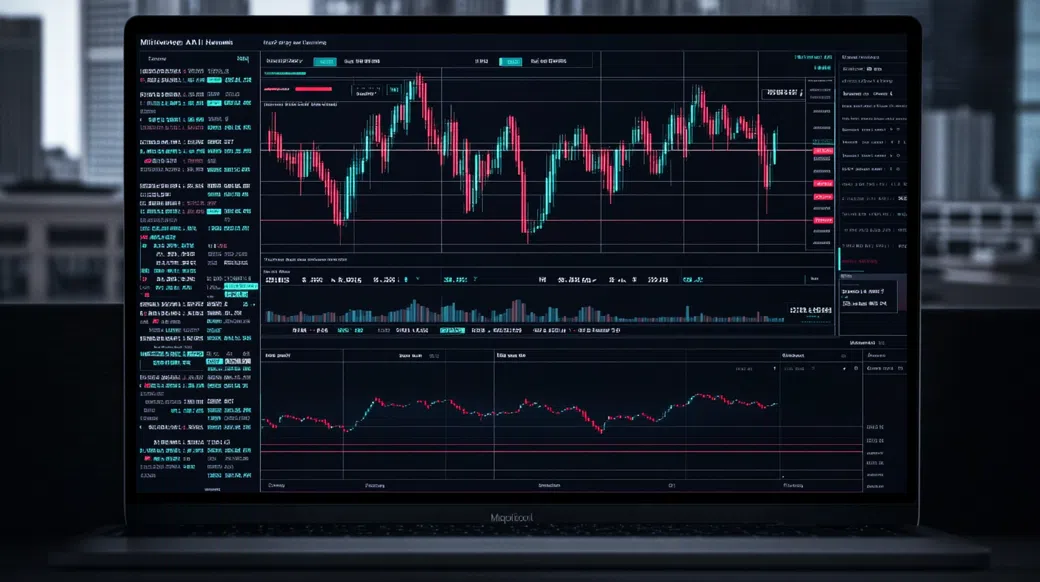
Silber Anlagthal Trading Platform Alternatives 2026: Reliable Options for Online Traders
Code doesn’t care about vibes; it cares about invariants. Trading platforms should be the same. If you’re evaluating Silber Anlagthal, you’re likely looking at a CFD-first setup (forex and indices up front, maybe some crypto CFDs), a proprietary WebTrader, and leverage that can reach levels like 1:500. That combination is common in the offshore segment: fast onboarding, attractive margin numbers, and a UI that feels “good enough” until you ask it to behave under stress—volatile sessions, partial fills, slippage, or a margin call that happens faster than your risk logic expects.
For US/EU-focused traders, the practical question isn’t “Can I place a trade?” It’s “Can I verify who sits on the other side of the trade, what rules they must follow, and what protections apply if something goes wrong?” That’s why this guide centers on Silber Anlagthal alternatives that are easier to validate: regulated entities with public registers, clearer execution disclosures (market maker vs STP/ECN/DMA), and more mature platform stacks. I’m not here to sell you a brand. I’m here to help you reduce the probability of ugly surprises—withdrawal friction, platform limitations, or protections that don’t exist when you need them.
Disclaimer: This article is for informational purposes only and does not constitute investment advice. CFDs and other leveraged products carry a high risk of loss and may not be suitable for all investors.
Key Takeaways (TL;DR)
- Offshore/high-leverage setups can amplify small pricing differences; compare round-turn trading cost (spread + commission + slippage), not headline leverage.
- If you need real stocks/ETFs (ownership) rather than stock CFDs, prioritize multi-asset brokers with DMA access (e.g., IBKR or Saxo), not CFD-only apps.
- Migration works best when you KYC the new broker first, export your history for tax/audit, then withdraw using the same rails you used to deposit (AML logic).
What Is Silber Anlagthal and How Does Its Trading Platform Work?
From what’s typically observable in this category of provider, Silber Anlagthal operates like an offshore CFD broker: forex and CFDs are the core product, with a menu that often includes indices and commodities, plus crypto exposure via CFDs rather than on-chain ownership. The operational model is usually closer to a dealing-desk/market-maker style setup than direct-market access—fine for basic trading, but it changes how you should think about execution quality, conflicts, and what “price” means when the market gaps. For traders who build systems (or just want predictable rules), that’s the context that makes brokers similar to Silber Anlagthal worth benchmarking against regulated venues.
Silber Anlagthal Web Trading Platform: Core Features and Tools
The proprietary WebTrader is typically the center of the stack, with mobile apps on iOS/Android mirroring the essentials. Expect standard charting, common indicators, and the usual drawing tools, but not the deep ecosystem you get with MT4/MT5 or cTrader (custom indicators, mature EA workflows, and community tooling). Order handling is usually basic: market/limit/stop are common, while more advanced conditional logic and granular execution reports can be thin. The account dashboard generally covers deposits/withdrawals, open positions, and margin metrics—useful, but not always “audit-friendly” when you’re trying to reconcile fills and slippage trade-by-trade.
Trading Fees, Spreads, and Account Types at Silber Anlagthal
In offshore CFD setups, costs are commonly packaged as a wider all-in spread on “Standard” accounts and a tighter spread plus commission on “Raw/ECN-style” tiers. A reasonable expectation for EUR/USD on a Standard-style account is around 2.0 pips, while a commission tier might show 0.0–0.4 pips plus roughly $6 round-turn per standard lot. Overnight financing (swap) is where many traders get quietly taxed—especially if you hold indices or crypto CFDs for days. Also watch for withdrawal and inactivity fees in the fine print; fee schedules in platforms like Silber Anlagthal can be less predictable than at top-tier regulated firms.
When Do Traders Start Looking for Silber Anlagthal Alternatives?
Margin is a power tool: it’s useful until it removes a finger. The moment you realize your risk controls depend on broker behavior (execution, margin policy, stop-out logic, negative balance protection), you start searching for Silber Anlagthal alternatives with more verifiable guardrails. For US/EU traders, the inflection point is often not the spread—it’s trust surface area: regulation you can check, segregated client funds, and dispute paths that don’t rely on email threads. A second trigger is strategy fit: proprietary platforms can be fine for discretionary trading, yet brittle for automation, trade journaling, or multi-account workflows.
- You need MT4/MT5 or cTrader for automated strategies, and the current WebTrader can’t support your EA/cBot workflow.
- You want regulator-backed protections (segregated client funds, formal complaints process), not just a terms-and-conditions promise.
- Your strategy is sensitive to slippage (news scalping, tight stops), and you can’t get enough execution transparency to model expected fill quality.
- You need access to real stocks/ETFs (not stock CFDs) for long-term allocation and tax reporting clarity.
How to Choose a Reliable Alternative to the Silber Anlagthal Trading Platform
I treat broker selection like dependency management: minimize unknowns, prefer well-maintained primitives, and verify upstream. For alternatives to the Silber Anlagthal trading platform, start by deciding what failure mode you refuse to accept—withdrawal delays, opaque execution, or limited product scope—then choose a regulated provider whose rulebook you can actually inspect. The best choice is the one that matches your instruments, your trade frequency, and your tolerance for platform complexity.
Regulation, Safety, and Investor Protection
Regulators are not marketing badges; they’re enforcement frameworks. In the UK, FCA oversight can pair with the FSCS investor compensation scheme (up to £85,000 in certain cases). In the EU, CySEC-regulated firms may fall under the ICF (up to €20,000, eligibility-dependent). For US forex, NFA/CFTC registration matters. Look for segregated client funds language, negative balance protection (where required), and confirm the entity on the regulator’s public register—don’t trust screenshots.
Available Markets and Instruments
Product scope drives everything from fees to tax forms. If you only trade EUR/USD and a few indices, a strong FX/CFD specialist can be enough. If you want to mix FX hedges with real equities, ETFs, options, or futures, pick a true multi-asset broker with exchange access. This is where many competitors to Silber Anlagthal split into two camps: CFD-first catalogs versus “own the asset” access with custody and corporate actions.
Trading Costs: Spreads, Commissions, and Other Fees
Compare round-turn cost, not “from 0.0 pips” headlines. Your real bill is spread + commission + expected slippage, then add swap/overnight financing for anything held past rollover. A scalper doing 200 standard lots/month will often find that a 0.6–1.0 pip difference is more consequential than leverage limits. Also audit non-trading fees: inactivity charges, withdrawal fees, and currency conversion spreads can dominate returns for low-frequency traders.
Platforms, Tools, and Execution Quality
MT4/MT5 and cTrader aren’t just interfaces; they’re ecosystems for automation, analytics, and reproducibility. Proprietary WebTraders can be clean, but they can also lock you into limited export formats and thin execution reporting. Execution model matters: market maker pricing can be stable but conflict-prone; STP/ECN/DMA models tend to disclose more about routing and fills. For fast markets, latency and slippage behavior are part of the “fee,” even if they never appear on a price sheet.
Support, Education, and Overall User Experience
Operational support is a risk control. Check support hours in your timezone, language coverage, and whether you can reach a human during volatile sessions. Education content is nice, but clarity beats volume: margin call rules, stop-out levels, corporate actions (if you trade equities), and funding timelines should be documented cleanly. Mobile parity matters too—if you can’t manage risk from your phone, you’re one outage away from forced liquidation.
Silber Anlagthal and Different Asset Classes: When Alternatives May Be Better
Silber Anlagthal Forex and CFD Trading
Forex/CFDs are the natural home for offshore brokers, and Silber Anlagthal likely sits in that mold: roughly 30–50 FX pairs, indices and commodities as CFDs, leverage up to 1:500, and a Standard-account EUR/USD spread around 2.0 pips. The trade-off is that execution and conflict controls are harder to verify. Regulated FX/CFD specialists like Pepperstone and OANDA tend to publish more about execution, offer MT4/MT5/cTrader (Pepperstone) or robust proprietary tooling (OANDA), and operate under regulators such as FCA/ASIC (and NFA/CFTC for OANDA in the US). If your strategy is sensitive to fills—tight stops, partial closes, high-frequency entries—those disclosures aren’t “nice to have”; they are inputs to your expected-value math.
Silber Anlagthal Stock and ETF Trading
Stock/ETF exposure at CFD-first brokers is frequently offered as CFDs, which means no shareholder rights, no direct voting, and terms that can differ from exchange trading (financing, corporate action handling, and potential trading halts). If you want actual ownership and broad global market access, this is where multi-asset firms earn their keep. Interactive Brokers (IBKR) is a common choice for advanced traders who need exchange connectivity across equities, options, futures, bonds, and FX, with a tooling stack built for reporting and controls. Saxo Bank is another strong option for investors who want curated multi-asset access with a polished platform and research layer. For many people comparing Silber Anlagthal alternatives, the deciding factor here is simple: “Do I want to trade a contract, or hold an asset?”
Silber Anlagthal Crypto Trading
Crypto access in the CFD world is usually synthetic: you’re trading price exposure (BTC, ETH, and a basket of other coins) without on-chain withdrawal, wallet custody, or network-level settlement. That can be fine if you’re strictly short-term and understand the financing and weekend gap risks—but it’s not “owning crypto.” In regulated CFDs, firms like IG (jurisdiction-dependent) and Pepperstone may offer crypto CFDs with clearer risk disclosures and regulated oversight compared to offshore venues. If you’re coming from regulated options vs Silber Anlagthal comparisons, check two things: how the broker handles extreme volatility (margin changes, trading halts) and what negative balance protection applies to retail clients. Crypto CFDs can move enough in minutes to turn leverage into a liquidation engine.
Best Silber Anlagthal Alternatives for 2026: Comparison of Top Trading Platforms
Interactive Brokers (IBKR): Key Facts and How It Compares to Silber Anlagthal
Regulation: SEC/FINRA (US), FCA (UK), IIROC (Canada)
Markets: Stocks, ETFs, options, futures, bonds, FX
Fees: FX spreads typically tight with commissions; equity/derivatives pricing varies by market and tier
Platform: Trader Workstation (TWS), IBKR Desktop/Mobile, Client Portal APIs
Best For: Multi-asset pros who want exchange access and deep reporting
Pepperstone: Key Facts and How It Compares to Silber Anlagthal
Regulation: FCA (UK), ASIC (Australia), CySEC (EU), DFSA (Dubai)
Markets: FX and CFDs (indices, commodities, some crypto CFDs where permitted)
Fees: Standard spreads often ~1.0–1.3 pips EUR/USD; Raw accounts can be ~0.0–0.3 pips + commission (varies by entity)
Platform: MT4, MT5, cTrader, TradingView (integration depends on region)
Best For: System traders who need MT4/MT5/cTrader and low-latency execution
Saxo Bank: Key Facts and How It Compares to Silber Anlagthal
Regulation: FCA (UK), DFSA (Dubai), MAS (Singapore)
Markets: Stocks, ETFs, bonds, FX, options, futures, CFDs
Fees: Pricing depends on tier; FX spreads commonly start around ~0.6–1.0 pips on major pairs (account/region dependent)
Platform: SaxoTraderGO, SaxoTraderPRO
Best For: Investors who want a bank-grade platform for diversified portfolios
OANDA: Key Facts and How It Compares to Silber Anlagthal
Regulation: CFTC/NFA (US), FCA (UK), ASIC (Australia), IIROC (Canada)
Markets: FX (and CFDs in certain jurisdictions), metals; crypto availability depends on region
Fees: Typically spread-only pricing on many accounts; major-pair spreads often around ~0.6–1.2 pips (market conditions apply)
Platform: OANDA Trade (web/mobile), MT4 (availability varies by region)
Best For: Risk-first FX traders who value transparent policies and tooling
IG: Key Facts and How It Compares to Silber Anlagthal
Regulation: FCA (UK), ASIC (Australia), MAS (Singapore)
Markets: CFDs (indices, FX, shares, commodities), spread betting (UK/IE), some crypto CFDs where allowed
Fees: Major FX spreads often start around ~0.6–1.0 pips; share CFD and other product costs vary by market
Platform: IG Web Platform, mobile apps, MT4 (in supported regions)
Best For: Active CFD traders who want broad markets under top-tier oversight
Comparison Summary
| Platform | Regulation | Main Markets | Typical Costs | Best For |
|---|---|---|---|---|
| Interactive Brokers (IBKR) | SEC/FINRA, FCA, IIROC | Stocks/ETFs/options/futures/bonds/FX | Commission-based; tight FX pricing; market/tier dependent | Multi-asset pros who want exchange access and deep reporting |
| Pepperstone | FCA, ASIC, CySEC, DFSA | FX + CFDs | Std ~1.0–1.3 pips; Raw ~0.0–0.3 pips + commission | System traders who need MT4/MT5/cTrader and low-latency execution |
| Saxo Bank | FCA, DFSA, MAS | Multi-asset + CFDs | Tiered; FX often ~0.6–1.0 pips on majors (region-dependent) | Investors who want a bank-grade platform for diversified portfolios |
| OANDA | CFTC/NFA, FCA, ASIC, IIROC | FX (CFDs where available) | Often spread-only; majors ~0.6–1.2 pips (conditions apply) | Risk-first FX traders who value transparent policies and tooling |
| IG | FCA, ASIC, MAS | CFDs (broad), spread betting (UK/IE) | FX from ~0.6–1.0 pips; other costs by product/venue | Active CFD traders who want broad markets under top-tier oversight |
How to Safely Move from Silber Anlagthal to Another Broker
Switching brokers is basically a production migration: reduce blast radius, keep logs, and validate dependencies before you flip the switch. If you’re exiting an offshore CFD venue, treat every step as adversarial—KYC delays, AML routing constraints, and time windows where you’re exposed to market risk without the tooling you expect. Before you initiate anything, screenshot key account details and keep a local copy of statements from Silber Anlagthal; disputes are easier when your evidence is not stored on someone else’s server.
- Confirm the new broker’s legal entity on the regulator’s public register (FCA Register, ASIC Connect, CySEC listing, or NFA BASIC) and match the website domain to the registered name.
- Create the new account and complete KYC/AML (ID + proof of address) before you start withdrawing; verification commonly clears quickly, but “commonly” is not a guarantee.
- Flatten exposure on the old account by closing open CFD positions; don’t assume you can transfer positions between brokers—plan to re-enter on the new venue if needed.
- Withdraw using the same payment rails used for deposit whenever possible; AML controls often force a “return to source” flow that can slow mismatched methods.
- Export trade history, confirmations, and funding records for tax and reconciliation; your future self will need this when a fill price looks wrong months later.
Ready to Explore Silber Anlagthal?
If you’re still considering the platform, validate the current onboarding, instruments, and fee schedule against your strategy requirements and your region’s rules. Then compare that profile to regulated substitutes with clearer execution and client-money safeguards before committing meaningful capital.
Visit Silber AnlagthalFAQ: Silber Anlagthal Alternatives and Trading Platforms
What is the best alternative to Silber Anlagthal in 2026?
The best choice depends on whether you need CFDs only or a true multi-asset account. For exchange-traded stocks, ETFs, options, and futures, Interactive Brokers (IBKR) is hard to beat; for FX/CFDs with MT4/MT5/cTrader, Pepperstone is a strong fit. Traders who want broad CFD coverage under FCA oversight often shortlist IG.
Is Silber Anlagthal a safe broker/platform?
Silber Anlagthal appears to operate under an offshore/unregulated framework (commonly associated with jurisdictions like the Seychelles FSA in this segment), which generally provides fewer protections than FCA/ASIC/CySEC/NFA regimes. That doesn’t automatically mean “scam,” but it does mean you should assume weaker investor safeguards and fewer formal dispute paths. If safety is your top constraint, prioritize regulated Silber Anlagthal alternatives with segregated client funds and clear legal entities you can verify.
Can I trade stocks, futures, or crypto with Silber Anlagthal?
On brokers in this category, stocks are often offered as CFDs (if offered at all), and futures are commonly not available as exchange-traded contracts. Crypto exposure is typically via crypto CFDs—price tracking without on-chain ownership or wallet withdrawals. If you need real stocks/ETFs or listed futures, look at Interactive Brokers or Saxo; if you want crypto CFDs under a more regulated umbrella, IG or Pepperstone may be relevant depending on your region.
What should I check before switching from Silber Anlagthal to another platform?
Start by verifying the new broker on the regulator’s register and confirming which legal entity will hold your account. Next, map your strategy requirements (platform stack like MT5/cTrader, execution model, negative balance protection, swap schedule) to the broker’s published terms, not a sales chat. Before you withdraw from Silber Anlagthal, export your full trade and funding history and test the new venue with small size to observe spreads and slippage in real conditions.
About the Author: Samuel White is a Seoul-based smart contract developer who approaches broker selection like security engineering: verify claims, minimize trust assumptions, and prefer systems with auditable rules. He writes about trading infrastructure, execution mechanics, and risk controls with a focus on protecting capital before chasing returns.