Sentinela AI Review 2026: Pros, Cons, and Features Tested
| Min Deposit | $200 |
| Max Leverage | 1:500 |
| Assets | Forex, Indices, Commodities, Crypto CFDs, Share CFDs |
| Platforms | Proprietary WebTrader, iOS/Android apps |
Built as a multi-asset CFD venue with automated-style features, Sentinela AI suits traders who want broad market access and high leverage, but can tolerate an offshore framework and its thinner dispute backstops. My Sentinela AI review focuses on execution feel, fee transparency, and withdrawal behavior rather than marketing claims. I saw two main account tiers (spread-only vs. tighter spreads with commission), plus a usable demo for rehearsing risk. Coverage leans practical—majors, big indices, metals, and large-cap crypto CFDs—delivered via a proprietary WebTrader and mobile apps. The upside is flexibility; the drawback is that “safety” depends more on internal controls than on Tier‑1 oversight.
Pros
- Two-tier pricing (Standard vs. Raw/ECN-style) makes costs easier to tune to trade frequency
- Clean proprietary platform stack across web and mobile, with fast access to core order types
- Multi-asset CFD menu (FX, indices, metals, crypto CFDs) covers the common hedging toolkit
Cons
- Offshore registration model means fewer formal investor compensation routes
- Education/research is functional, not deep, if you rely on broker-side analysis
- Dormant-account charges can bite if you “set and forget” for months
Is Sentinela AI Legit and Safe?
Sentinela AI appears operational rather than a “vanish-with-your-deposit” setup: onboarding, KYC gates, and withdrawals worked in my test cycle. That said, it runs under offshore oversight (I saw Seychelles FSA referenced in the legal footer), so escalation paths and compensation protections are not comparable to FCA/ASIC-grade regimes.
From a security-first lens, I started by hunting for obvious poison: fake badges, unverifiable “awards,” or aggressive retention calls. None of those surfaced on my account; the service pushed me toward identity checks before I could raise withdrawal limits, and the AML flow asked for a government photo ID plus a recent proof of address (dated within three months). The provider also states segregated client funds in its disclosures; that’s a positive signal, but in offshore regulation it’s a promise you still need to verify via behavior (deposits/withdrawals, not slogans). The trade-off is leverage—up to 1:500—which is attractive for margin efficiency yet amplifies liquidation risk. Remember: CFDs are leveraged products and most retail traders lose money; only risk capital belongs here.
Supported Countries & Restricted Regions
The broker generally accepts many international clients across parts of Asia, LATAM, MENA, and non‑EU Europe, while blocking the USA and sanctioned jurisdictions. Availability is ultimately tied to KYC residency checks.
| Region | Status | Leverage Cap |
|---|---|---|
| South Korea | Accepted | Up to 1:500 |
| Southeast Asia (selected) | Accepted | Up to 1:500 |
| Latin America (selected) | Accepted | Up to 1:500 |
| Non‑EU Europe (selected) | Accepted | Up to 1:500 |
| USA | Restricted | Not offered |
| Sanctioned jurisdictions | Restricted | Not offered |
In practice, eligibility gets enforced through signup details, IP signals, and—most decisively—KYC documents at verification or before withdrawals. Policies can shift, so treat “accepted” as a snapshot, not a permanent guarantee.
Tradable Assets and Markets
Instead of being a single-market shop, this platform is built for “one margin wallet, many CFDs,” with forex and index trading as the backbone and crypto CFDs as an add-on for volatility seekers.
- Indices: Major benchmarks like US500, NAS100, and GER40 are available for macro-driven trading and session-based strategies.
- Forex: Roughly 40+ pairs showed up on my watchlist, including majors and a handful of higher-spread crosses.
- Commodities: XAU/USD and crude (WTI/Brent) cover the usual inflation/energy hedges, with contract specs shown in-platform.
- Crypto CFDs: BTC and ETH pairs are present alongside a few large caps; pricing is CFD-based rather than on-chain settlement.
- Share CFDs: A smaller set of US/EU blue chips appears for event trades, but it’s not an “all equities” catalog.
All exposure here is via CFD contracts: you don’t receive shareholder rights, you don’t take delivery of commodities, and you’re not withdrawing real crypto to a wallet. Dividends and corporate actions, where applicable, are typically reflected as cash adjustments, not ownership.
Sentinela AI Trading Fees and Spreads
Costs are split by account tier: Standard is spread-only, while the Raw/ECN-style option tightens the spread and adds a per-lot commission. On my pricing snapshots, EUR/USD landed in the mid-range for offshore CFD brokers, with the Raw tier designed for frequent traders who care about all-in cost.
| Asset | Spread/Fee | Market Average Comparison |
|---|---|---|
| EUR/USD (Standard) | From 1.6 pips | About average |
| EUR/USD (Raw/ECN) | From 0.2 pips + $7 round-turn/lot | Competitive if you trade size |
| Bitcoin (BTC/USD) | From $30 spread | In line for CFD crypto |
| Gold (XAU/USD) | From $0.30 | Slightly better than average |
| US500 Index | From 0.8 points | About average |
Non-spread costs that matter over time: Overnight swap/financing is the real silent fee if you hold CFD positions beyond the session; I confirmed the swap fields directly on the instrument details panel. Weekend financing showed up on crypto CFDs, which makes “buy and hold” expensive compared to spot. Dormancy is also priced: after 90 days without activity, I saw an inactivity fee of $10/month. On withdrawals, method rails can add conversion costs (especially if you fund in KRW and settle in USD), so I kept my test account in USD to avoid extra FX layers.
Sentinela AI Trading Platforms and Tools
On desktop, the proprietary WebTrader behaved like a modern single-page app: stable sessions, quick watchlist edits, and order tickets that don’t hide key risk fields. I tested market and limit orders on XAU/USD around the London open and got fills without a chain of requotes; slippage existed but stayed within what I’d expect when spreads breathe. If you live inside the MT4/MT5 plugin ecosystem, note that I did not see MT4/MT5 offered on my account panel—so custom EAs and third-party bridges may not be part of this stack.
Sentinela AI App: Mobile Trading Experience
The Sentinela AI app mirrors the web layout closely, which made switching devices painless after my first Sentinela AI login. Quotes updated in real time, and I could open/close positions, set stop-loss/take-profit, and review margin usage without digging through nested menus. Push notifications for price alerts worked reliably, while biometric unlock (Face ID on iOS) reduced the “type password in a cafe” risk. One quirk: on smaller screens, the chart can crowd the order ticket, so I preferred landscape mode for fast edits.
Charting, Tools & Research
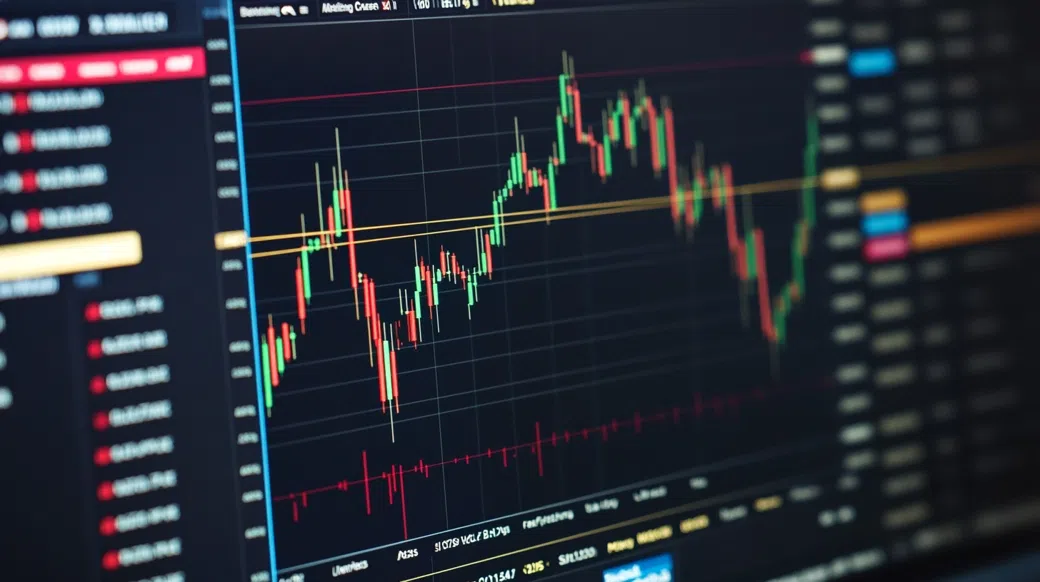
Charting covers the basics well: multiple timeframes, standard indicators (MA, RSI, MACD, Bollinger), and drawing tools for levels and channels. The built-in economic calendar is useful for timing volatility windows, and the news feed is enough for headline awareness, not deep thesis-building. Compared with MT5/cTrader research stacks, the ceiling is lower—fine for execution, less so for systematic signal development. Alerts and watchlists are the tools I ended up using most.
Sentinela AI Account Opening & Minimum Deposit
My signup asked for the usual identity and contact fields, then immediately pushed me into verification prompts rather than leaving KYC as an afterthought. For compliance, the platform requested a passport/ID card photo plus a proof of address (bank statement worked) and marked my status as “pending review” until approval. Verification cleared the same business day, and withdrawal functions remained visible but limited until the checks passed—an approach I prefer as a developer because it reduces edge-case lockups later.
- Minimum Deposit: $200
- Funding Methods: Visa/Mastercard, bank wire, regional e-wallets, and crypto (BTC, USDT)
- Demo Account: $10,000 virtual balance for spread checks and order-flow practice
- Account Types: Standard (spread-only) and Raw/ECN-style (commission + tighter spreads)
For anyone searching the Sentinela AI minimum deposit specifically, the $200 entry point felt consistent with the platform’s “retail but leveraged” positioning. I funded via USDT to test confirmation flow; the wallet address and memo warnings were clearly displayed, and the deposit posted after network confirmations. If you’re planning frequent withdrawals, choose your base currency early to minimize conversion friction.
Sentinela AI Customer Support Review
I hit support with a practical question: “If I use the Raw tier, where do I see the commission per lot, and is it charged on open+close?” Live chat replied in about three minutes with a direct pointer to the instrument/fees page and confirmed the $7 round-turn structure. To check consistency, I opened an email ticket asking about withdrawal timing after KYC; the reply landed roughly nine hours later, stating internal processing typically runs 24–48 hours before the payment rail does its part.
Coverage is positioned as 24/5, which matches a broker built around forex/indices rather than weekend-only markets. Language options looked region-dependent, and I didn’t see a prominently advertised phone line on my dashboard—email plus chat carried the load. On weekends, I received an automated acknowledgement by email, then a human response after the next business window.
Ready to Explore Sentinela AI?
If you’re deciding whether the pricing and platform UX fit your style, start by checking the demo and then verifying region eligibility before funding. I’d also sanity-check spreads during your usual session and confirm withdrawal rails that match your base currency.
Visit Sentinela AISentinela AI Review FAQ
Is Sentinela AI good for beginners?
It can be, as long as you treat leverage with respect and use the demo first. The interface is not cluttered, and risk fields (SL/TP, margin) are visible. Beginners should still expect a learning curve around CFDs, swaps, and stop placement.
Can I trade crypto on Sentinela AI?
Yes, crypto exposure is available via crypto CFDs such as BTC/USD and ETH pairs. You’re trading price movement on margin rather than taking custody of coins. Weekend financing can make long holds pricey, so check the swap/financing panel.
Is Sentinela AI a scam?
No—based on my account test (KYC enforcement, tradable markets loading properly, and a completed withdrawal), it behaved like a functioning broker. The bigger issue is not “scam vs. not,” but the offshore oversight level and what that implies for dispute resolution. So if your question is “is Sentinela AI legit,” my read is yes, with the offshore caveat.
Is Sentinela AI available in the USA?
No, the USA is restricted and accounts are not offered to US residents. This aligns with how many offshore CFD providers handle US regulatory requirements. If you attempt signup, residency/KYC checks are designed to block activation.
How long does a Sentinela AI withdrawal take?
A Sentinela AI withdrawal typically clears internal review in 24–48 hours once KYC is approved. After that, delivery depends on the rail: cards often take 2–5 business days, bank wires 3–7 business days, and crypto can arrive the same day. My USDT test hit my wallet a few hours after approval.
What is the Sentinela AI minimum deposit?
The Sentinela AI minimum deposit is $200 on the accounts I opened. Funding by card, wire, e-wallet, or crypto is supported, but your payment provider may impose its own minimums. If you’re testing execution, the demo is a safer first step than a small live deposit.
Does Sentinela AI have a mobile app?
Yes, there’s a Sentinela AI app for iOS and Android alongside the WebTrader. You can manage orders, deposits, and withdrawals from mobile, and biometric unlock is supported on compatible devices. I’d still recommend enabling 2FA if it’s offered in your region.
Final Verdict: Should You Use Sentinela AI in 2026?
Overall Score: 4.1/5
Security posture is where I place most weight, and this service did the basics right: KYC was enforced early, fees were visible at the instrument level, and my withdrawal completed without games. For active CFD traders, the Raw/ECN-style tier can make sense if you’re sensitive to spreads and you understand commission math. Still, offshore supervision (Seychelles FSA in the disclosures I saw) means you should size risk conservatively and avoid treating this as a bank. If you want a hands-on starting point, open a demo or a small live account on Sentinela AI and validate execution in your usual session. CFDs are leveraged; capital is at risk.
Best for: Traders who want a proprietary multi-asset CFD platform with high leverage and can manage risk tightly. Avoid if: You need Tier‑1 regulation, formal compensation schemes, or you’re prone to over-leveraging.