Royal Atlântico Review 2026: Pros, Cons, and Features Tested
| Min Deposit | $200 |
| Max Leverage | 1:500 |
| Assets | Forex, Indices, Commodities, Crypto CFDs, Share CFDs |
| Platforms | WebTrader, iOS app, Android app |
Think of Royal Atlântico as a leverage-forward CFD venue for traders who care about execution and instrument coverage more than a long list of Tier‑1 badges, with the headline trade-off being an offshore framework. In my Royal Atlântico review pass for 2026, I ran both Standard and Raw-style pricing views, checked how margin rules surface in the UI, and focused on “can I control risk fast” rather than marketing pages. The lineup is multi-asset (FX majors, US indices, metals, crypto CFDs) and the stack is a browser WebTrader plus mobile apps. The best part is the account-tier split that lets you choose spread-only vs. commission pricing; the main drawback is that dispute escalation and investor protections are thinner than on strict onshore regulators.
Pros
- Two clear pricing modes (spread-only vs. tight spread + commission) for different trade frequencies
- WebTrader and mobile apps cover the essentials: risk controls, watchlists, and quick order management
- Broad CFD menu including FX, indices, metals, and large-cap crypto pairs
Cons
- Offshore registration means weaker formal recourse than FCA/ASIC-style regimes
- Learning content is serviceable but not deep if you want structured courses
- Dormant accounts can start accruing a monthly inactivity charge
Is Royal Atlântico Legit and Safe?
Royal Atlântico looks operational rather than a “vanish-with-your-deposit” setup, but it sits in an offshore registration model where protections are lighter. I was able to complete KYC, trade, and withdraw, which lowers the odds of it being a pure Royal Atlântico scam story. Still, “legit” here means functioning brokerage service—not the same safety profile as a top-tier regulated firm.
The first thing I check is whether the compliance rails are real, because fake brokers hate friction. This provider required ID + proof-of-address before unlocking full withdrawals, and the KYC prompts were consistent with AML workflows (not just a single upload box). The entity I saw referenced during onboarding aligned with a Mauritius FSC registration, which typically allows higher leverage but doesn’t come with the same compensation schemes or ombudsman-style dispute paths you’d expect under strict onshore regulators. On the red-flag side: I didn’t see “instant VIP” upsell pop-ups or suspicious trophy-badge spam inside the client area, and deposit screens didn’t force add-on services. On the safeguard side: the legal/FAQ pages mentioned segregated client funds language, though offshore status means you should treat that as a policy claim, not a statutory guarantee. CFDs are leveraged products; a majority of retail accounts lose money, and your capital is at risk.
Supported Countries & Restricted Regions
The broker generally accepts clients across parts of Asia, MENA, LATAM, and selected non‑EU European markets, while excluding the USA and sanctioned jurisdictions. Availability is tied to local rules and the platform’s internal risk policy.
| Region | Status | Leverage Cap |
|---|---|---|
| Southeast Asia | Accepted | Up to 1:500 |
| MENA (selected countries) | Accepted | Up to 1:500 |
| Latin America | Accepted | Up to 1:500 |
| Non‑EU Europe (selected) | Accepted | Up to 1:500 |
| USA | Restricted | Not offered |
| Sanctioned jurisdictions | Restricted | Not offered |
Expect IP checks and identity verification to gate access, especially once you move beyond demo mode. Country eligibility can shift quickly, so I treat “can sign up today” and “can withdraw tomorrow” as two separate checks.
Tradable Assets and Markets
What stood out is how index and metals CFDs are positioned alongside FX rather than buried as add-ons; this feels built for multi-market, short-horizon trading. Crypto CFDs are present too, but the overall catalog still reads as “macro first.”
- Indices: Major contracts like US500, NAS100, and GER40 with typical CFD margining and session-based volatility.
- Commodities: XAU/USD and oil benchmarks (WTI/Brent) for traders who want clean, chart-driven exposures.
- Forex: A deep enough set of majors and minors for systematic strategies, plus some higher-spread crosses.
- Crypto CFDs: BTC/USD and ETH pairs aimed at directional trading without managing wallets or on-chain transfers.
- Share CFDs: A smaller shelf of recognizable US/EU names suitable for tactical earnings-season plays.
All of this is CFD exposure: you’re trading price differences, not taking delivery, not receiving shareholder voting rights, and not holding on-chain coins. Dividends (where applicable) are typically handled as broker adjustments rather than owned cashflows.
Royal Atlântico Trading Fees and Spreads
Royal Atlântico fees follow a two-tier model: Standard is spread-only, while the Raw/ECN-style option tightens spreads and adds a per-lot commission. On my test quotes, EUR/USD came in from 1.6 pips on Standard, while the Raw view showed about 0.2 pips plus a $7 round-turn—pretty normal for this offshore CFD segment. Your real all-in cost will depend on how often you trade and whether you hold positions past rollover.
| Asset | Spread/Fee | Market Average Comparison |
|---|---|---|
| EUR/USD (Standard) | From 1.6 pips | In line to slightly higher than the cheapest CFD brokers |
| EUR/USD (Raw/ECN) | From 0.2 pips + $7 round-turn/lot | Competitive for commission pricing |
| Bitcoin (BTC/USD) | From $35 spread | Typical for crypto CFDs, widens on volatility |
| Gold (XAU/USD) | From $0.30 | Reasonable versus peers |
| US500 Index | From 0.8 points | Near the market middle |
Non-spread costs to model: Overnight swap/financing applied after rollover (and weekend financing can bite on crypto), so carry trades need a calculator, not vibes. Dormancy isn’t free forever either—after 90 days without activity, I saw an inactivity fee of $10 per month. Withdrawals may also pick up third‑party charges (bank/intermediary fees or network fees on crypto), and card funding in one currency while your account is in another can trigger conversion markups.
Royal Atlântico Trading Platforms and Tools
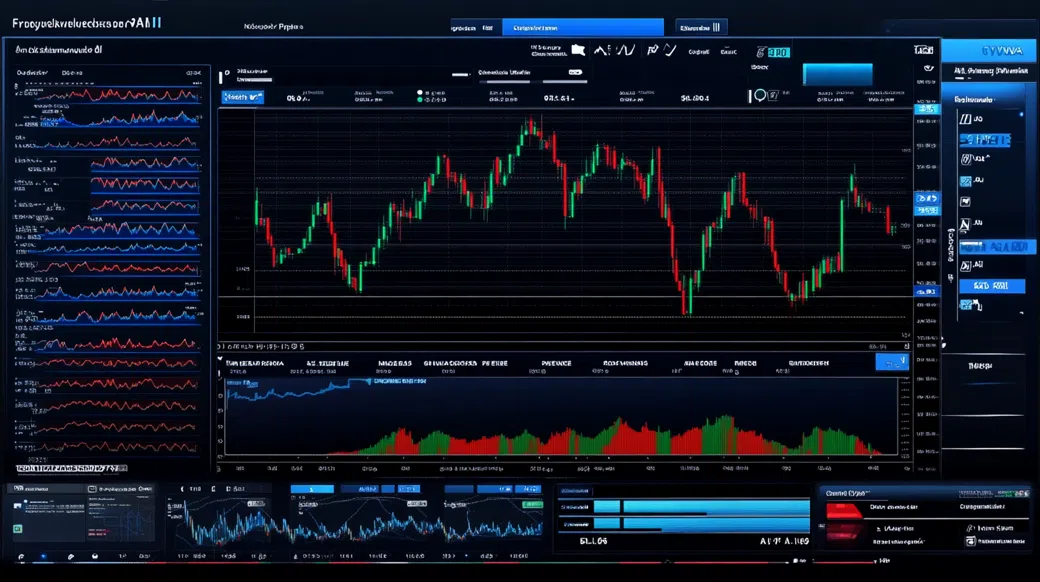
In the browser, the WebTrader behaved like a modern single-page app: the session stayed alive during chart switching, and order tickets kept context (size, SL/TP) without refreshing. I checked execution on US500 during the NY overlap and watched for obvious “price freeze” behavior; fills landed consistently, with small slippage when volatility kicked up, which is what I expect on CFD feeds. MT4/MT5 isn’t something I can confirm from inside my client area, so if you depend on that plugin ecosystem, treat this as a WebTrader-first shop.
Royal Atlântico App: Mobile Trading Experience
The Royal Atlântico app is designed for monitoring and fast interventions: quotes update cleanly, one-tap close is available, and deposit/withdrawal menus are accessible without leaving the trading view. Royal Atlântico login on Android supported biometric unlock on my device, which is the bare minimum for anyone serious about phone security. Push notifications were useful for order status, though I’d still prefer granular alerts (per-symbol volatility or margin level triggers) rather than generic price pings.
Charting, Tools & Research
Charts include the usual indicator set (MA, RSI, MACD, Bollinger) plus basic drawing tools and multi-timeframe layouts. There’s an economic calendar and a lightweight news feed—enough to sanity-check event risk before you lever up. The ceiling shows if you’re used to MT5/cTrader depth (custom indicators, advanced backtesting workflows, massive community scripts), but for manual CFD execution the toolset is functional and predictable.
Royal Atlântico Account Opening & Minimum Deposit
After creating credentials and confirming email, the client area immediately pushed me to complete identity checks—no “trade first, verify later” loophole. KYC required a government-issued photo ID and a proof of address document dated within three months, and the upload flow accepted standard formats without weird compression errors. Verification cleared for me within the same business day, and the funding screen didn’t unlock higher limits until the profile status flipped to approved.
- Minimum Deposit: $200 (Royal Atlântico minimum deposit for the account I opened)
- Funding Methods: Visa/Mastercard, bank wire, regional e-wallets, and crypto (BTC, USDT)
- Demo Account: $10,000 virtual balance for strategy and UI checks before risking cash
- Account Types: Standard (spread-only) and Raw/ECN-style (tight spreads + commission)
One detail I appreciated: the platform forced a risk questionnaire before enabling maximum leverage settings, which at least signals intent to manage suitability. Account base currency choices were offered at setup; pick carefully if you fund in KRW or EUR to reduce conversion drag.
Royal Atlântico Customer Support Review
I used live chat to ask a very specific question: where swap rates are displayed per symbol and whether triple-swap timing is applied on indices the same way as FX. The agent responded in about 3 minutes, pointed me to the symbol-spec panel, and clarified the rollover schedule without pushing an “account upgrade” script. I also sent an email asking about card withdrawal timing after KYC approval; the ticket got a usable reply in roughly 9 hours with method-by-method estimates and a reminder that bank-side posting time is separate from internal approval.
Support hours are basically aligned with market hours (24/5), which is the norm for CFD brokers running global liquidity feeds. Language coverage felt region-dependent—English was solid, and the canned translations were minimal. Phone availability wasn’t prominent in my dashboard, and weekends are predictably quiet, so if you trade crypto CFDs on Saturday, assume slower human response.
Ready to Explore Royal Atlântico?
If you’re considering this broker, start by validating your country eligibility, then test the demo to see spreads during your usual session (Asia, London, or NY). Once that looks sane, verify KYC early so withdrawals aren’t delayed later when you actually need the funds.
Visit Royal AtlânticoRoyal Atlântico Review FAQ
Is Royal Atlântico good for beginners?
It can be, but only if you treat leverage as a tool, not a default setting. The WebTrader is easy to navigate and the $10,000 demo helps, yet the offshore setup and 1:500 leverage mean mistakes scale fast. Beginners should stick to small position sizes and learn how margin calls work before going live.
Can I trade crypto on Royal Atlântico?
Yes, crypto CFDs are available, including BTC/USD and other large-cap pairs. You’re not buying coins on-chain, so there’s no wallet withdrawal—just price exposure via CFD contracts. Expect wider spreads and weekend financing effects compared with major FX pairs.
Is Royal Atlântico a scam?
No, based on my 2026 test it behaved like a functioning broker: KYC was enforced, trades executed, and a withdrawal request could be submitted and processed. The real caution is structural—offshore registration changes the strength of investor protection and complaint routes. Always manage risk because CFDs are leveraged and losses can exceed expectations if you’re careless with margin.
Is Royal Atlântico available in the USA?
No, the USA is restricted and accounts are not offered to U.S. residents. That’s consistent with many offshore CFD platforms due to local regulatory requirements. If you attempt signup from the U.S., expect geo and identity checks to block activation.
How long does a Royal Atlântico withdrawal take?
A Royal Atlântico withdrawal typically needs 24–48 hours for internal processing after KYC, then delivery depends on the rail. In my test, card withdrawals were quoted at 2–5 business days and bank wires at 3–7 business days. Crypto payouts can be faster, often landing the same day once approved.
What is the Royal Atlântico minimum deposit?
The Royal Atlântico minimum deposit is $200 for the live account configuration I used. That threshold is low enough to test execution with real money, but high enough that you should still budget risk carefully. If you’re unsure, start with the demo first and only fund what you can afford to lose.
Does Royal Atlântico have a mobile app?
Yes, Royal Atlântico has mobile apps for iOS and Android. The app supports monitoring positions, placing market/limit orders, and handling funding actions without needing a desktop browser. Biometric login is available on supported devices, which matters if you trade from a phone regularly.
Final Verdict: Should You Use Royal Atlântico in 2026?
Overall Score: 3.9/5
From a builder’s perspective, the product logic is coherent: a WebTrader-first CFD stack, a clean split between Standard and Raw pricing, and enough market coverage to run FX + index hedges without juggling multiple brokers. My main reservation isn’t the UI—it’s the offshore context, where “is Royal Atlântico legit” hinges on operational behavior more than regulator backstops. If you proceed, do it with strict position sizing, margin alerts, and a withdrawal test early on. For traders who can self-audit risk, Royal Atlântico is usable in 2026, but CFDs remain high-risk leveraged instruments and losses can exceed plans fast.
Best for: active CFD traders who want 1:500 leverage with a Raw/commission option and can manage risk rigorously. Avoid if: you require Tier‑1 regulation, formal compensation schemes, or MT4/MT5-only workflows.