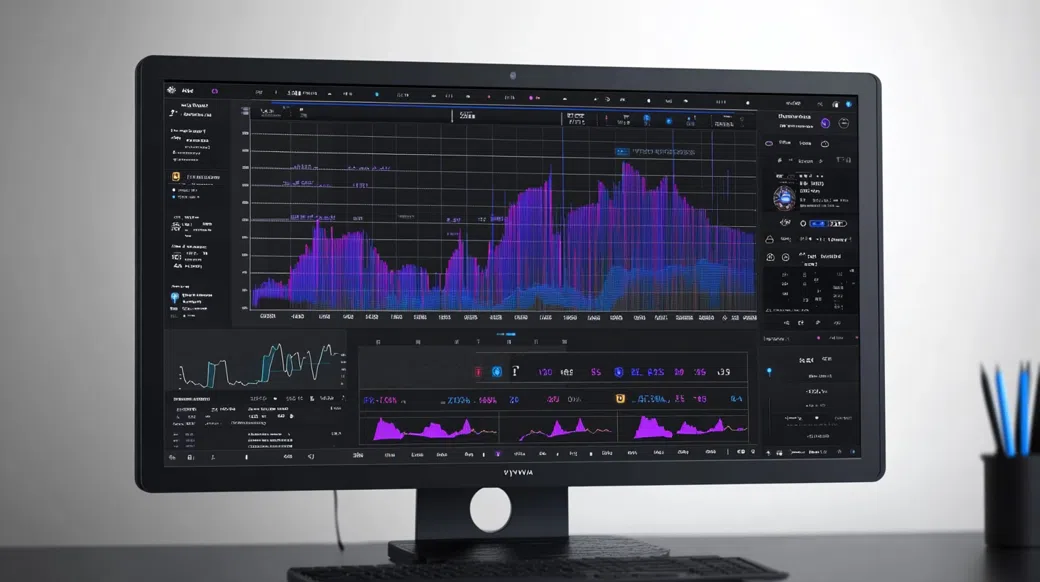
Ren Vekstnor Trading Platform Alternatives 2026: Reliable Options for Online Traders
Security people don’t “feel” their way into a broker. They verify surfaces, failure modes, and who you can sue when something breaks. If you’re evaluating Ren Vekstnor, the public footprint reads like a typical offshore CFD venue: Forex and index/commodity CFDs, crypto CFDs, a proprietary WebTrader plus mobile apps, and headline leverage that can run up to 1:500. The cost profile usually lands around a ~2.0 pip spread on EUR/USD on a standard-style account, with a minimum deposit commonly set near $250. That combination can be convenient for quick access, but it also concentrates risk in the least forgiving places: custody, dispute resolution, and execution quality under fast markets.
This is where Ren Vekstnor alternatives matter. In 2026, US and EU traders have no shortage of regulated brokers offering better-defined investor protections, clearer negative balance rules, and more mature platform stacks (MT4/MT5/cTrader or institutional-grade proprietary terminals). If you’re a developer or systematic trader, the platform question is not cosmetic—order types, logging, and API/automation options shape what you can test and what you can prove. The goal of this guide is to map the realistic trade-offs: safety framework (FCA/ASIC/CySEC/NFA), execution model (market maker vs STP/ECN/DMA), total cost per round-trip trade, and what you actually “own” when you click Buy (CFD exposure versus real shares or exchange-traded futures).
Disclaimer: This article is for informational purposes only and does not constitute investment advice. CFDs and other leveraged products can move against you quickly and may result in losses exceeding your initial margin.
Key Takeaways (TL;DR)
- Offshore-style brokers can advertise 1:500 leverage, but regulated substitutes typically trade that leverage for clearer client-fund rules and enforceable complaints processes.
- Compare costs using round-turn economics (spread + commission + swaps), not “from 0.0 pips” headlines—especially if you scalp or trade news volatility where slippage dominates.
- If you switch platforms, complete KYC at the new broker first, then withdraw using the original funding rail to avoid AML friction and delays.
What Is Ren Vekstnor and How Does Its Trading Platform Work?
From a trader’s perspective, Ren Vekstnor fits the offshore CFD broker pattern: a single account gives you access to leveraged Forex and CFDs (indices, commodities, sometimes shares as CFDs), with crypto often offered as CFDs rather than deliverable coins. The regulatory posture is commonly presented under a Seychelles FSA-style framework rather than a tier‑1 retail regime like the FCA, ASIC, CySEC, or the US NFA/CFTC. That matters because your protections—segregated client funds standards, dispute escalation, and compensation schemes—depend on the rulebook you’re actually under. Brokers similar to Ren Vekstnor often target fast onboarding, high leverage, and a simplified platform experience over deep market access.
Ren Vekstnor Web Trading Platform: Core Features and Tools
The platform stack is typically a proprietary WebTrader with an iOS/Android companion app. Expect basic-to-mid charting: multiple timeframes, common indicators, and the usual drawing tools (trendlines, Fibonacci tools, horizontal levels). Order entry generally covers market and limit/stop orders; more specialized order logic (server-side trailing stops, advanced OCO variants, or robust order auditing) may be thinner than on MT5 or cTrader. The account dashboard usually handles margin overview, open positions, swap charges, and deposits/withdrawals; the key question is how transparent execution reporting is—fills, timestamps, partial fills, and slippage stats are what you want if you debug strategies like you debug code.
Trading Fees, Spreads, and Account Types at Ren Vekstnor
For costs, a standard-style account commonly shows EUR/USD around ~2.0 pips. Some brokers in this category also advertise a “raw” tier where spreads can dip toward 0.0–0.4 pips, but then a commission appears (often roughly $5–$8 per round turn). Overnight financing (swap) is a meaningful line item on CFD positions held past rollover, and it’s easy to underestimate until you run a week of holds. You may also run into non-trading fees—withdrawal processing fees or inactivity charges—so the true cost isn’t just the spread you see on a quiet chart.
When Do Traders Start Looking for Ren Vekstnor Alternatives?
A switch usually starts with a single failed assumption: “I can exit when I want.” The catalysts vary—execution that slips during volatility, funding rules that feel like a maze, or the realization that the safety model is closer to an offshore CFD desk than a tightly supervised broker. For many accounts, the search for Ren Vekstnor alternatives begins when you try to scale position size or automate, and suddenly you need predictable fills, audit trails, and a regulator that answers the phone.
- You need MT4/MT5 or cTrader for an EA/robot workflow, and the current proprietary WebTrader can’t replicate your tooling or logs cleanly.
- A withdrawal gets paused for “additional verification” after profitable trading, and the timeline doesn’t match your cash-management plan.
- Your strategy depends on consistent execution during news events, but spreads widen aggressively and slippage becomes the real P&L driver.
- You want real stocks/ETFs (ownership, corporate actions, voting rights) instead of stock CFDs that expire as a broker-side contract.
How to Choose a Reliable Alternative to the Ren Vekstnor Trading Platform
Think of this as a threat model plus a fit-to-strategy test. The “best” substitute is the one whose legal wrapper, execution path, and cost structure match how you trade—and whose failure modes you can live with. Alternatives to the Ren Vekstnor trading platform should be judged the way you’d evaluate a dependency: verify the source, read the interfaces, and assume edge cases happen at the worst time.
Regulation, Safety, and Investor Protection
Start with the regulator’s public register: FCA (UK), ASIC (Australia), CySEC (Cyprus/EU), and NFA/CFTC (US) are the names that show up in serious due diligence. In the UK, eligible clients may have FSCS coverage up to £85,000; in Cyprus, the ICF can cover up to €20,000 for eligible retail clients. Look for segregated client funds language and whether negative balance protection applies—these are concrete controls, not marketing slogans.
Available Markets and Instruments
Map instruments to your actual objectives. If you only trade EUR/USD and major indices as CFDs, an FX/CFD specialist can be enough. If you want to build a diversified book—real stocks/ETFs, options, futures, bonds—then a multi-asset venue with exchange access matters more than flashy leverage. Platforms like Ren Vekstnor often center CFDs; if you need “own the asset” exposure, pick a broker that supports custody or exchange-traded products.
Trading Costs: Spreads, Commissions, and Other Fees
Calculate round-turn cost per trade: spread in pips + commissions (if any) + expected slippage + swaps for holds. A “raw” account with a $7 round-turn commission can beat a 2.0 pip spread account, but only if your fills are stable and you’re not leaking value in slippage. Also check inactivity fees, deposit/withdrawal fees, and currency conversion costs—these are boring, but they compound.
Platforms, Tools, and Execution Quality
Execution model is the hidden layer: market maker, STP/ECN, or DMA. Each can be acceptable, but you should understand what it implies for requotes, internalization, and slippage behavior. MT4/MT5 and cTrader have mature ecosystems (EAs, indicators, VPS workflows), while proprietary terminals can be clean but opaque. If you’re comparing competitors to Ren Vekstnor, prioritize tools that expose fill data and let you reproduce results.
Support, Education, and Overall User Experience
Support quality shows up at the worst moment: margin calls, platform outages, or KYC issues. Check hours (24/5 vs limited desks), language coverage, and whether ticketing is traceable. Education matters less for experts, but clear product docs matter a lot—especially around swaps, margin policy, and instrument specifications. Mobile parity is also practical: risk controls should not disappear just because you’re away from your desk.
Ren Vekstnor and Different Asset Classes: When Alternatives May Be Better
Ren Vekstnor Forex and CFD Trading
Forex/CFDs are likely the core: roughly a few dozen FX pairs (often 30–50) plus index and commodity CFDs, with leverage that can reach 1:500. That leverage is a double-edged blade; margin calls arrive fast, and overnight financing can quietly dominate returns if you hold positions. The bigger differentiator is execution under stress: widening spreads, stop-outs, and slippage during fast candles. For regulated options versus Ren Vekstnor, Pepperstone and IC Markets are frequently chosen by systematic traders because they support MT4/MT5/cTrader and offer raw-style pricing where spreads can be very tight with a transparent commission model. IG and CMC Markets are strong on index CFDs and risk tools, with mature infrastructure built for large retail flow.
Ren Vekstnor Stock and ETF Trading
If you’re trying to build a long-term portfolio, the key question is whether you’re buying real shares/ETFs or just signing a CFD contract that mirrors the price. With many offshore CFD platforms, stock exposure is commonly CFDs only, meaning no shareholder rights, no direct participation in corporate actions beyond broker handling, and financing costs if you hold leveraged long positions. This is where top substitutes for Ren Vekstnor look very different: Interactive Brokers (IBKR) is built around exchange access—stocks, ETFs, options, futures, and bonds—plus FX for funding and hedging. Saxo Bank also targets multi-asset investors who want listed products alongside CFDs, with platform tooling designed for cross-asset risk management rather than only short-term CFD trading.
Ren Vekstnor Crypto Trading
Crypto on many CFD-first platforms is usually “price exposure,” not deliverable coins. That distinction matters: you can’t withdraw to an on-chain wallet, you don’t control private keys, and you’re exposed to broker credit risk as well as market risk. Crypto CFDs can still be useful for hedging or shorting where allowed, but you should treat it like any other leveraged derivative—spreads can widen, and weekend gaps can trigger margin calls. Among brokers similar to Ren Vekstnor but under tighter supervision, IG and Plus500 are commonly used for crypto CFDs in jurisdictions where they’re permitted, while Saxo offers broad multi-asset tools that can complement a crypto view with FX and rates hedges. If your requirement is on-chain ownership, that’s typically outside the CFD broker category altogether.
Best Ren Vekstnor Alternatives for 2026: Comparison of Top Trading Platforms
Interactive Brokers (IBKR): Key Facts and How It Compares to Ren Vekstnor
Regulation: SEC/FINRA (US), FCA (UK), IIROC (Canada)
Markets: Stocks, ETFs, options, futures, bonds, FX, funds (varies by region)
Fees: FX pricing is generally tight; commissions vary by product/venue; best evaluated per instrument and routing
Platform: Trader Workstation (TWS), IBKR Desktop, web platform, mobile; API access for automation
Best For: Multi-asset builders who want exchange access
Pepperstone: Key Facts and How It Compares to Ren Vekstnor
Regulation: FCA (UK), ASIC (Australia), CySEC (Cyprus), DFSA (Dubai)
Markets: FX and CFDs (indices, commodities, some shares CFDs depending on entity)
Fees: Standard spreads often around ~1.0+ pip on EUR/USD; Raw/Razor-style pricing can run near ~0.0–0.3 pips plus commission (commissions vary by platform/entity)
Platform: MT4, MT5, cTrader, TradingView integration (availability varies), mobile
Best For: Algo traders needing MT4/MT5/cTrader flexibility
CMC Markets: Key Facts and How It Compares to Ren Vekstnor
Regulation: FCA (UK), ASIC (Australia), BaFin (Germany)
Markets: CFDs (FX, indices, commodities, shares CFDs), some regions offer additional investing features
Fees: FX spreads can be competitive (often ~0.7+ pips on EUR/USD on spread-based pricing); other fees depend on market and product
Platform: Proprietary Next Generation platform, mobile apps
Best For: Discretionary CFD traders who want strong charting
Saxo Bank: Key Facts and How It Compares to Ren Vekstnor
Regulation: FCA (UK), MAS (Singapore), DFSA (Dubai)
Markets: Stocks, ETFs, bonds, options, futures, FX, CFDs (product set varies by region)
Fees: Pricing is tiered by account level; FX spreads commonly start around ~0.6+ pips on major pairs on some tiers; commissions apply on listed products
Platform: SaxoTraderGO, SaxoTraderPRO
Best For: Portfolio-oriented traders managing cross-asset risk
OANDA: Key Facts and How It Compares to Ren Vekstnor
Regulation: CFTC/NFA (US), FCA (UK), ASIC (Australia), IIROC (Canada)
Markets: FX (and CFDs in some regions, depending on entity)
Fees: Typically spread-based pricing; EUR/USD often around ~0.6–1.2 pips depending on market conditions and entity
Platform: OANDA web/mobile platforms; MT4 support in some regions
Best For: FX-first traders who prioritize strong regulatory oversight
Plus500: Key Facts and How It Compares to Ren Vekstnor
Regulation: FCA (UK), CySEC (Cyprus), ASIC (Australia), MAS (Singapore)
Markets: CFDs across FX, indices, commodities, shares CFDs, and crypto CFDs where permitted
Fees: Spread-based; typical costs vary by instrument and volatility; best checked live in the platform before trading
Platform: Proprietary Plus500 WebTrader and mobile apps
Best For: Beginners who want a simple CFD interface
Comparison Summary
| Platform | Regulation | Main Markets | Typical Costs | Best For |
|---|---|---|---|---|
| Interactive Brokers (IBKR) | SEC/FINRA, FCA, IIROC | Real stocks/ETFs, options, futures, bonds, FX | Product-based commissions; FX generally tight vs CFD-only venues | Multi-asset builders who want exchange access |
| Pepperstone | FCA, ASIC, CySEC, DFSA | FX + CFDs | ~1.0+ pip (Standard) or ~0.0–0.3 pip + commission (Raw-style) | Algo traders needing MT4/MT5/cTrader flexibility |
| CMC Markets | FCA, ASIC, BaFin | CFDs (FX, indices, commodities, shares CFDs) | Often ~0.7+ pips on EUR/USD (spread-based); varies by market | Discretionary CFD traders who want strong charting |
| Saxo Bank | FCA, MAS, DFSA | Stocks/ETFs, options, futures, FX, CFDs, bonds | Tiered spreads (often ~0.6+ pips on majors) + commissions on listed assets | Portfolio-oriented traders managing cross-asset risk |
| OANDA | CFTC/NFA, FCA, ASIC, IIROC | FX (CFDs in some regions) | Spread-based, often ~0.6–1.2 pips on EUR/USD depending on conditions | FX-first traders who prioritize strong regulatory oversight |
| Plus500 | FCA, CySEC, ASIC, MAS | CFDs (FX, indices, commodities, shares CFDs, crypto CFDs where allowed) | Spread-based; instrument-dependent and volatility-sensitive | Beginners who want a simple CFD interface |
How to Safely Move from Ren Vekstnor to Another Broker
Migration is not a “close account, open new account” chore; it’s a controlled cutover with capital at risk the whole time. Treat it like rotating keys in production: verify the new environment, reduce blast radius, then move funds. If you’re exiting an offshore setup such as Ren Vekstnor, assume extra scrutiny on withdrawals and plan for a buffer period where you’re flat and liquid.
- Confirm the new broker’s authorization on the regulator’s own site (FCA Register, ASIC Connect, CySEC listings, or NFA BASIC) and match the legal entity name—not just the brand.
- Create the new account and finish KYC/AML early (ID + proof of address). Many verifications clear fast, but only if your documents match your funding method.
- Reduce exposure on the old account: close open CFD positions rather than expecting a transfer. Most retail brokers do not port positions between firms.
- Request withdrawals back to the original deposit rail (same card/bank/e-wallet) because many brokers enforce that path under AML rules.
- Export trade history, statements, and funding records before you lose dashboard access; you’ll want them for taxes, performance review, and dispute evidence.
Ready to Explore Ren Vekstnor?
If you’re still evaluating the platform, review current eligibility in your jurisdiction, confirm the product list (CFDs vs real assets), and compare live trading conditions against the best Ren Vekstnor alternatives 2026 in this guide. Small tests beat big assumptions.
Visit Ren VekstnorFAQ: Ren Vekstnor Alternatives and Trading Platforms
What is the best alternative to Ren Vekstnor in 2026?
The best option depends on whether you need exchange-traded products or just FX/CFDs. For real stocks/ETFs plus derivatives, Interactive Brokers (IBKR) is hard to beat; for FX/CFD automation with MT4/MT5/cTrader, Pepperstone is a common pick. Traders who want a simpler CFD-only workflow often shortlist Plus500, while CMC Markets and Saxo Bank sit in the middle with strong platforms and broader market coverage.
Is Ren Vekstnor a safe broker/platform?
Ren Vekstnor appears to operate under an offshore framework (commonly presented in the Seychelles FSA category) rather than a tier‑1 retail regulator like the FCA, ASIC, CySEC, or NFA. That doesn’t automatically mean “scam,” but it does mean fewer formal protections and weaker dispute leverage compared with regulated options. If safety is your priority, weight segregation of client funds, negative balance protection terms, and the regulator’s enforcement track record above leverage and bonuses.
Can I trade stocks, futures, or crypto with Ren Vekstnor?
Ren Vekstnor is typically positioned around Forex and CFDs, and crypto exposure—if offered—is usually via crypto CFDs rather than deliverable coins. Stock/ETF access is often CFD-based (no ownership), and listed futures are more commonly available at multi-asset brokers like IBKR or Saxo Bank. If you need real equities or exchange-traded futures, focus on Ren Vekstnor alternatives that provide direct market access instead of contracts-for-difference only.
What should I check before switching from Ren Vekstnor to another platform?
Before moving, verify the new broker’s license on the official register and confirm the exact legal entity that will hold your account. Next, model your total cost (spread + commission + swaps + expected slippage) on your typical trade size, then test with small orders to see fill behavior. Finally, complete KYC first and plan withdrawals to the original funding method; for reference, you can review the current onboarding flow at Ren Vekstnor and compare it to the regulated brokers listed above.
About the Author: Samuel White is a Seoul-based smart contract developer who approaches trading platforms the same way he approaches production systems: verify, isolate risk, and assume edge cases will happen. He writes from an experienced trader’s perspective with a focus on execution mechanics, regulatory clarity, and operational security over hype.