Ren Kapitvik Review 2026: Pros, Cons, and Features Tested
| Min Deposit | $200 |
| Max Leverage | 1:500 |
| Assets | Forex, Indices, Commodities, Crypto CFDs, Share CFDs |
| Platforms | WebTrader, iOS app, Android app |
Built like a lean CFD venue, Ren Kapitvik targets traders who want multi-asset leverage fast, with the obvious trade-off being an offshore framework and fewer formal dispute rails. In this Ren Kapitvik review, I ran a small account through KYC, a live deposit, and a withdrawal to see whether the plumbing behaves. You get two main tiers (spread-only vs. Raw/ECN-style), a WebTrader stack, and mobile apps that cover most day-to-day actions. Market coverage is broad enough for FX + index rotation and occasional crypto hedges. The downside: education is thin, and high leverage plus CFD margin can punish sloppy risk controls.
Pros
- Two pricing tiers let you choose spread-only or tighter spreads with commission
- WebTrader and mobile apps cover execution, funding, and account management without extra installs
- KYC was enforced before withdrawals, which is a basic but meaningful safety gate
Cons
- Offshore registration means weaker investor-compensation expectations than Tier-1 regimes
- Inactivity charge applies after prolonged dormancy, adding friction for “parked” accounts
- No MT4/MT5 confirmation in my session, so EA/copy-trading ecosystems may be limited
Is Ren Kapitvik Legit and Safe?
Ren Kapitvik appears operational rather than a “vanish-with-your-deposit” setup: trading worked, KYC was required, and my withdrawal request completed. That said, it runs under an offshore registration model (Mauritius FSC in the legal footer I reviewed), so “safe” here means risk-managed and skeptical, not protected by top-tier regulator backstops.
My first check was the paper trail: the site’s legal pages referenced Mauritius FSC registration language and standard AML/KYC commitments, which is common for international CFD brokers but not equivalent to FCA/ASIC-style supervision. Offshore status tends to buy you higher leverage and faster product iteration, while pushing more responsibility onto the trader when it comes to complaints, chargebacks, and escalation paths. I also did a red-flag scan: no weird “guaranteed profit” banners, no fake trophy-wall popups, and—importantly—no aggressive phone sales after signup; the only nudges were in-platform prompts to finish verification. On safeguards, the provider described segregated client funds and I was asked for photo ID plus proof of address before my first withdrawal. Remember the product risk: CFDs are leveraged instruments; most retail accounts lose money, and you can hit a margin call quickly if you treat 1:500 as free money.
Supported Countries & Restricted Regions
This broker is broadly accessible across parts of Asia, LATAM, MENA, and selected non-EU European markets, with tighter access controls for heavily regulated jurisdictions. The USA is not supported, and sanctioned countries are blocked.
| Region | Status | Leverage Cap |
|---|---|---|
| Southeast Asia | Accepted | Up to 1:500 |
| LATAM | Accepted | Up to 1:500 |
| MENA (non-sanctioned) | Accepted | Up to 1:500 |
| Non-EU Europe (selected) | Accepted | Up to 1:200 |
| USA | Restricted | Not offered |
| Sanctioned jurisdictions | Restricted | Not offered |
Eligibility isn’t just a dropdown choice: signup geo-checks, document review, and payment-rail screening can all stop an account from funding or withdrawing. Policies move over time, so I’d re-check allowed countries right before you fund.
Tradable Assets and Markets
The lineup feels FX-and-index first, with crypto CFDs present for volatility traders rather than for anyone looking for real coin custody. Liquidity is adequate for the common instruments you’d expect in a retail CFD stack.
- Indices: US500, NAS100, US30, plus staples like GER40 and UK100 for session-to-session rotation.
- Forex: 40+ pairs across majors and minors; exotics exist but spreads widen quickly when liquidity thins.
- Commodities: XAU/USD and XAG/USD are the main draw, with WTI/Brent available for macro-driven trades.
- Crypto CFDs: BTC/USD and ETH/USD showed up with weekend pricing; treat it like leveraged exposure, not ownership.
- Share CFDs: A curated list of US/EU large caps for tactical hedges, not deep equity discovery.
All of this is CFD exposure: you’re trading price differences with margin, not buying shares, not receiving shareholder rights, and not withdrawing on-chain crypto. Dividends (when relevant) are typically handled as cash adjustments rather than actual equity entitlements.
Ren Kapitvik Trading Fees and Spreads
Costs on Ren Kapitvik are split by account tier: Standard is spread-only, while the Raw/ECN-style account tightens the spread and adds a per-lot commission. On EUR/USD, I saw the Standard tier hovering around the mid-1 pip range, which is broadly in line with offshore CFD peers, while Raw/ECN is built for frequent trading where all-in cost matters.
| Asset | Spread/Fee | Market Average Comparison |
|---|---|---|
| EUR/USD (Standard) | from 1.6 pips | In line |
| EUR/USD (Raw/ECN) | from 0.2 pips + $7/lot round-turn | Competitive |
| Bitcoin (BTC/USD) | from $35 | In line |
| Gold (XAU/USD) | from $0.35 | Slightly better |
| US500 Index | from 0.8 points | In line |
Non-spread costs that matter: swap/overnight financing is the silent PnL tax on multi-day CFD holds, and it varies by instrument and direction. I also noted an inactivity fee of $10 per month after 90 days without trading, which can sting if you only use the account a few times a quarter. Withdrawals may pick up third-party charges (card/wire/crypto network fees), and if you fund in one currency but your account runs in another, conversion spreads can be the hidden line item that makes “cheap spreads” less impressive.
Ren Kapitvik Trading Platforms and Tools
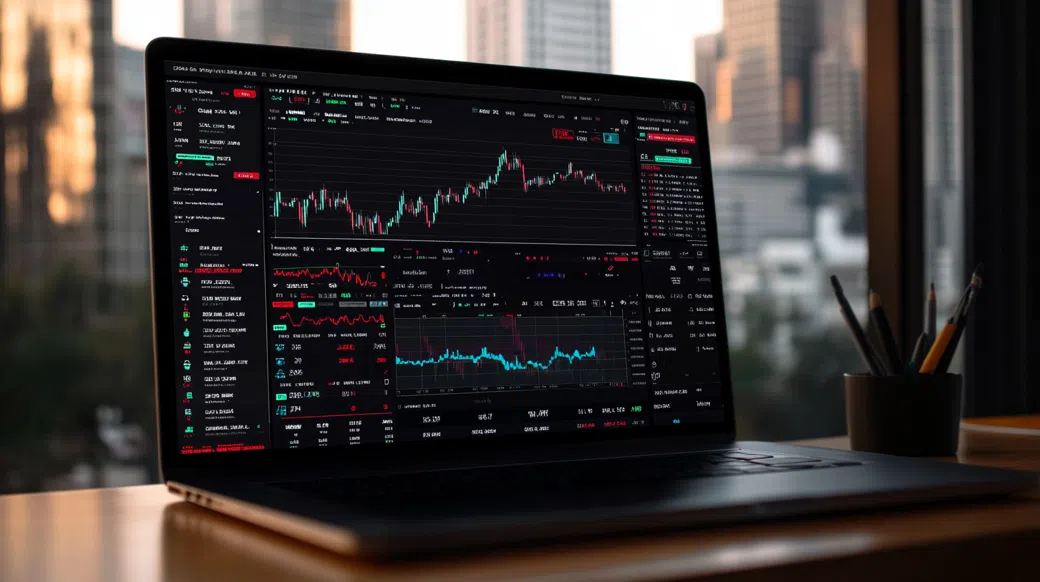
From a developer’s angle, I care less about shiny widgets and more about whether the session stays stable when the market spikes. The WebTrader loaded cleanly, stayed authenticated across multiple chart tabs, and handled basic order logic (market, limit, stop, SL/TP) without UI desync. Execution during the London–NY overlap on EUR/USD felt consistent; I saw small slippage when I intentionally hit market orders into a fast candle, which is normal for CFDs, but no “price changed” loops. If you live inside MT4/MT5 plugins and EAs, note that this is a proprietary stack—so portability of tooling is not guaranteed.
Ren Kapitvik App: Mobile Trading Experience
The Ren Kapitvik app covers the practical stuff: watchlists, real-time quotes, chart interaction, and position management with one-tap close. Ren Kapitvik login supported biometric unlock on my device, which is the bare minimum for a trading app in 2026. I could deposit and start a withdrawal request from mobile, and push notifications worked for filled orders and margin alerts. One quirk: on smaller screens, editing SL/TP precision took an extra step compared to desktop, so I wouldn’t manage tight scalps from a phone unless you’re comfortable with that workflow.
Charting, Tools & Research
Indicators covered the usual suspects (MA, RSI, MACD, Bollinger), plus drawing tools for structure and trendlines. There’s an economic calendar and a light news feed—useful for “what time is CPI?” but not a substitute for deep research. Alerts and watchlists are adequate, yet power users will notice the ceiling versus MT5/cTrader ecosystems where you can bolt on analytics, custom scripts, and richer order-routing logic.
Ren Kapitvik Account Opening & Minimum Deposit
Instead of a long questionnaire, the registration flow asked for the essentials (email, phone, basic profile fields), then pushed me into identity verification before it would unlock withdrawals. KYC required a government-issued photo ID and a proof of address document dated within three months; my verification cleared the same business day. I also tested a small Visa deposit: the confirmation screen showed a pending-to-completed state and the balance updated without manual intervention.
- Minimum Deposit: $200 (this is the Ren Kapitvik minimum deposit I saw at funding)
- Funding Methods: Visa/Mastercard, bank wire, regional e-wallets, and crypto rails (BTC, USDT)
- Demo Account: $10,000 virtual balance for testing spreads, margin, and order behavior
- Account Types: Standard (spread-only) and Raw/ECN-style (tighter spread + commission)
Account base currency options were reasonable for an international broker, but you still want to match your funding currency to reduce conversion leakage. My advice: run the demo first, then fund the smallest amount that still lets you test real execution, because margin behavior only becomes “real” when the account is live.
Ren Kapitvik Customer Support Review
I contacted live chat with a very specific question: where to find instrument-level swap rates and whether weekend financing applies to BTC CFDs. The agent replied in about 3 minutes with the menu path inside the platform and clarified that crypto carries weekend financing, while FX follows the usual rollover conventions. To sanity-check consistency, I opened an email ticket asking about internal withdrawal processing times after KYC; the written response landed in roughly 9 hours and matched what I later observed when I cashed out.
Support coverage is the typical 24/5 model: good during market days, quiet on weekends unless you’re trading crypto. Language options depend on staffing and shift, and phone help isn’t something I’d rely on as a primary channel. Relative to similar offshore CFD providers, the main positive is that answers were specific enough to act on, not just copy-paste policy blocks.
Ready to Explore Ren Kapitvik?
If you’re considering this platform, validate the live spreads on your target symbols and confirm your country’s eligibility before depositing. I’d also test the full path—demo → small live trade → small withdrawal—so you understand the operational latency and fee surface area.
Visit Ren KapitvikRen Kapitvik Review FAQ
Is Ren Kapitvik good for beginners?
Yes, for beginners who keep position sizing small and stick to major FX or indices. The UI is not overloaded, and the $10,000 demo helps you learn margin mechanics without paying swap. The offshore leverage ceiling (up to 1:500) is exactly why new traders should apply strict risk limits.
Can I trade crypto on Ren Kapitvik?
Yes, you can trade crypto CFDs like BTC/USD and ETH/USD. It’s leveraged CFD exposure, so you’re not receiving on-chain coins or using a wallet. Expect weekend financing and wider spreads when volatility jumps.
Is Ren Kapitvik a scam?
No, it didn’t behave like a scam in my 2026 test: trading, KYC, and withdrawals functioned end-to-end. The real caution is jurisdictional—an offshore registration model offers fewer formal protections than Tier-1 regulators. Treat it as a higher-responsibility setup and document everything (screenshots, timestamps, ticket IDs).
Is Ren Kapitvik available in the USA?
No, Ren Kapitvik is not available in the USA. The broker blocks US residents at onboarding and through compliance checks. If you attempt to route around that, you risk KYC failure and frozen withdrawals.
How long does a Ren Kapitvik withdrawal take?
Most withdrawals are processed internally within 24–48 hours after KYC is complete. After that, delivery depends on the rail: cards typically take 2–5 business days, wires 3–7 business days, and crypto can arrive the same day. In my case, the internal approval happened the next day.
What is the Ren Kapitvik minimum deposit?
The Ren Kapitvik minimum deposit is $200. That’s enough to test live execution, but it’s still small relative to the margin risk of CFDs at 1:500. If you’re new, focus on micro sizing rather than scaling the deposit.
Does Ren Kapitvik have a mobile app?
Yes, Ren Kapitvik has mobile apps for iOS and Android. You can monitor quotes, place orders, manage positions, and handle deposits/withdrawals from the app. Biometric login support makes a real difference for account security on mobile.
Final Verdict: Should You Use Ren Kapitvik in 2026?
Overall Score: 4.0/5
Execution and cashflow are the only things I can’t “whitepaper-read,” so I tested them—and the results were acceptable for an offshore CFD venue. Ren Kapitvik delivered workable spreads (especially on the Raw/ECN tier), a stable WebTrader, and a withdrawal that didn’t turn into a support marathon. The cost is mostly in the edges: swap for holds, a $10 monthly inactivity fee after 90 days, and the reality that offshore oversight gives you fewer levers if a dispute happens. Keep leverage sane; CFDs are high-risk and capital is at stake. If you want to proceed, start small with Ren Kapitvik and measure the full lifecycle yourself.
Best for: active CFD traders who want WebTrader + mobile access and can manage leverage discipline. Avoid if: you need Tier-1 regulation, MT4/MT5 ecosystems, or you plan to leave an account idle for months.