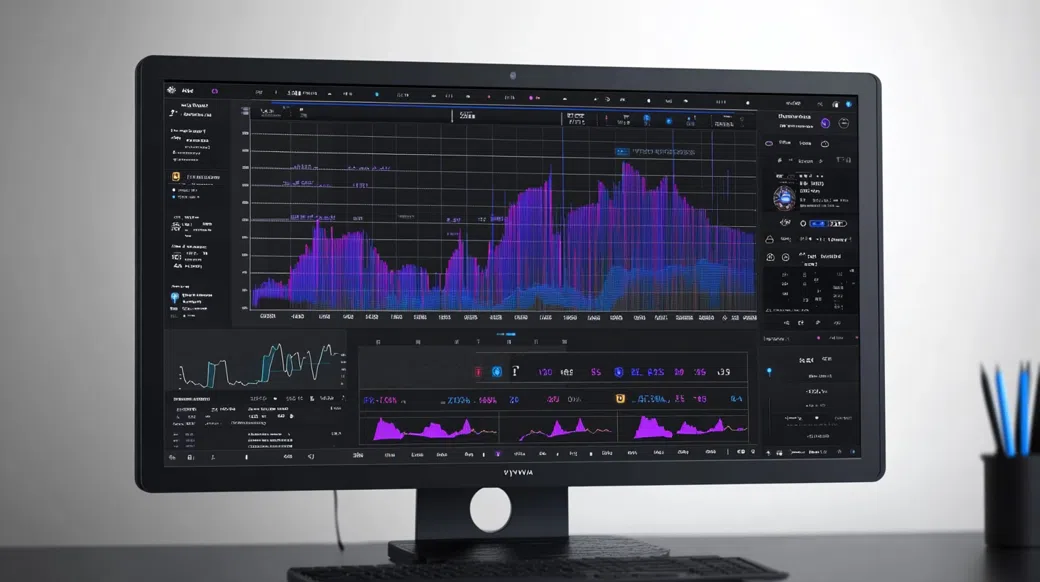
Qynx AI Review 2026: Pros, Cons, and Features Tested
| Min Deposit | $200 |
| Max Leverage | 1:500 |
| Assets | Forex, Indices, Commodities, Crypto CFDs, Share CFDs |
| Platforms | Proprietary WebTrader + iOS/Android apps |
Built like a typical offshore CFD venue with a heavy “fast access” bias, Qynx AI targets traders who want multi-asset leverage and can tolerate thinner regulatory guardrails as the price of that flexibility; I’d treat it as a tactical tool, not a custody solution. After opening a verified profile and running small test positions, I saw two main tiers (spread-only Standard and a tighter Raw/ECN-style option) that map cleanly to beginner vs. active workflows. Coverage leans broad—FX and indices first, with crypto CFDs for weekends—while the stack stays proprietary (WebTrader plus mobile). The upside is quick deployment and sensible order controls; the drawback is that dispute escalation and investor protections are not the same as Tier‑1 regimes. For the platform overview and onboarding flow, start at Qynx AI.
Pros
- Two pricing modes (spread-only and commission-based) that make costs easier to model
- WebTrader is lightweight, runs well in-browser, and includes the core indicators most discretionary traders actually use
- Crypto CFDs and major indices extend trading beyond FX sessions
Cons
- Offshore registration model means weaker formal recourse than top-tier regulated brokers
- Education/research is serviceable but shallow for self-directed learning
- Inactivity charges can accumulate if you park an account and forget it
Is Qynx AI Legit and Safe?
Qynx AI looked operational and tradeable in my hands-on checks, not like a “vanish after deposit” setup. That said, it operates under an offshore framework, so “legit” here means functioning brokerage service—not Tier‑1 level client protections.
Seychelles FSA-style offshore registration is the posture presented in the legal/footer flow I reviewed, and that choice shows up where it matters: higher leverage access, fewer formal compensation mechanisms, and a steeper hill if you ever need a regulator-led dispute route. My red-flag scan focused on the things scammers usually get wrong—KYC avoidance, aggressive “account manager” pressure, and gimmicky awards—none of which dominated my test window; identity checks were enforced before withdrawals, and the risk disclosures weren’t hidden behind dark UI. The provider also states segregated client funds language in its policy pages, though offshore wording isn’t the same as audited guarantees. One more reality check: CFDs are leveraged products, and most retail accounts lose money; margin calls and slippage can happen quickly around news.
Supported Countries & Restricted Regions
This broker generally accepts clients across parts of Asia, MENA, LATAM, and selected non‑EU European markets, while the USA and sanctioned jurisdictions are blocked.
| Region | Status | Leverage Cap |
|---|---|---|
| Southeast Asia (selected) | Accepted | Up to 1:500 |
| MENA (selected) | Accepted | Up to 1:500 |
| Latin America (selected) | Accepted | Up to 1:500 |
| Non‑EU Europe (selected) | Accepted | Up to 1:500 |
| USA | Restricted | Not offered |
| Sanctioned jurisdictions | Restricted | Not offered |
In practice, access is policed via signup declarations plus KYC/AML checks (document country, proof-of-address), and IP/location signals can trigger extra review. Eligibility is a moving target in offshore brokerage, so confirm your jurisdiction inside the account portal before funding.
Tradable Assets and Markets
Instead of going ultra-deep in a single niche, the platform is built as a compact multi-asset CFD menu where majors and headline instruments get the most attention. Liquidity felt best on FX majors and US indices during the NY overlap.
- Indices: US500, NAS100, US30 and a few Europe benchmarks (e.g., GER40) for macro-driven trading and intraday momentum.
- Forex: 40+ pairs across majors/minors, with a smaller set of exotics—good for session-based strategies, not exotic carry hunting.
- Commodities: XAU/USD and oil contracts (WTI/Brent) where spreads stayed relatively stable outside volatile headlines.
- Crypto CFDs: BTC and ETH plus a handful of large caps; pricing follows the CFD model with financing considerations.
- Share CFDs: A curated list of US/EU large caps for event trading (earnings, sector rotation), not broad portfolio building.
All of the above is CFD exposure: you’re trading price movement with leverage, not taking delivery of assets. That means no shareholder voting rights, and crypto positions are not on-chain holdings you can withdraw to a wallet.
Qynx AI Trading Fees and Spreads
Costs are organized around two account styles: Standard (spread-only) and a Raw/ECN-style tier (tight spreads plus a per-lot commission). On my test tickets, the Raw option reduced spread variability, while the Standard tier priced closer to the mid-range of offshore CFD peers.
| Asset | Spread/Fee | Market Average Comparison |
|---|---|---|
| EUR/USD (Standard) | From 1.6 pips | In line with typical offshore CFD pricing |
| EUR/USD (Raw/ECN) | From 0.2 pips + $7 round-turn/lot | Competitive for active trading if volume is consistent |
| Bitcoin (BTC/USD) | From $35 spread (variable) | About average; widens on weekend volatility |
| Gold (XAU/USD) | From $0.25 | Generally reasonable versus multi-asset CFD brokers |
| US500 Index | From 0.8 points | Near market norms for CFD indices |
Non-spread costs that matter for holding time: Overnight swap/financing is the quiet line item that will dominate if you run multi-day positions, and weekend financing on crypto can stack quickly. The platform also lists a $10/month inactivity fee after 90 days of dormancy, which is the kind of thing developers miss because it’s not in the ticket cost. Withdrawal rails may add third-party charges (bank fees, card processor FX), and multi-currency deposits can introduce conversion spread at either the broker or your payment provider.
Qynx AI Trading Platforms and Tools
On desktop, the WebTrader behaved like a modern single-page app: sessions stayed stable through repeated tab switches, and order tickets exposed the essentials (market/limit/stop, SL/TP, partial close). I intentionally tested a fast market order on EUR/USD during the London open; execution was acceptable with a small amount of slippage on a quick candle, but no obvious “price freeze” behavior. If you live inside MT4/MT5 plugin ecosystems (EAs, custom indicators, trade copiers), note that this service is proprietary-first—so portability is limited even if the UI is clean.
Qynx AI App: Mobile Trading Experience
The Qynx AI app mirrored the browser layout closely, which reduced cognitive load when switching screens; Qynx AI login supported biometric unlock on my device and stayed authenticated across restarts. Quotes updated in real time, and I could place stop/limit orders, adjust SL/TP with drag handles, and close positions with a single tap from the positions list. Funding and withdrawal menus are reachable from mobile, which is convenient, but it also means you should lock down device security (PIN/biometrics, OS updates) because your wallet controls are effectively in your pocket.
Charting, Tools & Research
Charts include the expected indicator kit (MA, RSI, MACD, Bollinger) plus drawing tools and multi-timeframe views, and watchlists are quick to build for session baskets. There’s an economic calendar and a lightweight news feed, but it’s not a substitute for dedicated research terminals or the broader marketplace you get around MT5/cTrader communities. Alerts exist, yet they’re best used as “heads-up” triggers rather than full automation.
Qynx AI Account Opening & Minimum Deposit
First impression: the signup form asked for the basics (email, phone, country, password), then pushed me into an identity workflow before I could request a withdrawal. KYC required a government photo ID plus proof of address (bank statement/utility bill dated within 3 months), and my verification cleared the next business day after an automated document read plus a manual check. AML prompts were standard: funding source declaration and a reminder that third‑party deposits are rejected.
- Minimum Deposit: $200 (this is the Qynx AI minimum deposit I saw at checkout)
- Funding Methods: Visa/Mastercard, bank wire, regional e-wallets, and crypto (BTC, USDT)
- Demo Account: $10,000 virtual balance for UI testing and sizing rules without real exposure
- Account Types: Standard (spread-only) and Raw/ECN-style (tighter spread + $7 round-turn commission/lot)
Depositing via USDT felt like the least friction, and the ledger updated after network confirmations with a clear timestamp and reference ID. If you want to treat the platform like code, not marketing, I recommend running a demo first, then a small funded account to verify swaps, contract specs, and margin behavior on your instruments of choice; my account portal checks were done through Qynx AI.
Qynx AI Customer Support Review
I tested support with a practical trader question: “Where can I see the exact swap rate per symbol before holding overnight, and does it change on triple-swap day?” Live chat replied in about 3 minutes with the menu path to contract specs and clarified the day-of-week multiplier; the explanation was accurate enough to reconcile against the position’s financing line. I followed up by email asking about withdrawal sequencing after KYC, and the ticket came back in roughly 9 hours with method-specific timelines and a reminder about name matching.
Coverage is broadly what you’d expect in this segment: 24/5 live chat for market days, email/contact form for anything that needs a paper trail, and patchy phone availability depending on region. Language support skewed toward English in my interaction, with templated but usable answers. Weekends are thinner—crypto trades still run, but staffing is not the same as a Tier‑1 shop.
Ready to Explore Qynx AI?
If you’re considering this broker, verify your country eligibility, read the contract specs for your main symbols, and compare Standard vs. Raw pricing using small sizes first. A demo run can confirm platform fit, while a controlled deposit lets you sanity-check swaps and the withdrawal workflow.
Visit Qynx AIQynx AI Review FAQ
Is Qynx AI good for beginners?
It can be, provided you keep leverage low and start with the demo. The interface is less intimidating than MT-style terminals, and the Standard account’s spread-only model is easier to understand. Beginners should still expect CFD risks: fast losses are possible when margin is involved.
Can I trade crypto on Qynx AI?
Yes, crypto is offered as CFDs (not spot coins). BTC/USD and ETH are the core listings, with spreads that widen during volatility and weekends. Because it’s CFD exposure, you can’t transfer coins to an external wallet.
Is Qynx AI a scam?
No—based on my 2026 test, it behaved like a functioning offshore CFD broker with KYC and working deposits/withdrawals. The more relevant question is protections: offshore registration typically means fewer formal avenues for complaints than Tier‑1 regulation. Treat position sizing and counterparty risk accordingly.
Is Qynx AI available in the USA?
No, the USA is restricted. If you attempt to register from a blocked jurisdiction, eligibility checks at signup or KYC can stop the account from being funded or verified. Always confirm your residency status inside the portal before depositing.
How long does a Qynx AI withdrawal take?
Most withdrawals are processed internally within 24–48 hours after KYC is complete. After that, delivery depends on the rail: cards typically land in 2–5 business days, bank wires in 3–7 business days, and crypto can arrive the same day once broadcast. The Qynx AI withdrawal timeline can stretch during compliance reviews or banking holidays.
What is the Qynx AI minimum deposit?
The minimum deposit is $200. You can fund via card, wire, selected e-wallets, or crypto like USDT depending on your region. If you’re testing execution, consider depositing only what you’re willing to risk while you validate spreads and swaps.
Does Qynx AI have a mobile app?
Yes, it offers iOS and Android apps alongside the WebTrader. The mobile build supports order placement, position management, and account functions like deposits and withdrawals. Use device-level security (biometrics + strong passcode) since the app is effectively your trading and funding console.
Final Verdict: Should You Use Qynx AI in 2026?
Overall Score: 4.0/5
From a “ship code, verify everything” perspective, Qynx AI did the basics correctly: enforced KYC before cash-out, kept the WebTrader stable during session volatility, and offered a clear split between spread-only and Raw/ECN pricing. The platform is not trying to be MT5-with-every-plugin; it’s a lean CFD terminal that’s easy to audit with small test trades and a controlled withdrawal. Offshore status remains the main constraint—high leverage (up to 1:500) is attractive, but protections are lighter than top-tier regulators. If you trade, remember CFDs put capital at risk and losses can exceed expectations if you misuse margin. For current terms, I’d re-check directly at Qynx AI.
Best for: active CFD traders who want a proprietary WebTrader, can price-check spreads/swaps, and keep strict risk limits. Avoid if: you need Tier‑1 regulation, deep research/education, or long-term investing with ownership rights.