Qvantaro Review 2026: Pros, Cons, and Features Tested
| Min Deposit | $200 |
| Max Leverage | 1:500 |
| Assets | Forex CFDs, Index CFDs, Commodity CFDs, Crypto CFDs, Share CFDs |
| Platforms | Proprietary WebTrader + iOS/Android mobile apps |
A multi-asset CFD broker built around a proprietary WebTrader, Qvantaro suits traders who want leverage and a simple two-tier pricing setup, with the catch being an offshore framework. In my test account I could toggle between a spread-only Standard profile and a tighter-spread Raw/ECN-style profile depending on how aggressively I was scalping. Market coverage leans practical: majors in FX, the big index contracts, and the usual crypto tickers instead of niche tokens. The UI is clean enough to trade from a laptop or phone without hunting through menus, and the minimum deposit is not extreme. The main drawback is governance—dispute escalation and investor protections won’t look like a Tier‑1 venue. Qvantaro
Pros
- Two pricing modes (spread-only vs. raw spread + commission) that map well to different trade frequencies
- WebTrader and mobile app feel consistent; basic risk controls (SL/TP) are easy to set
- Broad CFD menu covering FX, indices, metals/energy, and large-cap crypto
Cons
- Offshore registration means fewer formal backstops than top-tier regulators
- Education/research is functional but not deep for systematic traders
- Dormant accounts can incur a monthly inactivity fee after a period of no trading
Is Qvantaro Legit and Safe?
Qvantaro looks operational and tradeable rather than a “vanish-with-your-deposit” setup, but it is not the same safety profile as a Tier‑1 regulated broker. The biggest caveat is that it runs under an offshore registration model, so protections and dispute routes are thinner.
Seychelles FSA registration (as presented in the legal footer and onboarding docs) usually implies flexibility—higher leverage and faster product rollout—but also weaker compensation schemes and less predictable escalation if something goes wrong. On my run-through, the platform did enforce KYC/AML: it locked withdrawals until I uploaded a passport photo page plus a recent address document dated within three months. I also looked for the classic red flags: “fake trophy” badges, pressure calls, or a withdrawal screen that loops forever. I didn’t get those signals; the withdrawal form produced a trackable request ID, and support didn’t push me toward any bonus hook. The site does talk about segregated client funds, though in offshore venues that’s more a policy claim than a legally standardized guarantee. Remember the product risk too: CFDs use leverage, margin calls happen fast, and most retail accounts lose money.
Supported Countries & Restricted Regions
This broker is generally accessible across many international regions, especially parts of Asia, MENA, and Latin America, while the USA and sanctioned jurisdictions are blocked.
| Region | Status | Leverage Cap |
|---|---|---|
| Southeast Asia (selected countries) | Accepted | Up to 1:500 |
| MENA (selected countries) | Accepted | Up to 1:500 |
| Latin America (selected countries) | Accepted | Up to 1:500 |
| Non-EU Europe (selected countries) | Accepted | Up to 1:200 |
| USA | Restricted | Not offered |
| Sanctioned jurisdictions | Restricted | Not offered |
Eligibility is checked via a mix of residency declarations, IP heuristics, and KYC documents, and it can shift when the provider updates its risk policy. If you travel often, expect occasional prompts to re-confirm country and address.
Tradable Assets and Markets
The lineup is built for “core trading” rather than collecting exotic symbols: enough breadth to diversify, but curated around liquid CFDs that can handle leverage.
- Index CFDs: Major benchmarks like US500, NAS100, US30, GER40, and UK100 with intraday-friendly quoting.
- Forex CFDs: 40+ pairs covering the main majors and a set of minors, with spreads that vary meaningfully by account tier.
- Commodity CFDs: XAU/USD and XAG/USD plus energy contracts such as WTI/Brent where financing costs matter on holds.
- Crypto CFDs: BTC and ETH alongside large-cap names; pricing is continuous, with weekend conditions affecting funding.
- Share CFDs: A selection of US/EU blue chips intended more for short-term exposure than buy-and-hold investing.
Everything here is CFD exposure—no shareholder voting, no transfer agent benefits, and no on-chain withdrawals for crypto. If you want spot ownership, you’d use an exchange or a cash equities account instead.
Qvantaro Trading Fees and Spreads
Qvantaro fees are split by account type: Standard is spread-only, while the Raw/ECN-style option aims for near-zero spreads plus a per-lot commission. On EUR/USD I saw the cost difference show up immediately when switching profiles, which is typical for offshore CFD brokers targeting both casual and active traders.
| Asset | Spread/Fee | Market Average Comparison |
|---|---|---|
| EUR/USD (Standard) | From 1.5 pips | In line |
| EUR/USD (Raw/ECN) | From 0.2 pips + $7/round-turn per lot | Competitive |
| Bitcoin (BTC/USD) | From $35 | In line |
| Gold (XAU/USD) | From $0.25 | Slightly better |
| US500 Index | From 0.8 points | In line |
Non-spread costs to model:
Overnight swap/financing is the silent killer for long holds, and the rate can flip depending on direction and instrument—especially on indices and metals. After 90 days of no activity, my account panel showed an inactivity charge of $10 per month, which makes “open and forget” a bad idea. Withdrawals can also pick up method-side costs (bank/intermediary fees or card network handling), and if you deposit in KRW or another non-USD currency, conversion spreads are part of the real bill. For crypto CFDs, weekend financing tends to be noticeably heavier than weekday carry.
Qvantaro Trading Platforms and Tools
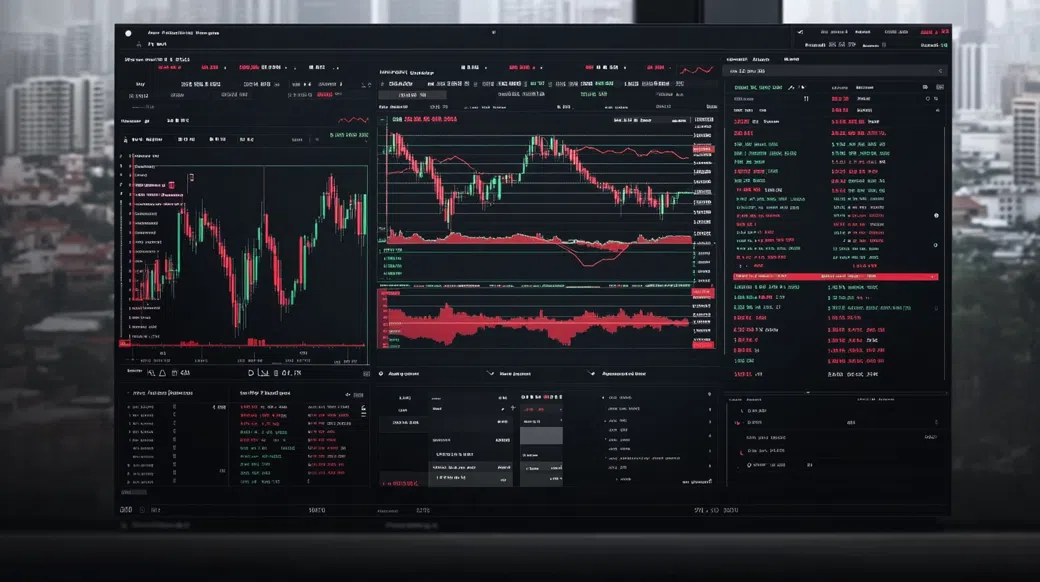
On desktop, the WebTrader behaved like a modern single-page app: stable sessions, quick instrument search, and the core order types (market, limit, stop) plus SL/TP controls right in the ticket. I tested a small EUR/USD position around the London open and watched for weirdness—no obvious requote loop, and fills landed quickly, though slippage can still appear when liquidity thins. If you’re coming from MT4/MT5, the gap isn’t execution basics; it’s ecosystem depth (custom indicators, EAs, and third-party analytics).
Qvantaro App: Mobile Trading Experience
The Qvantaro app kept parity with the web layout: real-time quotes, one-tap position close, and deposits/withdrawals accessible without leaving the trading screen. Qvantaro login supported biometrics on my device, and push notifications for price alerts were reliable enough to use as a lightweight monitoring layer. One quirk: complex chart layouts are harder to manage on a small screen, so I treated the phone as “manage risk and react,” not “build thesis.”
Charting, Tools & Research
Charting covers the essentials: multiple timeframes, drawing tools, and the standard indicator set (MA, RSI, MACD, Bollinger). There’s an integrated economic calendar and a news feed that’s fine for timing but not for deep macro work. Watchlists and alerts are useful, yet you’ll hit a ceiling if you rely on advanced strategy testing or institutional-grade order-flow tools.
Qvantaro Account Opening & Minimum Deposit
From the signup screen, it was the usual trifecta—email, password, country—followed by AML prompts about source of funds and trading experience. KYC required a government photo ID and a proof of address (I used a bank statement), and verification cleared within a business day after submission. That’s not “instant,” but it is fast enough to avoid the multi-day limbo some offshore brokers create.
- Minimum Deposit: $200 (Qvantaro minimum deposit for the Standard account in my test flow)
- Funding Methods: Visa/Mastercard, bank wire, regional e-wallets, and crypto (BTC, USDT)
- Demo Account: $10,000 virtual balance for testing spreads, margin behavior, and the order ticket
- Account Types: Standard (spread-only) and Raw/ECN-style (tighter spread + commission for active traders)
Before depositing, I checked that the base currency options were clear—funding in USD avoids extra conversion layers if your bank supports it. When I topped up via USDT, the platform generated a unique address and waited for confirmations before crediting margin. If you want to see the exact onboarding steps and documents list, I’d start at Qvantaro and open a demo first.
Qvantaro Customer Support Review
I used live chat with a practical trader question: where to find the swap/overnight fee schedule for XAU/USD and US500 before holding positions past rollover. The agent replied in roughly three minutes, pointed me to the instrument details panel, and clarified that triple-swap timing can vary by product. To validate consistency, I also emailed a ticket about withdrawal sequencing (does KYC need to be completed before the first cash-out); the answer landed in about eight hours on a business day and matched what the portal enforced.
Support coverage is the familiar 24/5 model—good during the week, quieter over the weekend, which matters if you trade crypto CFDs outside FX hours. Language options depend on staffing; English worked for me, and I wouldn’t assume Korean phone support unless it’s explicitly listed in your region. Phone access, where offered, tends to be more about account administration than trading help.
Ready to Explore Qvantaro?
If you’re considering this broker, verify your country eligibility, then sanity-check spreads and margin impact in a demo before committing real funds. I also recommend testing a small deposit and one withdrawal early, so you know the rails and timelines that apply to your method.
Visit QvantaroQvantaro Review FAQ
Is Qvantaro good for beginners?
It can be, as long as you treat it as a leveraged CFD venue and start small. The Standard account keeps costs easy to understand (spread-only), and the demo helps you learn margin mechanics without paying swap. Beginners should still be cautious with 1:500 leverage—position sizing matters more than platform features.
Can I trade crypto on Qvantaro?
Yes, you can trade crypto CFDs such as BTC/USD and ETH/USD. You’re speculating on price movement with leverage, not buying coins you can withdraw to a wallet. Keep an eye on weekend financing, which can raise the effective holding cost.
Is Qvantaro a scam?
No clear scam pattern showed up in my functional checks (KYC enforcement, order placement, and a completed withdrawal request flow). The more accurate framing is “offshore CFD broker,” which carries different protections than FCA/ASIC-style supervision. If you’re allergic to offshore risk, choose a Tier‑1 regulated alternative.
Is Qvantaro available in the USA?
No, Qvantaro is not available in the USA. US residents typically can’t onboard due to local regulatory constraints on retail CFD trading. If you attempt signup from the US, you should expect the application to be blocked during eligibility checks.
How long does a Qvantaro withdrawal take?
A Qvantaro withdrawal is typically processed internally within 24–48 hours after KYC is approved. Receipt time then depends on the rail: cards often take 2–5 business days, bank wires 3–7 business days, and crypto transfers can arrive the same day. Plan for extra time if your bank uses intermediary routing.
What is the Qvantaro minimum deposit?
The Qvantaro minimum deposit is $200 in the onboarding flow I tested. That amount is enough to open positions, but it’s still easy to over-leverage if you use the maximum margin. If you’re new, treat $200 as a learning stake, not a bankroll.
Does Qvantaro have a mobile app?
Yes, it offers iOS and Android apps alongside the WebTrader. The mobile build supports charting, order placement, and account actions like deposits and withdrawals. For complex analysis, I still prefer desktop, but the app is solid for monitoring and risk management.
Final Verdict: Should You Use Qvantaro in 2026?
Overall Score: 4.0/5
Security-minded traders will immediately notice the trade-off: the product set and leverage are attractive, but the rulebook is offshore. For my workflow—small sizing, strict stops, and a preference for transparent cost tiers—the Raw/ECN-style pricing plus a stable WebTrader felt usable, and the withdrawal request path behaved predictably. Still, you should treat this provider as a high-risk environment relative to Tier‑1 brokers: read margin policy, confirm segregated-funds language, and test cash-out early. CFDs are leveraged products and capital is at risk. If you want to inspect the current terms directly, start from Qvantaro.
Best for: active CFD traders who want a simple web platform, two pricing tiers, and up to 1:500 leverage. Avoid if: you require Tier‑1 regulation, formal compensation schemes, or you plan to hold positions long-term where financing dominates.