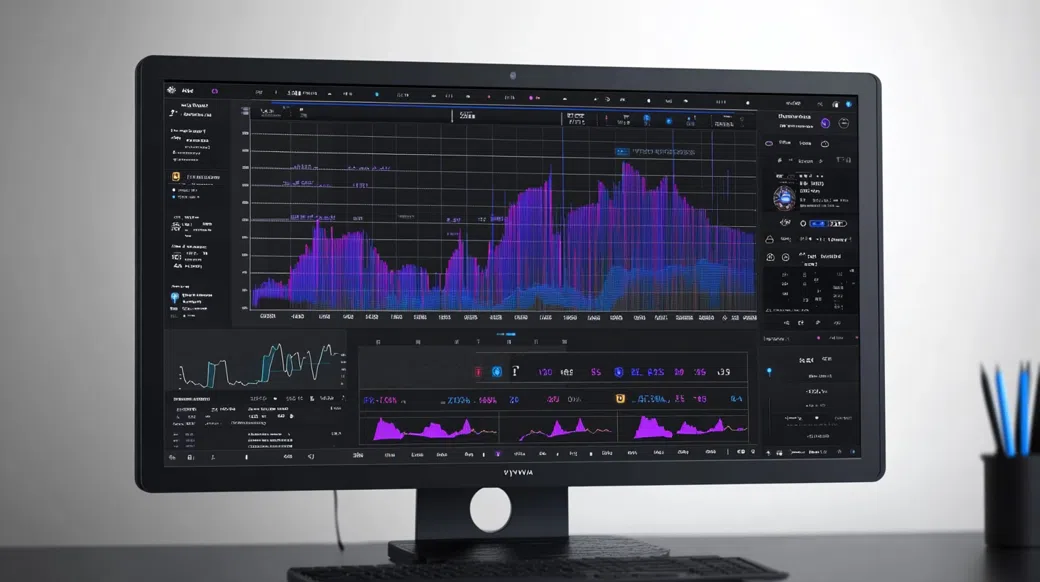
Qavionex Trading Platform Alternatives 2026: Reliable Options for Online Traders
My default mode is to read specs, not slogans. So here’s the practical problem: if a broker sits in the offshore/unregulated zone, your risk profile changes even before you place your first trade. Qavionex appears to fit that “offshore CFD broker” shape (often tied to Seychelles-style registrations): a proprietary WebTrader, a mobile app, and a product menu centered on forex and CFDs, usually with crypto CFDs on the side. For this category, it’s common to see minimum deposits around $250, leverage advertised up to 1:500, and a typical EUR/USD spread around ~2.0 pips on the standard-type account.
That combination can be tempting—fast onboarding, high leverage, and a simple UI—but it’s also where operational details matter: segregated client funds, negative balance protection, dispute resolution, and how withdrawals behave under AML rules. If you’re in the US, access is typically blocked; EU/UK traders also have to think about what protections are actually enforceable when something breaks. That’s why this guide focuses on Qavionex alternatives that sit inside well-known regulatory frameworks and provide clearer execution and account safeguards. If you want to compare the current offering directly, start by checking the broker’s own terms and jurisdiction details on Qavionex—then validate everything against a regulator register.
Disclaimer: This article is for informational purposes only and does not constitute investment advice. CFDs and other leveraged products carry a high risk of loss and may not be suitable for all investors.
Key Takeaways (TL;DR)
- Offshore CFD brokers can differ sharply from FCA/ASIC/CySEC/NFA brokers in dispute resolution, client-money rules, and compensation coverage (FSCS up to £85,000; ICF up to €20,000).
- Cost comparisons should use “round-turn” trading cost (spread + commission + slippage), not headline leverage or “from 0.0” marketing.
- Before migrating, KYC the new broker first, export trade history for taxes, then withdraw using the original funding rail to avoid AML blocks.
What Is Qavionex and How Does Its Trading Platform Work?
From the outside, Qavionex resembles a CFD-first brokerage offering access to forex pairs, indices, commodities, and a smaller menu of crypto CFDs. The operational model in this segment is commonly market-maker style (the broker is the counterparty on many flows), which can be fine when well supervised—but supervision is the whole point. For traders benchmarking brokers similar to Qavionex, the key questions are not aesthetic; they’re about how orders are executed, where the entity is domiciled, and what legal tools exist if a withdrawal or pricing dispute escalates.
Qavionex Web Trading Platform: Core Features and Tools
The platform stack is typically a proprietary WebTrader with a companion iOS/Android app. Expect basic-to-mid charting (popular timeframes, standard indicators, drawing tools) and a straightforward order ticket for market/limit/stop orders. Where this class of platform often feels thin is workflow: limited multi-chart layouts, fewer advanced order conditions, and less transparency around execution metrics (slippage, fill speed, and re-quotes). Mobile parity is usually decent for monitoring and quick actions, but strategy traders who rely on MT4/MT5 or cTrader tooling may find the ecosystem too closed.
Trading Fees, Spreads, and Account Types at Qavionex
For offshore CFD providers, the “standard” pricing profile often lands around ~2.0 pips typical spread on EUR/USD, with higher costs on minors and exotics. Some providers in this lane offer a raw/ECN-style tier in the ~0.0–0.4 pip range plus a commission (commonly in the ~$5–$8 round-turn band), though the fine print matters: swap/overnight financing can dominate holding costs, and fees may appear in withdrawals or inactivity policies. If you’re comparing platforms like Qavionex, model costs on your actual trade frequency and holding time, not just the headline spread.
When Do Traders Start Looking for Qavionex Alternatives?
Execution and cash movement are the two “unit tests” that fail first. A trader can tolerate a basic interface; they can’t tolerate uncertainty around fills, margin rules, or withdrawals—especially under leverage. In practice, Qavionex alternatives usually enter the conversation when someone needs stricter oversight (FCA/ASIC/CySEC/NFA), more predictable execution, or broader product access beyond CFD wrappers.
- You need MT4/MT5 or cTrader for an EA/automation workflow, but the current WebTrader stack doesn’t support your tooling or logging requirements.
- Your strategy is sensitive to slippage (news spikes, scalping), and you want clearer execution-model disclosure (market maker vs STP/ECN/DMA).
- You’re trying to withdraw profits and run into repeated verification loops, payment-method constraints, or slow processing that disrupts risk management.
- You want real stocks/ETFs (ownership, corporate actions) rather than stock CFDs with overnight financing and no shareholder rights.
How to Choose a Reliable Alternative to the Qavionex Trading Platform
Think of broker selection like choosing a custody layer, not an app. The UI is replaceable; legal jurisdiction, client-money handling, and execution quality aren’t. A clean process is to map your strategy (holding period, sizing, instruments) to a short checklist, then verify the broker’s regulatory status directly on the regulator’s own register before funding.
Regulation, Safety, and Investor Protection
Start with the regulator and the entity name, not the brand. FCA-regulated firms (UK) can fall under FSCS protection up to £85,000 in certain cases; CySEC oversight can involve ICF coverage up to €20,000. ASIC and NFA/CFTC supervision has different structures, but the theme is enforceability: segregated client funds rules, audited reporting, and a clearer complaint path. Offshore entities may offer none of this in practice.
Available Markets and Instruments
If your plan is FX and index CFDs, an FX/CFD specialist can be enough. If you want portfolios—stocks, ETFs, options, futures—pick a multi-asset venue with real market access. This is where alternatives to the Qavionex trading platform separate cleanly: some brokers deliver CFDs only, while others provide cash equities with DMA, plus derivatives under one roof. Match the broker’s product set to your actual risk and tax needs.
Trading Costs: Spreads, Commissions, and Other Fees
Use round-turn cost as the comparable unit: spread paid on entry/exit plus commissions, then add expected slippage. Swap/overnight fees matter if you hold positions beyond a session; they can quietly outweigh tight spreads. Also scan for non-trading charges (inactivity, withdrawals, currency conversion). On paper, an offshore broker can look “cheap,” but a wider effective spread during volatility changes the math.
Platforms, Tools, and Execution Quality
MT4/MT5 and cTrader matter because they’re ecosystems: automation, plugins, reporting, and a large base of operational knowledge. Proprietary platforms can be fine, but they often expose less telemetry. Ask about execution model (market maker vs STP/ECN/DMA), order types, and how margin calls are handled. If you still use Qavionex while testing, run side-by-side fills with identical order sizes to see where slippage clusters.
Support, Education, and Overall User Experience
Support quality shows up when something breaks: a platform outage, a rejected withdrawal, a corporate action on an equity position. Check support hours, language coverage, and whether the broker offers traceable ticketing rather than chat-only. Education is secondary for experienced traders, but platform guides and margin documentation reduce operational mistakes. Mobile parity matters if you manage risk on the move.
Qavionex and Different Asset Classes: When Alternatives May Be Better
Qavionex Forex and CFD Trading
On FX/CFDs, the big differentiator is not the instrument count (30–50 FX pairs and a modest CFD list is typical) but the total trading frictions: spread, commission, and slippage under stress. With a typical ~2.0 pip EUR/USD spread profile on standard-style accounts in this segment, active traders can end up paying more than they realize—especially if they trade frequently. Pepperstone and IC Markets are common picks for traders who want MT4/MT5 or cTrader plus sharper pricing on raw-style accounts (often ~0.0–0.3 pips + commission). If your edge is small, execution quality and predictable margin handling can matter more than a headline 1:500 leverage banner.
Qavionex Stock and ETF Trading
Stock exposure is where many offshore CFD setups feel like a wrapper: you may get stock CFDs (price exposure), but not the thing itself (no shareholder rights, no direct corporate-action processing the way a cash broker handles it). For US/EU investors building longer-horizon allocations, Interactive Brokers (IBKR) and Saxo Bank are strong contrasts because they offer real stocks and ETFs with broad market access, plus options/futures for hedging. That difference is structural, not cosmetic: custody, reporting, and product governance tend to be clearer at multi-asset brokers operating under top-tier regulators. For traders evaluating competitors to Qavionex, confirm whether “stocks” means CFDs or cash equities before you fund.
Qavionex Crypto Trading
Crypto at many CFD brokers is “crypto CFDs,” not on-chain ownership. You’re trading a derivative: no wallet withdrawal, no staking, and counterparty risk sits with the broker. If that’s acceptable (e.g., you only want directional exposure with tight risk limits), regulated CFD providers like IG or Plus500 can offer crypto CFDs depending on region, with clearer disclosures and restrictions aligned to local rules. If you require actual coin custody or DeFi interaction, a CFD platform is the wrong primitive entirely—treat it as a separate architecture decision. For 2026, regulated options vs Qavionex are less about more coins and more about enforceable client protections when volatility spikes.
Best Qavionex Alternatives for 2026: Comparison of Top Trading Platforms
Interactive Brokers (IBKR): Key Facts and How It Compares to Qavionex
Regulation: SEC/FINRA (US), FCA (UK), IIROC (Canada)
Markets: Stocks, ETFs, options, futures, bonds, FX
Fees: Pricing varies by venue; FX tends to be low-cost relative to typical CFD-only setups; commissions apply on many exchange products
Platform: Trader Workstation (TWS), IBKR Desktop/Mobile, Client Portal APIs
Best For: Multi-asset traders who want real market access and audit-friendly reporting
Pepperstone: Key Facts and How It Compares to Qavionex
Regulation: FCA (UK), ASIC (Australia), CySEC (EU), DFSA (Dubai)
Markets: FX and CFDs (indices, commodities; availability varies by entity)
Fees: Raw-style pricing often ~0.0–0.3 pips on EUR/USD + commission; standard-style spreads commonly ~1.0+ pip range
Platform: MT4, MT5, cTrader, TradingView (region-dependent)
Best For: Systematic FX traders running MT4/MT5 or cTrader
Saxo Bank: Key Facts and How It Compares to Qavionex
Regulation: FCA (UK), MAS (Singapore), DFSA (Dubai)
Markets: Stocks, ETFs, options, futures, FX, bonds, CFDs
Fees: Tiered pricing; FX spreads generally competitive vs offshore standard accounts, with commissions on many exchange-traded products
Platform: SaxoTraderGO, SaxoTraderPRO
Best For: Portfolio builders who want integrated FX + listed derivatives
IG: Key Facts and How It Compares to Qavionex
Regulation: FCA (UK), ASIC (Australia), MAS (Singapore)
Markets: CFDs (FX, indices, commodities, shares); spread betting in the UK (where eligible)
Fees: Costs are typically spread-based on many CFD products; FX spreads can be competitive versus ~2.0 pip offshore baselines, varying by instrument and market conditions
Platform: IG web platform, mobile app, MT4 (region-dependent)
Best For: Risk-managed CFD trading with strong regulatory oversight
OANDA: Key Facts and How It Compares to Qavionex
Regulation: CFTC/NFA (US), FCA (UK), ASIC (Australia), IIROC (Canada)
Markets: FX (and CFDs in certain jurisdictions)
Fees: Generally spread-based pricing; EUR/USD spreads often land around ~0.6–1.2 pips depending on account type and market conditions
Platform: OANDA web/mobile, MT4 (region-dependent)
Best For: FX-first traders who prioritize strong jurisdictional compliance
Plus500: Key Facts and How It Compares to Qavionex
Regulation: FCA (UK), CySEC (EU), ASIC (Australia), MAS (Singapore)
Markets: CFDs (FX, indices, commodities, shares; crypto CFDs where permitted)
Fees: Spread-based pricing; costs vary by instrument, with overnight funding (swap) as a key variable for multi-day holds
Platform: Plus500 WebTrader, Plus500 mobile app
Best For: Simplified CFD execution for traders who don’t need MT4/MT5
Comparison Summary
| Platform | Regulation | Main Markets | Typical Costs | Best For |
|---|---|---|---|---|
| Interactive Brokers (IBKR) | SEC/FINRA, FCA, IIROC | Real stocks/ETFs, options, futures, bonds, FX | Exchange commissions; FX often low-cost vs CFD-only spread models | Multi-asset traders who want real market access and audit-friendly reporting |
| Pepperstone | FCA, ASIC, CySEC, DFSA | FX + CFDs | Raw ~0.0–0.3 pips + commission; Standard ~1.0+ pip (typical) | Systematic FX traders running MT4/MT5 or cTrader |
| Saxo Bank | FCA, MAS, DFSA | Stocks/ETFs, options, futures, FX, CFDs, bonds | Tiered; commissions on listed markets; FX spreads competitive by tier | Portfolio builders who want integrated FX + listed derivatives |
| IG | FCA, ASIC, MAS | CFDs (FX/indices/commodities/shares); UK spread betting | Mainly spread-based; instrument-dependent; swaps for holds | Risk-managed CFD trading with strong regulatory oversight |
| OANDA | CFTC/NFA, FCA, ASIC, IIROC | FX (CFDs in some regions) | Spread-based; EUR/USD often ~0.6–1.2 pips (typical) | FX-first traders who prioritize strong jurisdictional compliance |
| Plus500 | FCA, CySEC, ASIC, MAS | CFDs across major asset classes | Spread-based; swaps matter for multi-day positions | Simplified CFD execution for traders who don’t need MT4/MT5 |
How to Safely Move from Qavionex to Another Broker
Migrations fail when people move money before they move process. Treat switching brokers as a controlled rollout: verify the new venue, stage access, then de-risk withdrawals and position management. Leverage magnifies small operational errors—one mismatched margin rule or a delayed withdrawal can turn into forced liquidation, even if your market view is correct.
- Confirm the new broker’s exact legal entity on the regulator’s public register (FCA Register, ASIC Connect, CySEC directory, or NFA BASIC) before you submit any documents.
- Open the new account and complete KYC/AML (ID + proof of address) first; only fund after the account is fully approved and you can see deposit/withdrawal rails.
- Export statements, trade history, and funding logs from Qavionex so you retain timestamps and pricing for tax and dispute purposes.
- Flatten open exposure rather than assuming positions can be transferred; re-enter on the new broker only after verifying contract specs (lot size, margin rate, swap schedule).
- Withdraw using the original deposit method where possible; many brokers enforce source-of-funds rules, and mismatches can slow processing.
Ready to Explore Qavionex?
If you’re still evaluating the current setup, review the onboarding flow, supported regions, and platform constraints first—then compare it against the regulated substitutes listed above using the same trade scenarios. Make sure the product you want (CFD vs real asset) matches your intent before committing capital.
Visit QavionexFAQ: Qavionex Alternatives and Trading Platforms
What is the best alternative to Qavionex in 2026?
The best alternative depends on whether you need real stocks/ETFs or you’re purely trading FX/CFDs. For multi-asset access with strong reporting, Interactive Brokers (IBKR) is hard to beat; for FX automation and tighter raw pricing, Pepperstone is a frequent pick. If you prefer a simpler CFD-only workflow under top-tier regulators, IG or Plus500 can fit better.
Is Qavionex a safe broker/platform?
Qavionex appears to operate in an offshore/unregulated-style framework (commonly associated with jurisdictions such as Seychelles), which typically provides fewer investor protections than FCA/ASIC/CySEC/NFA brokers. Safety isn’t just “can you place a trade”—it’s whether client funds segregation, complaints, and enforcement are robust when something goes wrong. If safety is your priority, favor regulated options vs Qavionex where protections are clearly defined.
Can I trade stocks, futures, or crypto with Qavionex?
With offshore CFD brokers, “stocks” and “crypto” commonly mean CFDs rather than ownership, and futures are often not offered as exchange-traded contracts. Qavionex is typically positioned around forex and CFDs, with crypto CFDs often included, but that doesn’t give you on-chain withdrawals or shareholder rights. If you need real stocks/ETFs or listed futures, brokers like IBKR or Saxo are more direct fits.
What should I check before switching from Qavionex to another platform?
Verify the new broker’s legal entity on the regulator register, then confirm client-money segregation, negative balance protection, and the exact product type (CFD vs cash). Next, compare round-turn costs on your most-traded instruments and test execution with small size to observe slippage. Finally, ensure withdrawals will route through compliant payment methods under AML rules before you move your full balance.
About the Author: Samuel White is a Seoul-based smart contract developer who approaches trading platforms the way he audits code: trust is earned through verifiable controls, clear execution rules, and documented failure modes. He focuses on broker structure, regulation, and operational risk—because most “platform disasters” aren’t market-related; they’re process-related.