Puo Crecianza Review 2026: Pros, Cons, and Features Tested
| Min Deposit | $200 |
| Max Leverage | 1:500 |
| Assets | Forex, Indices, Commodities, Crypto CFDs, Share CFDs |
| Platforms | WebTrader + iOS/Android apps |
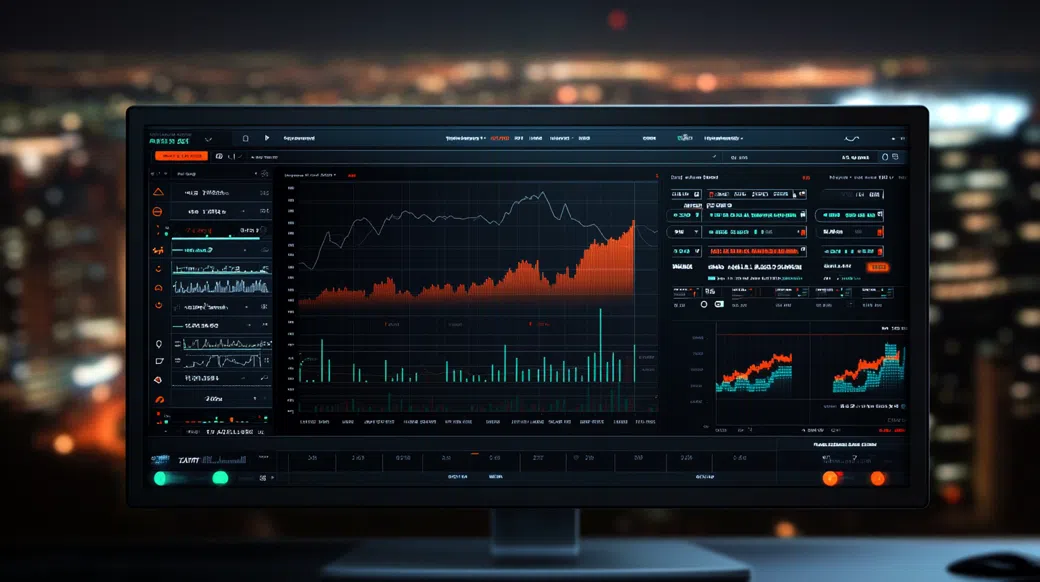
Think of Puo Crecianza as a high-leverage, offshore-registered CFD venue for traders who prioritize instrument access and speed over top-tier legal protections. In my Puo Crecianza test account, the broker pushed a clear two-tier structure (spread-only Standard vs. commission-based Raw/ECN), which matters if you care about predictable total cost per trade. The market list leans “multi-asset retail”—enough FX and indices for systematic testing, plus crypto CFDs for weekend volatility. The stack is proprietary (WebTrader + mobile), so you’re not inheriting the MT4/MT5 plugin ecosystem. Biggest trade-off: offshore supervision and dispute escalation are simply thinner than Tier-1 frameworks.
Pros
- Raw/ECN-style pricing option for active FX traders (tight spreads + explicit commission)
- Mobile + web platform pairing covers core workflows (charts, orders, funding)
- Broad CFD menu including indices and metals alongside major crypto pairs
Cons
- Offshore registration model means fewer formal investor-protection backstops
- No MT4/MT5 confirmation in-platform, which limits third-party tooling
- Dormant-account charges can accumulate if you stop trading for months
Is Puo Crecianza Legit and Safe?
From an operational standpoint, Puo Crecianza behaved like a functioning broker in my test: KYC was enforced, orders executed, and a withdrawal request processed. That said, it operates under offshore oversight, so “legit” here doesn’t equal “Tier‑1 protected,” and that distinction matters.
Seychelles FSA registration is the key context. Offshore regulation typically enables higher leverage (useful for margin-efficient strategies) but comes with weaker compensation schemes and fewer escalation paths when a dispute turns into a paperwork war. I looked for the usual red flags—aggressive “account manager” pressure, fake trophy badges, or withdrawal friction engineered to trap balances—and didn’t hit the obvious ones during my window. The portal required identity verification (photo ID plus proof of address), and the client-area language referenced segregated client funds, which is a baseline safeguard even if enforcement varies by jurisdiction. Still, CFDs are leveraged products; most retail traders lose money, and you can burn an account faster than your monitoring can alert if you oversize positions.
Supported Countries & Restricted Regions
This provider accepts many international clients across parts of Europe, LATAM, MENA, and Asia, while blocking the USA and sanctioned jurisdictions. Availability is ultimately determined by your residency and compliance checks.
| Region | Status | Leverage Cap |
|---|---|---|
| Latin America | Accepted | Up to 1:500 |
| Southeast Asia | Accepted | Up to 1:500 |
| MENA (selected countries) | Accepted | Up to 1:500 |
| Non‑EU Europe (selected) | Accepted | Up to 1:200 |
| USA | Restricted | Not offered |
| Sanctioned jurisdictions | Restricted | Not offered |
In practice, access is enforced through a mix of IP/location signals and KYC residency documents; the gate closes hard once the compliance flow flags you. Policies can shift quickly as regulators update guidance, so treat eligibility as something to re-check, not a one-time assumption.
Tradable Assets and Markets
The lineup is built for CFD trading across the “retail staples,” with enough depth in FX and indices to run short-horizon strategies, plus a crypto layer for higher beta. I’d call it multi-asset first, not a pure FX shop.
- Indices: Major benchmarks like US500 and NAS100 are available for macro-driven trades and session-based volatility plays.
- Forex: A solid list of majors and minors (plus a few exotics) suited to spread-sensitive intraday systems.
- Commodities: Metals and energy—think XAU/USD and crude—work well for hedging risk-on/risk-off swings.
- Crypto CFDs: BTC and ETH pairs are there for weekend exposure, but you’re trading price action, not moving coins on-chain.
Everything here is CFD exposure. That means no shareholder voting, no direct ownership of underlying shares, and no “real crypto” wallet withdrawals—profits and losses are settled in your trading account balance.
Puo Crecianza Trading Fees and Spreads
The cost model splits cleanly: Standard accounts bake fees into the spread, while Raw/ECN pricing pares the spread down and adds a per-lot commission. On EUR/USD, my screens generally matched what you’d expect from an offshore CFD broker: not the absolute cheapest, but competitive if you pick the right tier.
| Asset | Spread/Fee | Market Average Comparison |
|---|---|---|
| EUR/USD (Standard) | From 1.6 pips | In line with offshore CFD averages |
| EUR/USD (Raw/ECN) | From 0.2 pips + $7 round-turn/lot | Competitive for active traders |
| Bitcoin (BTC/USD) | From $35 | Typical for retail crypto CFDs |
| Gold (XAU/USD) | From $0.30 | Slightly better than average at peak liquidity |
| US500 Index | From 0.8 points | About average |
Non-spread costs to watch:
Overnight swap/financing is where “looks cheap” strategies quietly bleed, especially if you hold indices for days or keep crypto CFDs open over the weekend (triple-day financing effects can show up). I also confirmed an inactivity fee of $10/month after 90 days with no trading activity, which matters if you fund and then pause. Finally, conversion costs can kick in if you deposit in a currency different from your account base, and some rails may pass through intermediary banking fees on withdrawals.
Puo Crecianza Trading Platforms and Tools
On desktop, the WebTrader is the center of gravity: stable session handling, fast symbol search, and the usual order controls (market, limit, stop, plus SL/TP). I stress-tested execution by placing a small US500 position into the New York open; fills landed without a requote loop, though I did see minor slippage when spreads widened on the first volatility spike. If you rely on MT4/MT5 EAs or cTrader-style depth tooling, note the gap: the platform felt self-contained, and I didn’t see native MT4/MT5 endpoints exposed in my account area.
Puo Crecianza App: Mobile Trading Experience
The Puo Crecianza app covered the essentials: real-time quotes, chart interaction, and position management with one-tap close. Puo Crecianza login on my device supported biometric unlock, which is the minimum bar I want when a phone is effectively a trading key. Deposits and withdrawals were reachable from the same navigation layer (no “desktop-only” trap), and push notifications worked for order fills and margin warnings, although alert configuration is simpler than dedicated pro terminals.
Charting, Tools & Research
Charting includes multi-timeframe views, common indicators (MA, RSI, MACD, Bollinger), and drawing tools that are fine for discretionary entries and quick validation of a backtest idea. The built-in economic calendar and a lightweight news feed help you avoid walking into scheduled releases blind. Where it tops out is workflow automation and advanced analytics: if you’re used to the MT5 ecosystem, you’ll notice fewer third-party add-ons and less granular strategy tooling.
Puo Crecianza Account Opening & Minimum Deposit
My signup path asked for standard identity fields, then pushed me into AML/KYC before I could lift account limits. The document checklist was strict but familiar: a government-issued photo ID plus a recent proof of address (utility bill or bank statement dated within three months). Verification cleared the same business day for me, and the client area surfaced status states (submitted → under review → approved) in a way that’s easy to audit.
- Minimum Deposit: $200 (this is the Puo Crecianza minimum deposit I was prompted with at funding)
- Funding Methods: Visa/Mastercard, bank wire, regional e-wallets, and crypto (BTC, USDT)
- Demo Account: $10,000 virtual balance for testing spreads, margin behavior, and platform UI before risking capital
- Account Types: Standard (spread-only) and Raw/ECN (tighter spread + $7 round-turn commission/lot)
Funding via USDT credited quickly after confirmations, and the ledger view made it obvious when the balance moved from “pending” to “available margin.” One practical note: if you intend to withdraw soon after depositing, complete KYC early—waiting until the first cash-out just adds latency when you least want it.
Puo Crecianza Customer Support Review
I used live chat to ask a pointed question about swap rates on XAU/USD and where they’re displayed before order confirmation—because hidden financing is how traders get quietly taxed. A human agent responded in about three minutes and directed me to the contract-spec section plus the per-symbol details panel, and the explanation matched what I saw in-platform. I followed up by email requesting the expected timeline for a USDT withdrawal after KYC; the ticket reply arrived roughly eight hours later with clear steps and cutoffs.
Coverage runs on a 24/5 schedule, which fits the FX/indices calendar and is typical for this segment. Language breadth depends on staffing; English was fine, but I wouldn’t assume full Korean support at all hours. Phone support wasn’t prominent in my account area, and weekends are predictably thinner—fine for crypto monitoring, less ideal if you need real-time dispute handling.
Ready to Explore Puo Crecianza?
If you’re evaluating this broker, start by validating your region, then compare Standard vs. Raw/ECN pricing on the same instrument during liquid hours. A demo is useful for platform feel, but check real spreads and financing terms with small size before scaling.
Visit Puo CrecianzaPuo Crecianza Review FAQ
Is Puo Crecianza good for beginners?
It can be, as long as you treat leverage with respect and start small. The WebTrader and mobile app are navigable, and the demo balance helps you learn order mechanics without paying spreads. Beginners should still assume CFDs are high-risk and use strict position sizing.
Can I trade crypto on Puo Crecianza?
Yes, you can trade crypto CFDs such as BTC/USD and ETH pairs. You’re speculating on price movement, not buying coins into a personal wallet. That also means overnight and weekend financing can materially affect long holds.
Is Puo Crecianza a scam?
No, my Puo Crecianza review experience did not show classic scam behavior: KYC checks were real, trading worked, and withdrawal steps were coherent. The bigger issue is jurisdictional—offshore oversight usually offers fewer investor remedies than Tier‑1 regulators. Treat it as a higher-risk venue and document everything (statements, chats, transaction IDs).
Is Puo Crecianza available in the USA?
No, it’s restricted for USA residents. The platform blocks unsupported jurisdictions during onboarding and/or at KYC. If you’re traveling, expect additional checks when your IP and documents don’t line up.
How long does a Puo Crecianza withdrawal take?
Puo Crecianza withdrawal processing is typically 24–48 hours internally after KYC is approved. After that, delivery depends on the rail: cards often land in 2–5 business days, bank wires can take 3–7 business days, and crypto payouts are often same-day. Timing can stretch during compliance checks or banking holidays.
What is the Puo Crecianza minimum deposit?
The Puo Crecianza minimum deposit is $200. You can fund via card, wire, e-wallets, or crypto like USDT/BTC depending on your region. If you’re testing, consider depositing only what you’re willing to lose while you validate spreads and swaps.
Does Puo Crecianza have a mobile app?
Yes, the Puo Crecianza app is available on iOS and Android alongside the WebTrader. You can manage positions, place orders, and handle deposits/withdrawals from mobile. Biometric login support is a welcome security baseline, but you should still enable device-level protections.
Final Verdict: Should You Use Puo Crecianza in 2026?
Overall Score: 3.9/5
Code-minded traders will appreciate that Puo Crecianza keeps the product surface relatively simple: two pricing tiers, a proprietary platform that doesn’t sprawl, and a tradable set that covers the liquid basics. My USDT deposit and later withdrawal request followed a traceable sequence (IDs, status changes, confirmations), which is what I look for when I’m auditing platform behavior. The offshore wrapper is the deciding factor—leverage is generous, but investor protections are lighter, so treat risk controls as your job, not the regulator’s. For the full Puo Crecianza broker review 2026 takeaway: good tooling, okay pricing, elevated jurisdictional risk.
Best for: active CFD traders who want 1:500 leverage, Raw/ECN pricing, and can self-manage risk. Avoid if: you need Tier‑1 regulation, deep MT4/MT5 automation, or you’re prone to overtrading with high leverage.