Puente Valorío Review 2026: Pros, Cons, and Features Tested
| Min Deposit | $200 |
| Max Leverage | 1:500 |
| Assets | Forex, Indices, Commodities, Crypto CFDs, Share CFDs |
| Platforms | Proprietary WebTrader, iOS app, Android app |
Built as an offshore-style CFD venue, Puente Valorío fits traders who want multi-asset leverage and a clean WebTrader, with the main trade-off being lighter dispute/compensation protections than top-tier regulators provide. In my test account, the broker pushed two core tiers—spread-only Standard and a tighter Raw/ECN-style option—so pricing can be tuned to how often you trade. The product menu leans Forex-first but adds indices, metals, and crypto CFDs for hedging and weekend volatility plays. The platform stack is proprietary (web + mobile), which keeps onboarding cohesive but doesn’t give you the MT4/MT5 plugin universe. For a quick platform check, I used Puente Valorío to verify spreads and order controls before moving size.
Pros
- Two pricing modes (Standard vs Raw/ECN-style) that map well to low- vs high-frequency trading
- Broad CFD shelf: FX majors, key indices, metals, and large-cap crypto CFDs in one account
- Mobile app mirrors core account actions, including funding and position management
Cons
- Offshore framework means weaker escalation paths if a dispute turns messy
- MT4/MT5 support wasn’t something I could confirm inside the client area
- Ongoing costs can include swap and a dormancy charge if you park the account
Is Puente Valorío Legit and Safe?
Puente Valorío operated like a functioning broker in my checks: KYC was enforced, orders executed, and withdrawals followed the stated rails. That said, it sits in an offshore registration model (Mauritius FSC), so “legit” here means operational—not equivalent to a Tier-1 licensed venue with robust compensation schemes.
Before I even looked at spreads, I looked for security posture signals: mandatory identity verification gates, TLS-protected account pages, and whether the portal used sane session timeouts. The provider stated Mauritius FSC registration and referenced segregated client funds language in its legal docs, which is reassuring but still relies on the broker’s own controls rather than a heavyweight investor protection regime. Offshore status tends to come with higher leverage (good for margin efficiency, bad for blow-up risk) and fewer formal paths to force resolution if you end up in a dispute. During the test window I watched for the classic red flags—fake award badges, “account manager” pressure, or withdrawal games—and didn’t run into aggressive sales tactics. Still, CFDs are leveraged products; most retail accounts lose money, and you should treat margin as a sharp tool, not free capital.
Supported Countries & Restricted Regions
This broker generally accepts clients across parts of Asia, MENA, LATAM, and selected non-EU Europe, while the USA and sanctioned jurisdictions are blocked.
| Region | Status | Leverage Cap |
|---|---|---|
| Southeast Asia (selected) | Accepted | Up to 1:500 |
| MENA (selected) | Accepted | Up to 1:500 |
| Latin America (selected) | Accepted | Up to 1:500 |
| Non-EU Europe (selected) | Accepted | Up to 1:200 |
| USA | Restricted | Not offered |
| Sanctioned jurisdictions | Restricted | Not offered |
Access wasn’t just a checkbox: the sign-up flow and KYC prompts are used to enforce eligibility, and IP/location signals can also trigger extra review. Policies can shift, so I’d re-check your country status right before funding.
Tradable Assets and Markets
The lineup is multi-asset, but it feels engineered around liquid, high-turnover CFDs rather than niche instruments. If you trade sessions (Asia/London/NY) and want quick hedges, the shelf covers the usual bases without turning into a 10,000-symbol catalog.
- Indices: Core benchmarks like US500, NAS100, and GER40 are available for macro-driven positioning and event hedging.
- Forex: Roughly 40+ pairs across majors and minors, with a handful of higher-volatility crosses for tactical setups.
- Commodities: XAU/USD and crude (WTI/Brent) showed up as the “go-to” contracts for inflation and risk-off hedges.
- Crypto CFDs: BTC and ETH pairs plus a few large caps; useful for volatility exposure without managing wallets.
Everything here is CFD exposure: you’re trading price movement, not acquiring shareholder rights or taking delivery of metals. Likewise, crypto positions are synthetic—no on-chain withdrawals and no ownership of the underlying coins.
Puente Valorío Trading Fees and Spreads
Puente Valorío fees are structured around two lanes: Standard accounts bundle costs into the spread, while the Raw/ECN-style tier tightens spreads and adds a per-lot commission. On balance, the total cost sits in the “normal offshore CFD broker” band, with the Raw tier being the more predictable choice for frequent execution.
| Asset | Spread/Fee | Market Average Comparison |
|---|---|---|
| EUR/USD (Standard) | From 1.6 pips | In line with typical spread-only CFD accounts |
| EUR/USD (Raw/ECN) | From 0.2 pips + $7 round-turn/lot | Competitive for commission-based pricing |
| Bitcoin (BTC/USD) | From $38 | Near average for crypto CFD spreads on offshore venues |
| Gold (XAU/USD) | From $0.30 | Slightly better than many retail CFD quotes |
| US500 Index | From 0.9 points | About average for index CFDs |
Non-spread costs that matter: Overnight swap/financing is the big silent line item; holding indices or FX past rollover changed my P&L more than a few tenths of a pip ever will. The broker also applies an inactivity fee of $10 per month after 90 days of no trading, which is basically a tax on forgotten accounts. Withdrawals can be fee-free on the broker side but still pick up third-party charges (card processor, bank wire fees, or blockchain network costs), and conversion spreads can bite if you fund in a currency that doesn’t match your account base. I confirmed the swap schedule and dormancy rule inside Puente Valorío before leaving positions open.
Puente Valorío Trading Platforms and Tools
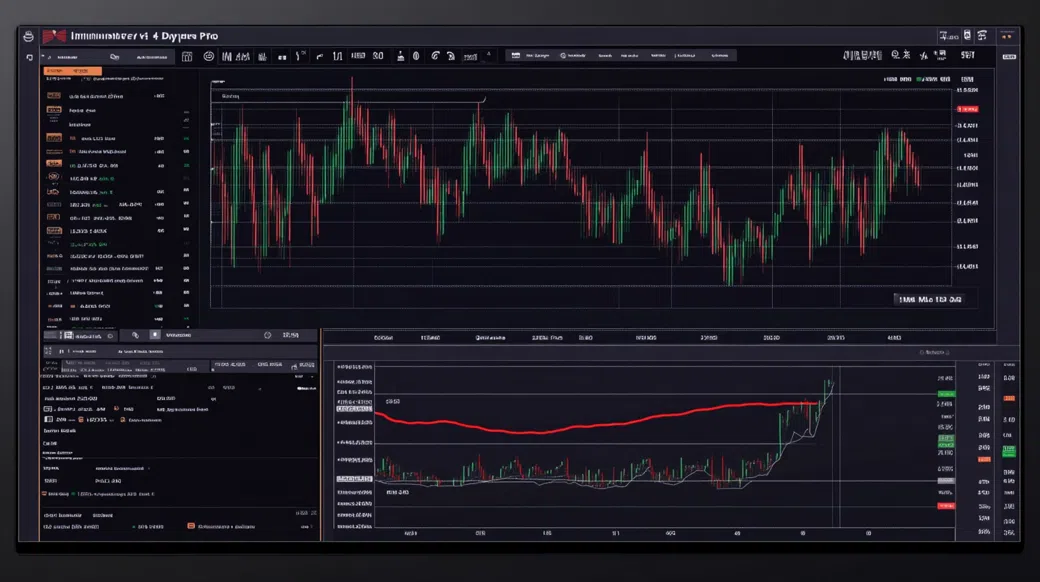
WebTrader was stable across repeated sessions: the terminal kept state, watchlists persisted, and I didn’t hit random logouts mid-order. Order types covered the practical set (market, limit, stop, stop-loss/take-profit), and execution felt consistent when I fired small test tickets during the London open on EUR/USD. If you live inside MT4/MT5 scripts, EAs, or a deep indicator marketplace, the proprietary stack will feel narrower; if you just want charts + orders without plugin drift, it’s a calmer surface.
Puente Valorío App: Mobile Trading Experience
The Puente Valorío app tracked the web layout closely: real-time quotes, quick position edits, and a one-tap close button for fast risk-off moments. Puente Valorío login supported biometric unlock on my device, which is the minimum I expect in 2026 for account security. Deposits and withdrawals were reachable from the same sidebar as trading, and push notifications for fills/price alerts worked, though I did notice notifications arrive a bit late when my phone was in power-saving mode.
Charting, Tools & Research
Charting gives you the common indicator toolbox (MA, RSI, MACD, Bollinger) plus basic drawing tools and multiple timeframes, enough to validate entries and manage exits. The embedded economic calendar and a light news feed cover “what’s happening” without turning into a research terminal. There’s a ceiling: advanced strategy testing and deep analytics still belong to MT5/cTrader ecosystems, not a broker-built WebTrader.
Puente Valorío Account Opening & Minimum Deposit
My registration path was mostly form-driven: email, password, basic personal details, and then an identity workflow that didn’t let me proceed to full functionality without verification. For KYC/AML, the portal requested a government-issued photo ID plus proof of address (utility bill or bank statement dated within three months). Verification landed the same business day for me, and the dashboard clearly flagged what was approved vs pending.
- Minimum Deposit: $200
- Funding Methods: Visa/Mastercard, bank wire, regional e-wallets, and crypto (BTC, USDT)
- Demo Account: $10,000 virtual balance to test spread behavior and order controls without risking capital
- Account Types: Standard (spread-only) and Raw/ECN-style (tighter spreads + commission)
For anyone searching “Puente Valorío minimum deposit,” the $200 threshold is realistic for a controlled test—enough to see margin behavior without forcing you to overfund. One operational note: the client area encouraged KYC early, which I prefer because it reduces the odds of a withdrawal getting paused later for missing docs.
Puente Valorío Customer Support Review
I hit live chat with a precise question: whether weekend financing applies to BTC/USD CFDs and where the swap schedule is published. A human agent replied in about 3 minutes, pointed me to the instrument specs panel, and confirmed that crypto financing is applied daily with a weekend adjustment depending on the contract. I also opened an email ticket about card withdrawal timelines after KYC; the written response arrived in roughly 9 hours with a method-by-method breakdown and a reminder that internal approval precedes bank processing.
Coverage is broadly 24/5, which matches the CFD week rather than a 7-day crypto desk. Language support appears region-dependent, and I wouldn’t assume Korean-language agents at all times despite the platform being usable from Seoul. Phone support wasn’t prominent in my account area, so treat chat/email as the primary rails, especially outside peak market hours.
Ready to Explore Puente Valorío?
If you’re considering an offshore CFD account, start by validating the spread/commission tier that matches your trading frequency and confirming your country eligibility. I’d also suggest opening a demo first to sanity-check charting, margin, and order controls before funding real money.
Visit Puente ValoríoPuente Valorío Review FAQ
Is Puente Valorío good for beginners?
It can be, as long as you treat leverage as a risk multiplier and keep position sizes small. The WebTrader and demo account lower the learning curve, but the education content is not as deep as what you’d get from top-tier global brokers. Beginners should also factor in offshore dispute limitations before depositing.
Can I trade crypto on Puente Valorío?
Yes, you can trade crypto CFDs such as BTC/USD and ETH pairs. These are derivatives, so you’re speculating on price moves rather than receiving on-chain coins. Financing can apply, so check the instrument specs before holding positions over multiple days.
Is Puente Valorío a scam?
No—based on my 2026 test, it behaved like an operating broker: KYC was required and withdrawals followed the stated process. The bigger concern is not a cartoon “scam” label but the offshore setup (Mauritius FSC) and what that implies for investor protections. Always assume CFDs carry real loss risk and trade accordingly.
Is Puente Valorío available in the USA?
No, Puente Valorío is not offered to USA residents. The sign-up flow and compliance checks are designed to block restricted jurisdictions. If you’re traveling, expect additional verification if your location conflicts with your documents.
How long does a Puente Valorío withdrawal take?
A Puente Valorío withdrawal typically needs 24–48 hours for internal processing once KYC is approved. After that, cards usually take 2–5 business days, bank wires 3–7 business days, and crypto transfers often arrive the same day depending on network conditions. Delays most commonly come from missing verification documents or third-party banking rails.
What is the Puente Valorío minimum deposit?
The Puente Valorío minimum deposit is $200. That’s enough to test live spreads and margin behavior without committing a large balance. Funding options include cards, bank transfer, e-wallets, and crypto (BTC/USDT), depending on your region.
Does Puente Valorío have a mobile app?
Yes, Puente Valorío has iOS and Android apps that mirror the core WebTrader functions. You can monitor quotes, open/close trades, and manage deposits/withdrawals from the app. Biometric login is available on supported devices, which is a practical security baseline.
Final Verdict: Should You Use Puente Valorío in 2026?
Overall Score: 4.0/5
From a builder’s perspective, the biggest win is operational consistency: KYC gates worked, the proprietary terminal didn’t wobble under routine use, and pricing tiers were clearly separated between spread-only and commission-based trading. The offshore registration (Mauritius FSC) remains the non-negotiable caveat—escalation and compensation mechanisms won’t match Tier-1 venues—so keep your risk budget tight. If you want a single CFD account for FX, indices, metals, and crypto volatility, Puente Valorío is serviceable in 2026, but it’s not the place to “set and forget” capital. CFDs are leveraged; losses can exceed expectations without disciplined stops.
Best for: active CFD traders who value tiered pricing and a clean WebTrader/mobile stack. Avoid if: you require Tier-1 regulation, extensive MT4/MT5 tooling, or you’re prone to overusing 1:500 leverage.