Possecimo Trading Platform Alternatives 2026: Reliable Options for Online Traders
Code tells you the truth faster than headlines. When I review a broker-like product, I look for verifiable control points: regulator registers, custody and segregation language, execution disclosures, and whether the platform stack is mature enough to survive real volatility. In that light, Possecimo appears to fit the common offshore CFD template: forex and CFD markets as the center of gravity, a proprietary WebTrader plus mobile apps, high leverage (often marketed as a feature), and trading conditions that can look fine in a screenshot but become expensive through spreads, swaps, and slippage.
Traders start searching for Possecimo alternatives when they need more than “it works on my phone.” A US/EU-focused decision typically comes down to two things: enforceable investor protections (FCA/ASIC/CySEC/NFA regimes with segregation rules and complaint pathways) and a platform/execution setup that matches how you actually trade (manual, automation, hedging, low-latency scalping, or long-hold carry). If you want real stocks/ETFs rather than stock CFDs, or you want futures/options under a single account, offshore CFD-only setups frequently hit a wall.
Disclaimer: This article is for informational purposes only and does not constitute investment advice. Trading leveraged products like CFDs involves a high risk of loss and may not be suitable for all investors.
Key Takeaways (TL;DR)
- Offshore-style brokers often price risk into wider spreads (e.g., ~2.0 pips EUR/USD on a standard-style account); regulated substitutes can reduce total round-turn costs via tighter spreads and transparent commissions.
- If you need real multi-asset access (stocks/ETFs/options/futures) rather than CFDs, start with Interactive Brokers or Saxo, then add an FX/CFD specialist for MT4/MT5/cTrader workflows.
- Do not assume positions can be “transferred” between CFD brokers; plan to flatten exposure, withdraw via the same funding rail, and re-enter at the new venue.
What Is Possecimo and How Does Its Trading Platform Work?
From a product-shape perspective, Possecimo looks like a CFD-first broker offering forex pairs, indices, commodities, and often crypto CFDs, aimed at retail traders who want a browser-based terminal and quick onboarding. The regulatory posture commonly associated with this segment is offshore (for example, Seychelles-style frameworks), which can mean fewer hard guarantees around dispute resolution, compensation schemes, and supervision compared with FCA/ASIC/CySEC/NFA-regulated firms. That gap matters most when markets gap, margin calls cascade, or withdrawals become time-sensitive. For traders evaluating brokers similar to Possecimo, the question is less “can I place an order” and more “what happens when something breaks.”
Possecimo Web Trading Platform: Core Features and Tools
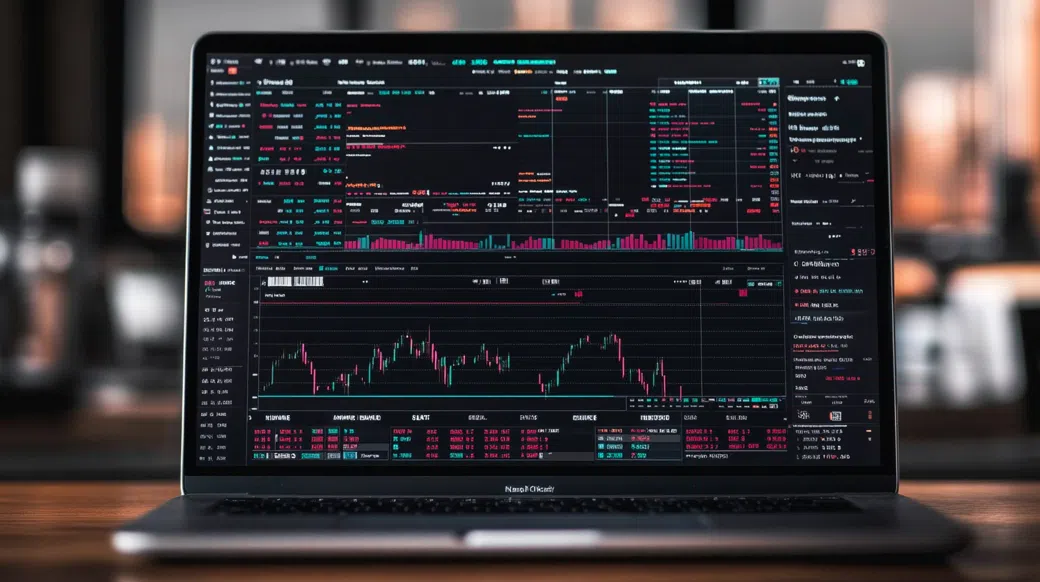
Expect a proprietary WebTrader with basic-to-mid charting rather than a full workstation. Typical builds include multiple chart layouts, a standard set of indicators (moving averages, RSI/MACD-type tools), and drawing tools for manual levels. Order entry is usually geared to market/limit/stop orders with a clean ticket and margin readouts, but advanced workflow—depth-of-market, strategy testing, and robust automation hooks—tends to be thin compared with MT5 or cTrader ecosystems. Mobile apps on iOS/Android usually mirror the essentials: watchlists, simple charting, and position management, while account dashboard functions (deposits/withdrawals, KYC uploads, statement export) are handled inside the same web portal.
Trading Fees, Spreads, and Account Types at Possecimo
Cost structure in this broker category is often spread-led: for EUR/USD, a typical standard-style quote is around ~2.0 pips in normal conditions, which is workable for swing trading but punishing for high-turnover systems. Some firms advertise a raw/ECN-like tier with near-zero spreads plus commission (commonly in the ~$5–$8 round-turn range), but you still need to model total cost: spread + commission + slippage + swap/overnight financing. Add-on fees vary by provider—withdrawal handling charges, inactivity rules, and currency conversion markups are where “cheap” can quietly get expensive. Minimum deposits often cluster around $250, while maximum leverage can be as high as 1:500, which amplifies both opportunity and liquidation risk.
When Do Traders Start Looking for Possecimo Alternatives?
The first red flag is usually not the UI—it’s operational friction: funding and withdrawal rails, account verification loops, or execution that behaves differently when volatility spikes. Once you measure outcomes (fills, slippage, net P&L after swaps) instead of marketing claims, Possecimo alternatives become a practical engineering decision. A regulated option vs Possecimo often gives you clearer rules around negative balance protection (where applicable), better-defined complaint paths, and a platform ecosystem that supports your actual workflow rather than the broker’s preferred flow.
- You need MT4/MT5 or cTrader for automation, VPS hosting, or a strategy that depends on custom indicators not supported by a proprietary WebTrader.
- Your trade journal shows that the all-in round-turn cost (spread + commission + slippage) is consistently higher than peers, especially during London/NY overlap.
- You want real stocks/ETFs (with corporate actions and proper custody) instead of equity CFDs that provide price exposure only.
- High leverage (e.g., 1:500) is tempting, but your risk budget requires stricter margining, better protections, and clearer margin-call mechanics.
How to Choose a Reliable Alternative to the Possecimo Trading Platform
I treat broker selection like selecting dependencies for production code: reduce unknown behavior, prefer audited/regulated primitives, and avoid single points of failure. For alternatives to the Possecimo trading platform, build your shortlist around enforceable protections, the instruments you truly need, and the execution model that fits your strategy. The goal is not maximum leverage; it’s predictable plumbing under stress.
Regulation, Safety, and Investor Protection
Start with the regulator’s public register, not a footer badge. FCA (UK), ASIC (Australia), CySEC (EU), and NFA/CFTC (US) supervision generally implies stricter controls on marketing, client money handling, and reporting. In the UK, eligible accounts can fall under FSCS coverage (up to £85,000), while CySEC-regulated entities may be linked to ICF coverage (up to €20,000) depending on client categorization and terms. Look for segregated client funds language, negative balance protection where required, and a clear legal entity name that matches the register entry.
Available Markets and Instruments
Match the venue to what you’re actually trying to hold. FX and index CFDs are fine for short-horizon trades, but they’re a poor substitute for long-term investing in cash equities/ETFs. If your plan includes options, futures, or bonds, you’re in multi-asset territory (Interactive Brokers, Saxo). If you mostly trade majors and gold with systematic entries, an FX/CFD specialist may be better. This is where competitors to Possecimo separate into “CFD-only exposure” versus “real asset access.”
Trading Costs: Spreads, Commissions, and Other Fees
Ignore single-line “from 0.0 pips” claims and calculate round-turn cost-of-trade for your volume. A trader doing 200 standard lots/month will feel a 1.0 pip difference far more than a slightly higher maximum leverage setting. Compare: (average spread in pips × pip value) + commission (round-turn) + typical slippage + swap/overnight fee for your holding time. Also scan for inactivity fees, withdrawal charges, and currency conversion spreads—small percentages compound fast.
Platforms, Tools, and Execution Quality
Platform choice is a capability decision. MT4/MT5 ecosystems are broad (EAs, indicators), cTrader is strong for depth-of-market and execution tooling, while proprietary terminals vary wildly. Execution model matters: market maker setups can be fine for many retail flows, but STP/ECN/DMA-style routing and transparent fill logic can reduce “surprise” behavior. If you’re migrating from Possecimo, test execution with small size and measure slippage around news or session opens instead of trusting a demo fill.
Support, Education, and Overall User Experience
Support quality shows up at the worst moment—KYC mismatches, rejected withdrawals, or corporate action adjustments. Check live support hours aligned to US/EU sessions, language coverage, and whether responses include concrete steps or generic scripts. Education matters less than many ads suggest, but platform documentation, margin rules, and fee schedules should be readable and consistent. Finally, mobile parity is not optional in 2026: you need full position controls, alerts, and secure authentication flows.
Possecimo and Different Asset Classes: When Alternatives May Be Better
Possecimo Forex and CFD Trading
In a typical offshore-CFD configuration, Possecimo would cover roughly a few dozen FX pairs, a handful of commodities, and major indices—enough for mainstream retail strategies. The trade-off is cost and execution transparency: a ~2.0 pip EUR/USD spread on a standard-style setup pushes you toward longer holds, while high leverage (up to 1:500) increases the chance of forced liquidation on routine volatility. Regulated substitutes for Possecimo often win on measurable metrics: tighter average spreads, clearer commission schedules, and execution tooling that lets you audit what happened. Pepperstone and IC Markets, for example, are commonly used by traders who care about platform choice (MT4/MT5/cTrader) and who want raw-spread + commission pricing that’s easier to model. If your edge depends on frequent entries, shaving even 0.5–1.0 pip can matter more than any “bonus” feature.
Possecimo Stock and ETF Trading
Stock/ETF access is where “platforms like Possecimo” often diverge from brokerages built for investing. Many CFD-first brokers offer equities primarily as CFDs—price exposure without ownership, shareholder rights, or the same corporate action mechanics you get with real shares. If your intent is long-term allocation, dividend handling, or options overlays, you’ll usually want a multi-asset, custody-based model. Interactive Brokers (IBKR) is a frequent pick for US/EU traders who need broad exchange access (stocks, ETFs, options, futures) and detailed reporting. Saxo is another strong candidate for multi-asset portfolios, especially for users who value a polished workstation and integrated risk tools. For “best Possecimo alternatives 2026” in the equity context, prioritize real asset capability and robust statements over flashy chart widgets.
Possecimo Crypto Trading
Crypto is an overloaded word. In many CFD offerings, “crypto trading” means a derivative (a crypto CFD), not on-chain ownership—no withdrawals to a wallet, no self-custody, and exposure is tied to the broker’s pricing and risk model. That can be acceptable for short-term directional trades, but it’s not the same product as holding BTC/ETH. If you specifically want crypto CFDs inside a regulated CFD framework, brokers like IG and Plus500 are known for offering regulated access in certain regions (availability depends on jurisdiction and classification). If your goal is actual coin ownership, you’re outside the CFD broker lane and into regulated exchanges/custodians—an entirely different due diligence checklist. Either way, treat leverage with caution; crypto gaps can turn a “small” position into a margin event quickly.
Best Possecimo Alternatives for 2026: Comparison of Top Trading Platforms
Interactive Brokers (IBKR): Key Facts and How It Compares to Possecimo
Regulation: SEC/FINRA (US), FCA (UK), IIROC (Canada) (entity depends on region)
Markets: Stocks, ETFs, options, futures, bonds, FX
Fees: FX spreads are generally competitive on major pairs; commissions and exchange fees vary by product and venue (model your round-turn per instrument)
Platform: Trader Workstation (TWS), IBKR Desktop, mobile app, APIs
Best For: Multi-asset portfolio builders who want real market access
Pepperstone: Key Facts and How It Compares to Possecimo
Regulation: FCA, ASIC, CySEC, DFSA
Markets: FX, CFDs (indices, commodities, some shares depending on entity)
Fees: On raw-style pricing, EUR/USD can be near 0.0–0.3 pips plus commission (often ~ $6–$8 round-turn); standard-style pricing typically wider (often ~1.0+ pip range)
Platform: MT4, MT5, cTrader
Best For: Systematic FX traders needing MT4/MT5/cTrader flexibility
Saxo Bank: Key Facts and How It Compares to Possecimo
Regulation: FCA, MAS, DFSA (varies by region/entity)
Markets: Stocks, ETFs, options, futures, FX, CFDs, bonds
Fees: Pricing depends on product; FX spreads are typically competitive on majors, with commissions/tiers based on account level and activity
Platform: SaxoTraderGO, SaxoTraderPRO
Best For: Investors who want a single account for stocks, options, and FX
IC Markets: Key Facts and How It Compares to Possecimo
Regulation: ASIC, CySEC, FSA Seychelles (group-level, entity varies)
Markets: FX, CFDs (indices, commodities, crypto CFDs depending on region)
Fees: Raw-style accounts often show EUR/USD around 0.0–0.3 pips plus commission (commonly ~ $6–$7 round-turn); standard accounts generally wider
Platform: MT4, MT5, cTrader
Best For: High-frequency traders optimizing for tight spreads and execution tools
IG: Key Facts and How It Compares to Possecimo
Regulation: FCA, ASIC, MAS
Markets: CFDs (FX, indices, commodities, shares), spread betting (UK), some stock dealing offerings by region
Fees: Costs vary by instrument; major FX spreads are typically competitive, with financing/overnight charges on leveraged positions
Platform: Proprietary web platform, mobile app (MT4 available in some regions)
Best For: EU/UK traders who want a regulated CFD venue with broad market coverage
Plus500: Key Facts and How It Compares to Possecimo
Regulation: FCA, CySEC, ASIC, MAS
Markets: CFDs (FX, indices, commodities, shares, crypto CFDs where permitted)
Fees: Spread-based pricing; typical costs depend on instrument and volatility, plus overnight funding for held CFD positions
Platform: Proprietary web platform and mobile apps
Best For: Beginners who want a simple, regulated CFD interface
Comparison Summary
| Platform | Regulation | Main Markets | Typical Costs | Best For |
|---|---|---|---|---|
| Interactive Brokers (IBKR) | SEC/FINRA, FCA, IIROC | Stocks/ETFs, options, futures, bonds, FX | Product-based commissions/fees; FX typically competitive on majors | Multi-asset portfolio builders who want real market access |
| Pepperstone | FCA, ASIC, CySEC, DFSA | FX, CFDs | Raw: ~0.0–0.3 pips + ~$6–$8 RT; Standard: often ~1.0+ pip | Systematic FX traders needing MT4/MT5/cTrader flexibility |
| Saxo Bank | FCA, MAS, DFSA | Stocks/ETFs, options, futures, FX, CFDs, bonds | Tiered by product/account; competitive FX majors; commissions vary | Investors who want a single account for stocks, options, and FX |
| IC Markets | ASIC, CySEC, FSA Seychelles | FX, CFDs | Raw: ~0.0–0.3 pips + ~$6–$7 RT; Standard: wider spreads | High-frequency traders optimizing for tight spreads and execution tools |
| IG | FCA, ASIC, MAS | CFDs across FX/indices/commodities/shares; spread betting (UK) | Instrument-dependent spreads; overnight financing on leveraged holds | EU/UK traders who want a regulated CFD venue with broad market coverage |
| Plus500 | FCA, CySEC, ASIC, MAS | CFDs across FX/indices/commodities/shares; crypto CFDs where allowed | Spread-based; costs widen in fast markets; overnight funding applies | Beginners who want a simple, regulated CFD interface |
How to Safely Move from Possecimo to Another Broker
Migrating is less “switch apps” and more “change counterparty risk.” Treat it like a controlled rollout: verify the new venue first, reduce exposure before moving money, and keep an audit trail. If you’re moving away from Possecimo, assume nothing about portability—open positions, trading history, and funding rails rarely map cleanly between brokers, and leverage can magnify mistakes during the transition.
- Check the new broker’s legal entity on the regulator’s own site (FCA Register, ASIC Connect, CySEC directory, or NFA BASIC) and screenshot the entry for your records.
- Create the new account and finish KYC/AML (ID + proof of address) before you touch your existing setup; approvals commonly clear within about a business day, but mismatches happen.
- Export statements, confirmations, and funding receipts from the old account so you can reconcile taxes and disputes later, even if access is restricted after closure.
- Flatten or hedge down open positions rather than hoping for a “position transfer.” Rebuild exposure on the new platform with fresh orders and current pricing.
- Withdraw using the same payment method you used to deposit whenever possible; many brokers enforce this to satisfy AML rules and source-of-funds checks.
Ready to Explore Possecimo?
If you’re still evaluating, verify the current onboarding flow, regional eligibility, and fee schedule directly, then compare it side-by-side with regulated brokers similar to Possecimo. Look at platform capabilities you can test (order types, statements, authentication), not just headline spreads.
Visit PossecimoFAQ: Possecimo Alternatives and Trading Platforms
What is the best alternative to Possecimo in 2026?
The best pick depends on whether you need real multi-asset access or primarily FX/CFDs. For broad US/EU market access (stocks/ETFs/options/futures plus FX), Interactive Brokers is hard to beat; for MT4/MT5/cTrader-based FX trading, Pepperstone or IC Markets are common “best Possecimo alternatives 2026” candidates. If you prefer a simpler regulated CFD interface, IG or Plus500 can fit—subject to your region and product permissions.
Is Possecimo a safe broker/platform?
Possecimo appears consistent with an offshore/unregulated-or-lightly-regulated CFD setup (commonly seen under jurisdictions such as Seychelles-style frameworks), which generally provides fewer enforceable protections than FCA/ASIC/CySEC/NFA oversight. Safety is not only about cybersecurity; it’s about segregation, dispute resolution, and what happens during a fast market or a withdrawal problem. If those controls are a priority, regulated options vs Possecimo usually offer a clearer safety perimeter.
Can I trade stocks, futures, or crypto with Possecimo?
Possecimo typically fits a forex-and-CFD profile, so stocks/ETFs are often offered as CFDs (price exposure) rather than real ownership, and exchange-traded futures are commonly not part of the product set. Crypto access, where offered, is usually via crypto CFDs, not on-chain coins you can withdraw to a wallet. If you need real stocks/ETFs or listed futures, competitors to Possecimo like Interactive Brokers or Saxo are built for that.
What should I check before switching from Possecimo to another platform?
Before switching, confirm the new broker’s legal entity on the regulator’s register, then read the client money/segregation policy and negative balance protection terms that apply to your region. Next, compare round-turn trading costs (spread + commission + typical slippage) for the instruments you actually trade, not just a headline “from” number. Finally, test deposits/withdrawals with a small amount and validate platform features (statements, 2FA, margin rules) before moving full capital—especially if you’re coming from platforms like Possecimo with high leverage marketing.
About the Author: Samuel White is a Seoul-based smart contract developer who reviews trading platforms like he reviews code: threat models first, features second. He focuses on execution mechanics, custody/segregation language, and operational failure modes that matter when real money meets real volatility.