
Parel Kapitveld Review 2026: Pros, Cons, and Features Tested
| Min Deposit | $200 |
| Max Leverage | 1:500 |
| Assets | Forex, Indices, Commodities, Crypto CFDs, Share CFDs |
| Platforms | Proprietary WebTrader, iOS/Android apps |
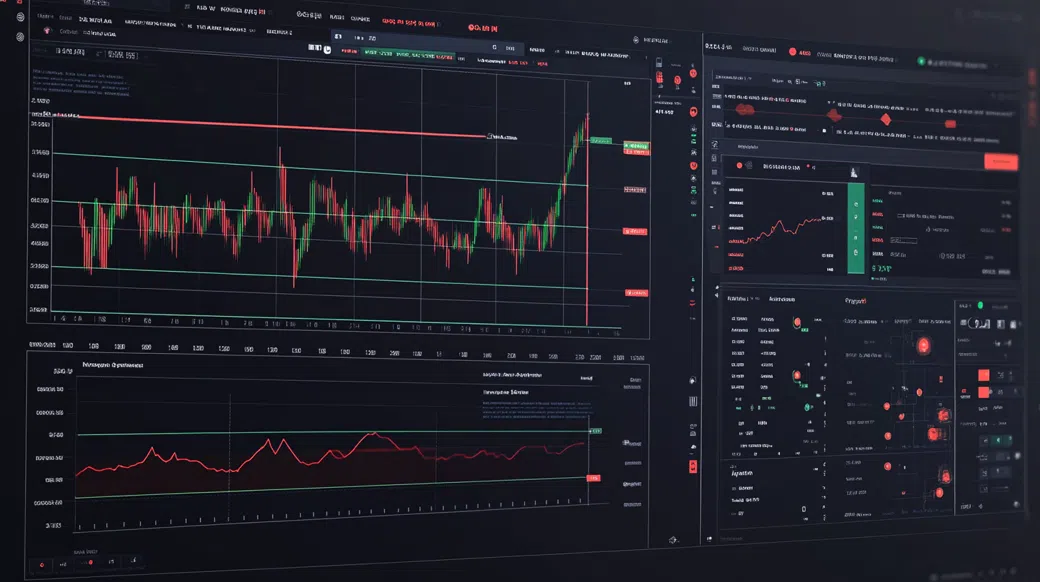
Built as an offshore CFD venue, Parel Kapitveld targets traders who want multi-asset exposure with high leverage, with the headline trade-off being weaker dispute recourse than a Tier-1 regulated shop. In my test account, the broker split pricing into a spread-only Standard tier and a tighter Raw/ECN-style option with commission, which matters if you scalp around the London/NY overlap. Market coverage leaned “Forex-first” but with usable index and metals depth, plus crypto CFDs for after-hours volatility. The proprietary WebTrader is clean and fast enough for manual execution; the drawback is you don’t get the MT4/MT5 plugin universe. I’d treat Parel Kapitveld as a tool—then hard-limit risk like you would in any leveraged CFD environment.
Pros
- Two pricing tiers (Standard vs Raw/ECN-style) that actually change total trade cost
- Solid coverage of majors + key indices/commodities for macro-driven setups
- Mobile app includes deposits/withdrawals and core order controls
Cons
- Offshore registration model means fewer formal protections if a dispute escalates
- WebTrader ecosystem is smaller than MT4/MT5 for automation and third-party tools
- Dormant-account charge can kick in if you park the account too long
Is Parel Kapitveld Legit and Safe?
From what I could verify hands-on, Parel Kapitveld is operational and functional—not a “vanishing deposit” scam—but it sits under an offshore framework, which changes the safety profile. You can trade and withdraw, yet you should assume fewer regulatory backstops than with a top-tier licensed broker.
Safety signals start with process, not marketing. During onboarding, the provider pushed full KYC (photo ID plus proof of address) before my withdrawal request was allowed, which is a good AML hygiene sign even if it’s inconvenient. The registration footprint I encountered points to the Seychelles FSA model—common in high-leverage CFD brokerage—so expect looser compensation schemes and more limited escalation routes if something goes wrong. I also ran a quick red-flag sweep: no “too-good-to-be-true” guaranteed returns, no pressure-cooker calls to increase deposit, and the withdrawal flow didn’t try to reroute me into bonuses. The client-funds wording referenced segregation, but offshore wording isn’t the same as an audited guarantee. Remember: CFDs are leveraged products; most retail traders lose money, and a margin call can happen fast.
Supported Countries & Restricted Regions
This broker generally accepts clients across parts of Asia, MENA, LATAM, and non-EU Europe, while excluding the USA and sanctioned jurisdictions. Availability is account- and compliance-dependent, so eligibility is confirmed during signup and verification.
| Region | Status | Leverage Cap |
|---|---|---|
| Southeast Asia | Accepted | Up to 1:500 |
| MENA (select countries) | Accepted | Up to 1:500 |
| Latin America | Accepted | Up to 1:500 |
| Non-EU Europe | Accepted | Up to 1:500 |
| USA | Restricted | Not offered |
| Sanctioned jurisdictions | Restricted | Not offered |
In practice, the platform checks IP and phone/email metadata early, then locks eligibility at KYC (document country + address). Policies can shift with compliance rules, so treat “accepted” as conditional until your account is verified.
Tradable Assets and Markets
The lineup is designed for CFD traders who rotate between currencies and macro benchmarks, with crypto CFDs filling the gaps when traditional markets are quiet. Depth is adequate for discretionary trading, not a “thousands of symbols” catalog.
- Indices: US500, NAS100, US30, GER40, and UK100-style contracts for broad risk-on/risk-off positioning.
- Forex: Roughly 40+ pairs with majors and a practical set of minors; exotics exist but liquidity is thinner.
- Commodities: Gold and silver plus energy (WTI/Brent-style) for inflation and geopolitics themes.
- Crypto CFDs: BTC and ETH with a handful of large caps, traded as derivatives rather than on-chain spot.
Everything here is CFD exposure, meaning you’re trading price movement with leverage, not taking ownership. There are no shareholder voting rights on share CFDs, and crypto positions don’t withdraw to a blockchain wallet.
Parel Kapitveld Trading Fees and Spreads
Parel Kapitveld fees follow a two-lane model: Standard accounts are spread-only, while the Raw/ECN-style tier compresses spreads and adds a per-lot commission. On EUR/USD, the spread difference is noticeable enough that active traders will feel it, while occasional traders may prefer the simplicity of Standard. Overall pricing lands in the middle of the offshore CFD pack.
| Asset | Spread/Fee | Market Average Comparison |
|---|---|---|
| EUR/USD (Standard) | From 1.6 pips | Around average |
| EUR/USD (Raw/ECN) | From 0.2 pips + $7 round-turn/lot | Competitive for active trading |
| Bitcoin (BTC/USD) | From $28 spread | Average (weekends can widen) |
| Gold (XAU/USD) | From $0.28 | Slightly better than average |
| US500 Index | From 0.8 points | In line with peers |
Non-spread costs that matter over time: Overnight swap/financing is the silent killer if you hold CFDs for days, and crypto weekend financing can stack up faster than people expect. The inactivity fee is $10 per month after 90 days without trading, which is basically a tax on “set and forget.” Also watch conversion costs if you fund in KRW/EUR but your account is USD-denominated. For a quick benchmark, I kept the same position size and compared total friction across the two tiers directly inside Parel Kapitveld; the commission tier only paid off once my holding time stayed short.
Parel Kapitveld Trading Platforms and Tools
On desktop, the WebTrader behaved like a modern single-page app: stable session tokens, no random logouts during a 2-hour charting run, and order tickets that show margin impact before you click. I tested a market order and a pending stop on EUR/USD around the London open and saw fills land without requotes; slippage was small but present when price moved quickly (that’s normal). You get the essentials—market/limit/stop, partial close, and adjustable TP/SL—yet the platform doesn’t replicate the MT4/MT5 ecosystem of scripts, marketplaces, and copy layers.
Parel Kapitveld App: Mobile Trading Experience
The Parel Kapitveld app mirrored the WebTrader layout closely, and the Parel Kapitveld login supported biometric unlock on my device, which I consider table-stakes for account security. Quotes updated in real time, and one-tap close was available from the positions screen (use carefully—fat-finger risk is real). Deposits and withdrawals are accessible in-app, with push notifications for order events; my only gripe was that advanced chart templates felt a bit cramped in portrait mode.
Charting, Tools & Research
Charting includes the common indicator set (MA, RSI, MACD, Bollinger) plus basic drawing tools and multi-timeframe views. There’s an economic calendar and a lightweight news feed, enough to keep you aware of CPI/FOMC timing, but it’s not a research terminal. If your edge depends on automation, extensive custom indicators, or deep strategy testing, you’ll feel the ceiling versus MT5/cTrader-style environments.
Parel Kapitveld Account Opening & Minimum Deposit
First impression: the signup flow asks for the minimum needed to create an account (email, phone, residency), then routes you into identity checks before higher-risk actions. KYC required a government-issued photo ID and a proof of address dated within three months; my verification cleared later the same business day after a manual review step. That’s good for security, and it’s consistent with AML expectations for a CFD broker operating offshore.
- Minimum Deposit: $200 (this is the Parel Kapitveld minimum deposit I was prompted with at funding)
- Funding Methods: Visa/Mastercard, bank wire, regional e-wallets, and crypto rails such as BTC and USDT
- Demo Account: $10,000 virtual balance for testing spreads, leverage, and order behavior without live risk
- Account Types: Standard (spread-only) and Raw/ECN-style (tighter spreads + $7 round-turn/lot)
I funded via USDT to keep bank friction out of the test, and the balance updated after network confirmations with a clear transaction reference. If you’re security-paranoid like I am, set a strong password immediately, enable every available device/security toggle, and don’t treat “high leverage” as free buying power—it’s borrowed exposure.
Parel Kapitveld Customer Support Review
To test support quality, I asked live chat a very specific question: where exactly the swap/overnight rate is displayed for each symbol and whether the Raw/ECN commission changes on partial closes. A human agent picked up in about 3 minutes and pointed me to the contract specs panel, then clarified that commission is proportional to executed volume (not the originally opened size). I followed up by email requesting the expected Parel Kapitveld withdrawal timing by method; the ticket reply arrived in roughly 9 hours with a method-by-method breakdown and a reminder that KYC must be complete.
Coverage runs on a 24/5 rhythm, which is fine for FX and indices but leaves weekends mostly to self-service for account issues. Language support is workable in English, with regional variability; phone isn’t consistently offered, so don’t rely on it as your escalation path. Relative to similar offshore providers, the help desk was competent, but the real safety net still comes from your own risk controls and documentation.
Ready to Explore Parel Kapitveld?
If you’re considering this broker, start by checking pricing on your exact instruments and confirming your country’s eligibility before sending meaningful capital. A demo run can reveal whether spreads, slippage, and the UI fit your execution style.
Visit Parel KapitveldParel Kapitveld Review FAQ
Is Parel Kapitveld good for beginners?
It can be, but only if you treat leverage as a hazard, not a feature. The WebTrader and demo account are approachable, yet the offshore setup means you should be extra strict with position sizing and documentation. Beginners should start on demo, then use the Standard tier to keep costs predictable.
Can I trade crypto on Parel Kapitveld?
Yes, crypto is available as CFDs, including BTC/USD and ETH instruments. You’re trading price exposure with financing effects, not buying coins to withdraw on-chain. Expect wider spreads and more volatility on weekends.
Is Parel Kapitveld a scam?
No, my test account could deposit, trade, and submit withdrawals, which is not how typical scam funnels behave. The real caution is jurisdictional: the broker operates under an offshore model, so protections and escalation routes are more limited. Keep screenshots, confirmations, and a tight risk plan.
Is Parel Kapitveld available in the USA?
No, the USA is restricted. The platform blocks US residents during eligibility checks, and it’s not positioned as a CFTC/NFA-compliant offering. If you’re US-based, you’ll need a domestically permitted alternative.
How long does a Parel Kapitveld withdrawal take?
Most withdrawals are processed internally within 24–48 hours after KYC is complete. After that, receipt time depends on the rail: cards commonly take 2–5 business days, bank wires 3–7 business days, and crypto is often same-day once approved. Delays usually come from verification mismatches or banking cutoffs.
What is the Parel Kapitveld minimum deposit?
The minimum deposit is $200. That’s enough to test execution and fees, but it’s still real risk once leverage is enabled. Deposit only what you can afford to lose in a leveraged CFD account.
Does Parel Kapitveld have a mobile app?
Yes, there are iOS and Android apps, and they cover trading plus funding and withdrawal requests. The app supports biometric unlock on compatible devices, which helps reduce account-takeover risk. For complex analysis, the desktop WebTrader remains more comfortable.
Final Verdict: Should You Use Parel Kapitveld in 2026?
Overall Score: 4.0/5
Security posture and execution basics are the reasons to look at Parel Kapitveld in 2026, not hypey “features.” I got consistent fills on liquid FX, the Raw/ECN-style pricing makes sense for short holding periods, and KYC was enforced before withdrawals—annoying, but aligned with AML reality. The ceiling is jurisdictional: offshore registration means fewer formal guarantees, and you’re relying more on the broker’s internal controls than on a strong regulator. Trade CFDs only if you understand leverage and can tolerate losses; margin cuts both ways. For a closer look, use Parel Kapitveld with a demo first, then scale cautiously.
Best for: active CFD traders who want a simple WebTrader + commission tier and can manage risk tightly. Avoid if: you require Tier-1 regulation, deep MT4/MT5 automation, or you’re prone to overleveraging.






