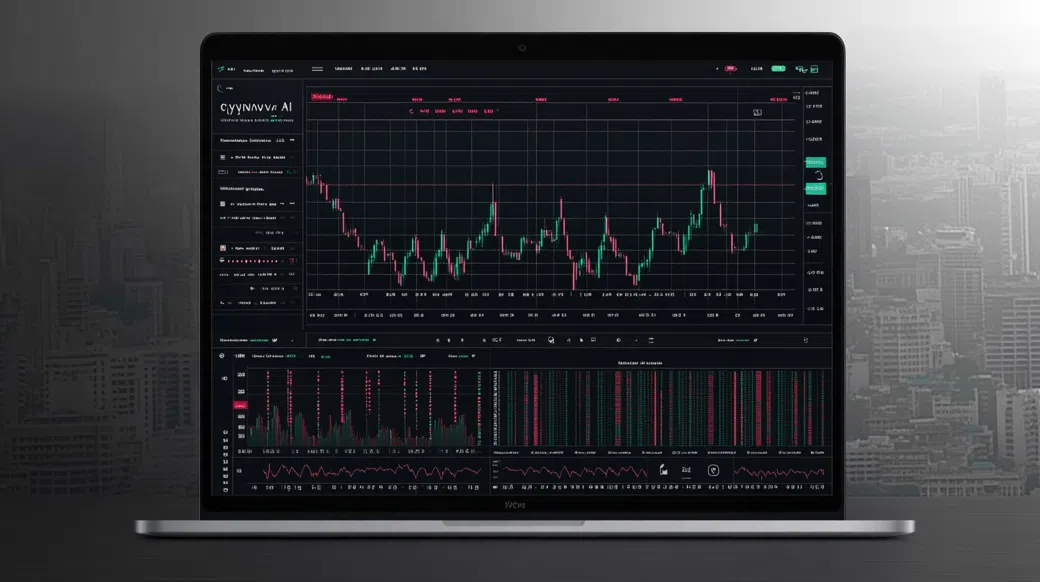
Muelle Capitaje Trading Platform Alternatives 2026: Reliable Options for Online Traders
Security questions rarely start with charts; they start with jurisdiction, custody, and what happens when something goes wrong. That’s the lens I use when evaluating Muelle Capitaje and the broader set of Muelle Capitaje alternatives for 2026. In the offshore CFD segment, it’s common to see a proprietary WebTrader paired with mobile apps, a low-ish entry deposit, and headline leverage that looks attractive until you price in slippage, funding costs, and the practical reality of dispute resolution across borders.
Based on the patterns typical of offshore providers, Muelle Capitaje appears positioned as a forex/CFD-first venue with a basic-to-mid WebTrader experience, a minimum deposit around $250, and leverage that can reach roughly 1:500. Costs in this category often center on spread-only pricing on a Standard-style account (EUR/USD commonly around 2.0 pips), with “Raw/ECN-like” tiers sometimes offered elsewhere but not always transparently documented. For US/EU traders, the biggest driver for switching is rarely one feature—it’s the combined surface area: regulation strength, client-fund handling, execution model clarity, and whether the platform stack supports your actual workflow (MT4/MT5/cTrader, APIs, logs, and risk controls).
Disclaimer: This article is for informational purposes only and does not constitute investment advice. Trading leveraged products such as CFDs involves a high risk of loss and may not be suitable for all investors.
Key Takeaways (TL;DR)
- Offshore CFD venues can look efficient on paper; regulated brokers add harder guarantees like segregated client funds and formal complaints channels.
- Compare “round-turn” cost (spread + commission + swaps) and execution quality, not just headline leverage or “from 0.0” marketing.
- Migration is safer when the new account is KYC-verified first, trade history is exported, and you test with a small deposit before scaling.
What Is Muelle Capitaje and How Does Its Trading Platform Work?
From a product perspective, Muelle Capitaje fits the blueprint of an offshore forex-and-CFD brokerage: a retail-facing account opening flow, a web-based trading terminal, and instrument coverage centered on FX pairs plus the usual CFD staples (indices, commodities, and frequently crypto CFDs). The regulatory posture commonly associated with this segment is “offshore” rather than Tier-1 licensing—here, that means an operating framework aligned with the Seychelles FSA rather than FCA, ASIC, CySEC, or NFA oversight. If you’re comparing brokers similar to Muelle Capitaje, treat the platform as a trading UI first and a legal wrapper second; both layers matter when you need withdrawals, dispute resolution, or enforcement leverage.
Muelle Capitaje Web Trading Platform: Core Features and Tools
The typical proprietary WebTrader in this category focuses on convenience: browser access, a clean watchlist, and one-click trade tickets. Expect functional charting (timeframes, basic indicators, drawing tools) but not the depth you’d get from MT5 or cTrader for custom workflows, strategy testing, or granular order controls. Order types are usually limited to market, limit, stop, and simple take-profit/stop-loss—advanced conditional orders and server-side algos are less common. Mobile apps often mirror the core UI, but parity can be uneven: chart templates, indicator sets, and exportable logs may be thinner on iOS/Android. The account dashboard typically covers deposits/withdrawals, open positions, and margin metrics, but the details that matter for auditability—execution timestamps, partial fills, and slippage reporting—can be harder to interrogate.
Trading Fees, Spreads, and Account Types at Muelle Capitaje
Costs are where “simple” becomes expensive. A standard offshore CFD setup commonly prices EUR/USD around 2.0 pips on a spread-only account, with swaps/overnight financing applied on leveraged holds (and those can dominate P&L if you carry positions for weeks). Minimum deposits often land near $250, and leverage can be marketed up to about 1:500—useful for margin efficiency, but it also compresses error tolerance and accelerates margin calls. Some brokers in this segment advertise multiple tiers (Standard vs. Pro vs. Raw), yet the key question is whether commissions are explicit, whether swap rates are published, and whether fees like inactivity or withdrawal processing are predictable. That’s one reason traders compare platforms like Muelle Capitaje against Tier-1 regulated alternatives with clearer fee schedules and stronger client protections.
When Do Traders Start Looking for Muelle Capitaje Alternatives?
Code teaches you a habit: if you can’t verify assumptions, reduce exposure. Traders usually start scanning Muelle Capitaje alternatives when verification gets difficult—regulatory status is hard to map to real protections, execution quality can’t be independently measured, or withdrawals become slow enough to feel like a risk factor rather than a back-office task. Sometimes the trigger is purely practical: you need MT4/MT5/cTrader for an automated strategy, or you need broader market access than a CFD-only menu can provide. And yes, leverage cuts both ways; at 1:500, small slippage events can become meaningful drawdowns fast.
- You want Tier-1 oversight (FCA/ASIC/CySEC/NFA) and documented client-money segregation rather than an offshore-only framework.
- Your strategy needs MT4/MT5 or cTrader (EAs, custom indicators, VPS workflows), but the current WebTrader can’t replicate that tooling.
- Withdrawal timelines or fee visibility feel inconsistent, and you need predictable funding rails for risk management.
- You’re trying to trade real stocks/ETFs (ownership) instead of stock CFDs, for tax, rights, or long-term portfolio reasons.
How to Choose a Reliable Alternative to the Muelle Capitaje Trading Platform
Think of the selection process like a threat model: identify failure modes (counterparty risk, platform risk, operational risk), then pick controls that actually mitigate them. Regulated options vs Muelle Capitaje can differ less in UI polish and more in “what happens under stress”—flash moves, margin calls, disputed fills, or a frozen withdrawal. If you write down your must-haves (assets, platform stack, cost ceiling, support hours), the shortlist becomes obvious.
Regulation, Safety, and Investor Protection
Start with the regulator because it changes enforcement. FCA, ASIC, CySEC, and NFA impose conduct rules, capital requirements, and audit expectations that offshore regimes often don’t match. In the UK, FSCS protection can apply up to £85,000 in specific failure scenarios; in Cyprus, the ICF framework can cover up to €20,000, depending on eligibility and product. Also look for segregated client funds and negative balance protection policies (where applicable). I treat “can I verify them on the regulator’s public register?” as the minimum bar.
Available Markets and Instruments
Match instruments to intent. If you only need FX and index CFDs, a strong FX/CFD specialist can be ideal. If you want a single account for stocks, ETFs, options, futures, and spot FX, you’re in multi-asset territory where ownership and routing matter. The big trap is “stocks” that are really CFDs—no voting rights, no transfer, and pricing that can diverge under stress. Competitors to Muelle Capitaje in the Tier-1 space can close those gaps by offering real exchange-traded products alongside CFDs.
Trading Costs: Spreads, Commissions, and Other Fees
Price trading like an engineer: compute round-turn cost. Spread-only accounts hide the full bill inside wider spreads; “Raw” accounts show tighter spreads but add a commission per round turn. Then add swap/overnight fees if you hold leveraged positions, plus any inactivity or withdrawal charges. For active traders, a difference of 0.8 pips on EUR/USD over a month can exceed the impact of most “bonus” promotions. If your broker won’t show a stable, reviewable fee schedule, your cost model is guesswork.
Platforms, Tools, and Execution Quality
Platform choice is really an execution-and-ops choice. MT4/MT5 and cTrader enable mature automation ecosystems, detailed logs, and predictable order behaviors; proprietary WebTrader stacks can be fine for discretionary trading but often lack the same transparency. Execution model matters too: market maker vs STP/ECN/DMA changes how fills are sourced and how slippage shows up during volatility. Midway through my own comparisons, I’ll often re-check Muelle Capitaje against candidates by looking for concrete evidence: published execution stats, order rejections policy, and how margin calls are handled.
Support, Education, and Overall User Experience
Support isn’t about friendliness; it’s about resolution time when money is locked. Check operating hours that match US/EU trading sessions, language coverage, and whether you can reach a human for funding and trade disputes. Good education libraries can help beginners, but experienced traders care more about accurate contract specs, swap tables, and clear margin rules. Mobile parity matters if you manage risk away from a desk: alerts, margin notifications, and fast position management are non-negotiable.
Muelle Capitaje and Different Asset Classes: When Alternatives May Be Better
Muelle Capitaje Forex and CFD Trading
Forex is where offshore CFD brokers usually look most “complete,” but the details decide whether you can scale. With Muelle Capitaje-style pricing (often ~2.0 pips on EUR/USD for a Standard setup) and leverage up to about 1:500, the platform can support short-term speculation—while also making small execution defects expensive. In fast markets, slippage and re-quotes (if present) are a bigger deal than the headline spread. FX/CFD specialists like Pepperstone and IC Markets tend to attract systematic and high-frequency retail traders because they offer MT4/MT5/cTrader stacks and commonly provide tighter raw-spread + commission structures (often near 0.0–0.3 pips plus a per-lot commission). That doesn’t eliminate risk, but it makes costs and execution behavior easier to measure and backtest.
Muelle Capitaje Stock and ETF Trading
If your goal is long-horizon investing, “stock exposure” via CFDs is a different instrument with different rights. Stock CFDs typically don’t grant shareholder rights, can embed financing charges, and can be restricted by leverage rules and local regulations. Offshore venues frequently lean toward “stocks as CFDs,” or don’t provide exchange-traded access at all. Multi-asset brokers such as Interactive Brokers and Saxo Bank are strong Muelle Capitaje trading platform alternatives 2026 candidates for investors who want real stocks and ETFs with direct market access, plus options and futures for hedging. The difference feels boring until you need it: corporate actions, tax documentation, and the ability to transfer holdings are structurally cleaner when you own the underlying rather than renting exposure through a derivative.
Muelle Capitaje Crypto Trading
Crypto at CFD brokers is usually “price exposure,” not coin ownership. That means no on-chain withdrawals, no self-custody, and no interaction with DeFi—useful for directional trading, but irrelevant if you actually need the asset. With offshore brokers, crypto CFDs often include wider spreads and higher margin requirements during volatility spikes, and weekend gaps can be brutal. If you want regulated access to crypto price moves via CFDs, IG and Plus500 are often used in regions where those products are permitted, with clearer risk disclosures and platform controls than many offshore counterparts. For anyone coming from a smart-contract background: don’t confuse a crypto CFD position with holding tokens. They are different threat models, different settlement mechanics, and different failure modes.
Best Muelle Capitaje Alternatives for 2026: Comparison of Top Trading Platforms
Interactive Brokers (IBKR): Key Facts and How It Compares to Muelle Capitaje
Regulation: SEC/FINRA (US), FCA (UK), IIROC (Canada) within relevant entities
Markets: Stocks, ETFs, options, futures, bonds, spot FX (availability varies by region)
Fees: FX pricing varies by schedule; commissions apply on many exchange-traded products (generally low, but depends on market and tier)
Platform: Trader Workstation (TWS), web platform, mobile
Best For: Multi-asset traders who want real market access and granular controls
Pepperstone: Key Facts and How It Compares to Muelle Capitaje
Regulation: FCA, ASIC, CySEC, DFSA (entity depends on residency)
Markets: FX and CFDs (indices, commodities, some crypto CFDs where permitted)
Fees: EUR/USD often ~0.0–0.3 pips + commission on Razor/Raw-style accounts; ~1.0+ pip typical on Standard-style pricing
Platform: MT4, MT5, cTrader, TradingView integrations (region-dependent), mobile
Best For: MT4/MT5/cTrader users running systematic or high-turnover FX strategies
Saxo Bank: Key Facts and How It Compares to Muelle Capitaje
Regulation: FCA, MAS, DFSA (entity depends on region)
Markets: Stocks, ETFs, bonds, FX, options, futures, CFDs (product set varies by jurisdiction)
Fees: Spreads and commissions vary by instrument; FX spreads commonly competitive for larger accounts, with transparent ticket costs
Platform: SaxoTraderGO, SaxoTraderPRO
Best For: Portfolio-style traders who want one account for investing plus derivatives hedging
OANDA: Key Facts and How It Compares to Muelle Capitaje
Regulation: CFTC/NFA (US), FCA (UK), ASIC (AU), IIROC (CA)
Markets: Primarily FX; CFDs available in some regions (indices/commodities depending on entity)
Fees: Typically spread-based pricing; EUR/USD often around ~0.6–1.2 pips depending on market conditions and region
Platform: OANDA web/mobile platform, MT4 (availability varies)
Best For: Risk-first FX traders who value strong regulatory coverage across regions
IG: Key Facts and How It Compares to Muelle Capitaje
Regulation: FCA, ASIC, MAS
Markets: CFDs across FX, indices, commodities, shares; spread betting (UK/IE where allowed)
Fees: Spread-based on many CFD markets; FX spreads often competitive (varies by pair and volatility)
Platform: IG web platform, mobile; MT4 available in some regions
Best For: Discretionary CFD traders who want broad markets with a mature platform
Trading 212: Key Facts and How It Compares to Muelle Capitaje
Regulation: FCA, CySEC
Markets: Stocks and ETFs (investing); CFDs (where offered and permitted)
Fees: Investing accounts typically focus on low explicit commissions; CFD costs are primarily spread-based plus overnight financing
Platform: Proprietary web and mobile apps
Best For: App-first investors who want simple access to stocks/ETFs alongside limited CFD use
Comparison Summary
| Platform | Regulation | Main Markets | Typical Costs | Best For |
|---|---|---|---|---|
| Interactive Brokers (IBKR) | SEC/FINRA, FCA, IIROC | Real stocks/ETFs, options, futures, bonds, spot FX | Commissions vary by venue; FX pricing by schedule | Multi-asset traders who want real market access and granular controls |
| Pepperstone | FCA, ASIC, CySEC, DFSA | FX + CFDs (indices/commodities; some crypto CFDs) | ~0.0–0.3 pips + commission (raw); ~1.0+ pip (standard) | MT4/MT5/cTrader users running systematic or high-turnover FX strategies |
| Saxo Bank | FCA, MAS, DFSA | Stocks/ETFs, FX, options, futures, CFDs, bonds | Instrument-based commissions/spreads; transparent ticket pricing | Portfolio-style traders who want one account for investing plus derivatives hedging |
| OANDA | CFTC/NFA, FCA, ASIC, IIROC | FX-first; CFDs in some regions | Mostly spreads; EUR/USD often ~0.6–1.2 pips (conditions vary) | Risk-first FX traders who value strong regulatory coverage across regions |
| IG | FCA, ASIC, MAS | CFDs across FX/indices/commodities/shares; spread betting (where allowed) | Primarily spread-based; varies by market volatility | Discretionary CFD traders who want broad markets with a mature platform |
| Trading 212 | FCA, CySEC | Stocks/ETFs (investing); CFDs (where offered) | Investing: low explicit commissions; CFDs: spreads + overnight financing | App-first investors who want simple access to stocks/ETFs alongside limited CFD use |
How to Safely Move from Muelle Capitaje to Another Broker
Switching brokers is a change-management task, not a vibe check. Treat it like migrating infrastructure: confirm identity, verify the counterparty, run a small canary deployment, then scale. If you’re leaving an offshore venue, also assume withdrawals can be the slowest step, and remember that leverage magnifies mistakes during the transition. I’d rather miss a trade than rush a transfer and create a funding or compliance lock.
- Verify the new broker on the regulator’s public register (FCA Register, ASIC Connect, CySEC register, or NFA BASIC) and make sure the legal entity matches your account-opening paperwork.
- Open the new account and complete KYC/AML checks before doing anything irreversible; identity and proof-of-address approvals often clear quickly, but not always.
- Flatten exposure on Muelle Capitaje by closing open positions rather than assuming any position transfer; most retail brokers do not support cross-broker portability.
- Withdraw using the same funding rail used for deposits when possible, since many payment providers and brokers enforce “return-to-source” AML logic.
- Export statements, trade history, and funding records for taxes and dispute resolution; don’t rely on dashboard access staying available after closure.
- Fund the new broker with a small initial deposit, execute a few low-size trades, and confirm spreads, swaps, and slippage behavior before redeploying larger capital.
Ready to Explore Muelle Capitaje?
If you’re still evaluating whether the current platform fits your risk and tooling requirements, review the onboarding steps, regional eligibility, and fee disclosures directly on the broker site. Compare that against at least one Tier-1 regulated substitute before committing meaningful capital.
Visit Muelle CapitajeFAQ: Muelle Capitaje Alternatives and Trading Platforms
What is the best alternative to Muelle Capitaje in 2026?
The best option depends on what you’re replacing: regulation strength, platform stack, or market access. For real stocks/ETFs plus derivatives, Interactive Brokers or Saxo Bank are strong picks; for FX/CFD execution on MT4/MT5/cTrader, Pepperstone is a common choice. For a simpler CFD-focused experience under Tier-1 regulation, IG can fit discretionary traders. This is the practical way I rank best Muelle Capitaje alternatives 2026: match the broker’s strengths to your strategy’s failure modes.
Is Muelle Capitaje a safe broker/platform?
Muelle Capitaje appears to operate under an offshore framework (commonly associated with the Seychelles FSA), which is structurally different from FCA/ASIC/CySEC/NFA supervision. That doesn’t automatically mean “unsafe,” but it usually means fewer formal investor-protection mechanisms and weaker dispute leverage if something breaks. For many traders, that gap is the core reason Muelle Capitaje alternatives exist—risk isn’t only market volatility; it’s also counterparty and operational reliability.
Can I trade stocks, futures, or crypto with Muelle Capitaje?
Muelle Capitaje is typically positioned around forex and CFDs, where “stocks” (if offered) are more likely stock CFDs rather than real share ownership, and futures access is often limited compared to multi-asset brokers. Crypto exposure in this segment is commonly delivered as crypto CFDs (price tracking, no on-chain withdrawals). If you need real stocks/ETFs or exchange-traded futures, platforms like Interactive Brokers and Saxo Bank are built for that; for regulated crypto CFDs in supported regions, brokers such as IG may be more appropriate.
What should I check before switching from Muelle Capitaje to another platform?
Before switching, confirm the new broker’s exact legal entity on the regulator register and read the margin, negative-balance, and withdrawal policies line by line. Then model your costs using round-turn metrics (spread + commission + swap) and test execution with small size to observe slippage. Finally, export your history from Muelle Capitaje and only close the account after funds and records are secured. Those steps reduce the operational risk that tends to get ignored when people chase lower spreads.
About the Author: Samuel White is a Seoul-based smart contract developer who evaluates trading platforms the way he reviews code: explicit assumptions, verifiable controls, and clean failure paths. He writes about market structure and broker risk with a focus on execution details, custody boundaries, and regulatory reality rather than headlines.