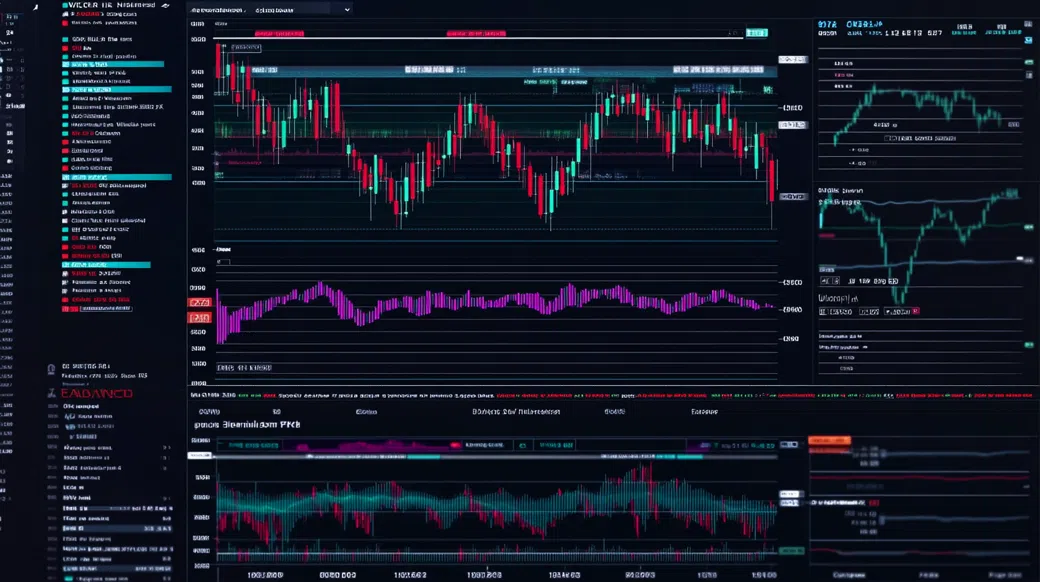
Mocno Fondrecht Trading Platform Alternatives 2026: Reliable Options for Online Traders
Code has a way of making risk visible. A missing check, a silent revert, an unbounded leverage toggle—same pattern, different domain. The Mocno Fondrecht setup, as publicly observed for offshore CFD-style providers, typically looks like this: a proprietary WebTrader with a companion mobile app, a focus on forex/CFDs (often with crypto CFDs), and commercial terms that can include high leverage (commonly up to 1:500) and a minimum deposit around $250. That package can feel “fast” to onboard, but it’s also where traders start asking questions that matter more than UI polish: which regulator is accountable, where client money sits, and what actually happens during a withdrawal or a margin event.
For readers in the US/EU, the gap is usually compliance and protections. Offshore registration—often under the Seychelles FSA framework for this broker category—doesn’t map neatly to the safeguards you may expect under FCA, ASIC, CySEC, or NFA regimes. That’s why this guide focuses on Mocno Fondrecht alternatives that are better-aligned with transparent rulebooks, segregated client funds, and verifiable registrations. I’ll refer to Mocno Fondrecht as the baseline and then compare substitutes by execution model, cost-of-trade (spread + commission round-turn), platform stack (MT4/MT5/cTrader vs proprietary), and product truth (real stocks vs stock CFDs). The goal is simple: fewer surprises when markets gap, servers lag, or your capital needs to come home.
Disclaimer: This article is for informational purposes only and is not investment advice. CFDs and leveraged products can move against you quickly and may result in losses exceeding deposits in some jurisdictions.
Key Takeaways (TL;DR)
- Offshore CFD-style terms (e.g., 1:500 leverage and ~2.0 pips EUR/USD on a standard-style account) can look attractive but shift a lot of risk onto the trader—verify oversight and protections before funding.
- Compare brokers by round-turn cost (spread + commission) and execution model (market maker vs STP/ECN/DMA), not by headline leverage or “from 0.0” marketing.
- If you want real stocks/ETFs (not CFDs), multi-asset venues like IBKR or Saxo are structurally different from WebTrader-first CFD platforms.
What Is Mocno Fondrecht and How Does Its Trading Platform Work?
From a trader’s point of view, Mocno Fondrecht sits in the offshore, CFD-first segment: forex pairs and index/commodity CFDs as the core, plus crypto CFDs in many cases. Access is usually routed through a proprietary browser platform rather than the classic MT4/MT5 ecosystem, which tends to attract beginners and casual speculators who prefer an “all-in-one” dashboard over deep tooling. With this category, the practical question is less “what can I trade?” and more “what is the operational contract?”—order handling, margin call policy, negative balance protection rules, and what regulator (if any) mediates disputes. For US residents, participation is typically restricted; Canada and sanctioned jurisdictions are also commonly blocked.
Mocno Fondrecht Web Trading Platform: Core Features and Tools
On the platform side, the common build is a basic-to-mid WebTrader: decent charting for direction and levels, but not the kind of environment where you’d tune execution-sensitive strategies. Expect standard indicators, drawing tools, and one-click trading, with market/limit/stop orders being the practical minimum. Mobile apps often mirror the Web UI and handle watchlists, deposits/withdrawals, and alerts reasonably well, but strategy depth is limited compared with MT5/cTrader workspaces. If you’ve used platforms like Mocno Fondrecht before, you’ll recognize the pattern: quick onboarding, fewer knobs, and less visibility into routing, slippage distribution, or fill quality.
Trading Fees, Spreads, and Account Types at Mocno Fondrecht
Costs in this offshore WebTrader segment are usually spread-led. A typical reference point is EUR/USD “from about 2.0 pips” on a standard-style account, with wider effective spreads during volatility. Some brokers in this bracket also advertise a raw/ECN-style tier (often ~0.0–0.4 pips plus a commission roughly $6–$8 round-turn per lot), but the real test is consistency across sessions and news spikes. Add swap/overnight financing (especially visible on indices and crypto CFDs), plus possible withdrawal charges depending on method. If you hold positions for days, financing dominates; if you scalp, spread + commission dominates.
When Do Traders Start Looking for Mocno Fondrecht Alternatives?
My usual trigger isn’t a bad trade—it’s ambiguity. The moment you can’t answer “who enforces the rules here?” you’re already in the danger zone, especially with leveraged CFDs. That’s where Mocno Fondrecht alternatives become less of a feature hunt and more of a control-plane upgrade: clearer regulation, better custody rules, and execution you can audit by behavior. Cost matters too, but cost is secondary if the withdrawal path is noisy or the platform can’t support your strategy constraints (EAs, API access, or deterministic order workflows).
- You need MT4/MT5 or cTrader for an automated system, but the current WebTrader can’t host EAs, custom indicators, or robust trade journaling.
- A margin call or stop-out event behaved differently than expected (slippage, partial fills, or rapid liquidation), and you want a broker with clearer execution disclosures.
- You’re moving from “trade-only” to “invest + hedge” and want real stocks/ETFs, options, or futures instead of stock CFDs.
- Withdrawals require repeated back-and-forth (extra documents, delays, or method restrictions), and you’d prefer a stricter but predictable KYC/AML process.
How to Choose a Reliable Alternative to the Mocno Fondrecht Trading Platform
Treat this as a strategy fit exercise with a safety budget. Start by defining what must not fail (custody, withdrawals, dispute resolution), then map your instruments (FX, CFDs, equities) to the brokers that actually offer them under your region’s rules. Only after that should you optimize spreads and platforms.
Regulation, Safety, and Investor Protection
For US/EU readers, the regulator is the root of trust. FCA (UK), ASIC (AU), CySEC (EU), and NFA/CFTC (US) each impose different constraints, but they all publish registers you can check. Investor compensation can matter: FCA-linked firms may fall under FSCS protection (up to £85,000 for eligible claims), while CySEC investment firms may have ICF coverage (up to €20,000). Also look for segregated client funds, negative balance protection (common in the EU/UK retail CFD framework), and clear complaints escalation paths.
Available Markets and Instruments
“Multi-asset” is not a vibe; it’s a product definition. If you want to own stocks/ETFs (with shareholder rights, corporate actions, and clean tax reporting), you need a venue built for securities, not only CFDs. FX and index CFDs may be enough for short-term macro trading, but options and futures change what hedging even means. Competitors to Mocno Fondrecht differ sharply here—some are CFD-only; others give you DMA-style access to exchanges.
Trading Costs: Spreads, Commissions, and Other Fees
Look at round-turn cost, not slogans. A “0.1 pip spread” can be meaningless if commission is $7 round-turn and slippage is worse during peak volatility. For active FX traders, model your typical month: lots traded × (spread in pips × pip value) + commissions + swap. Add the quiet fees too—inactivity charges, currency conversion, and withdrawal costs. This is where regulated options vs Mocno Fondrecht often win: pricing tends to be more standardized and disclosure is more enforceable.
Platforms, Tools, and Execution Quality
Platform choice is really execution choice. MT4/MT5 ecosystems are mature for EAs and third-party tooling; cTrader is popular for depth-of-market workflows and modern order handling; proprietary platforms vary widely. Execution model matters: market maker setups can be fine for many retail flows, but STP/ECN/DMA routing is typically preferred when you care about fill transparency and consistent slippage behavior. If you’re evaluating Mocno Fondrecht against alternatives, test execution with small size around liquid sessions and watch the spread expansion and rejection rate.
Support, Education, and Overall User Experience
Support is a control channel, not a comfort blanket. Check whether live chat/email are staffed during the hours you actually trade (London/NY overlap is a good benchmark). For global users, language coverage and response time are practical, but the substance matters more: can support explain a fill, a swap charge, or a margin call without hand-waving? Mobile parity also matters; if your risk management is on your phone, missing order types and weak notifications become real risk.
Mocno Fondrecht and Different Asset Classes: When Alternatives May Be Better
Mocno Fondrecht Forex and CFD Trading
FX and CFDs are the natural habitat for the Mocno Fondrecht model: roughly 30–50 FX pairs, a handful of commodities, and around 8–15 indices is typical for this segment, with leverage that can reach 1:500. The trade-off is execution clarity. A proprietary WebTrader can be perfectly usable, but it rarely gives you the same tooling for measuring slippage, session-by-session spread behavior, or order-routing characteristics. If you’re cost-sensitive, Pepperstone or IC Markets are common choices among brokers similar to Mocno Fondrecht in product focus, but with tighter raw-style pricing and broader platform support (MT4/MT5/cTrader). For traders who care about rulebooks as much as spreads, IG or CMC Markets can be a cleaner compliance fit in the UK/EU CFD context.
Mocno Fondrecht Stock and ETF Trading
Stock/ETF exposure is where many offshore CFD platforms show their limits. Even when “stocks” are listed, it’s often via CFDs rather than real shares—meaning no shareholder rights, no exchange membership relationship, and different tax/reporting mechanics. If your 2026 plan includes long-term allocation, corporate actions, or options overlays, that CFD-only approach becomes a mismatch. Interactive Brokers (IBKR) is the obvious bridge for US/EU traders needing real equities, ETFs, options, and futures under major regulators; Saxo Bank plays a similar role with a polished multi-asset stack and strong research tooling. These are not just Mocno Fondrecht alternatives—they’re a different class of venue built for custody and execution across listed markets.
Mocno Fondrecht Crypto Trading
Crypto at Mocno Fondrecht, when offered, is typically crypto CFDs: price exposure without on-chain ownership, no withdrawals to self-custody, and no verifiable proof-of-reserves because you’re not holding the asset. That can be acceptable if your intent is short-term directional trading with tight risk limits, but it’s not a substitute for spot custody. In regulated CFD land, IG and Plus500 are widely used for crypto CFDs where permitted, with product availability depending on jurisdiction and retail rules. If your requirement is “I want to hold coins,” you’re outside the CFD broker conversation entirely—then you’re evaluating regulated exchanges and self-custody practices, not brokers.
Best Mocno Fondrecht Alternatives for 2026: Comparison of Top Trading Platforms
Interactive Brokers (IBKR): Key Facts and How It Compares to Mocno Fondrecht
Regulation: SEC/FINRA (US), FCA (UK), IIROC (Canada) (entity depends on your region)
Markets: Stocks, ETFs, options, futures, bonds, FX (spot), funds (varies by jurisdiction)
Fees: FX spreads are typically competitive on larger sizes; commissions and exchange fees apply on listed products (varies by market/plan)
Platform: Trader Workstation (TWS), IBKR Desktop/Mobile, Client Portal; API access
Best For: Security-first multi-asset traders who want real markets
Pepperstone: Key Facts and How It Compares to Mocno Fondrecht
Regulation: FCA, ASIC, CySEC, DFSA
Markets: FX and CFDs (indices, commodities, some crypto CFDs where allowed)
Fees: Raw-style accounts often ~0.0–0.3 pips on EUR/USD + commission (commonly around $7 round-turn); standard pricing typically higher
Platform: MT4, MT5, cTrader; mobile support
Best For: Algorithmic FX traders running MT4/MT5/cTrader
IG: Key Facts and How It Compares to Mocno Fondrecht
Regulation: FCA, ASIC, MAS
Markets: CFDs across FX, indices, commodities, shares; spread betting in the UK (where eligible)
Fees: Costs are mainly spread-based; FX spreads can be competitive on majors, with financing/swap on held CFD positions
Platform: IG web platform, mobile apps; MT4 available in some regions
Best For: Risk-managed CFD traders who value strong oversight
Saxo Bank: Key Facts and How It Compares to Mocno Fondrecht
Regulation: FCA, DFSA, MAS
Markets: Stocks, ETFs, options, futures, FX, bonds, CFDs (availability varies by jurisdiction)
Fees: Pricing depends on tier and product; FX spreads are typically competitive for active traders, with commissions on many listed instruments
Platform: SaxoTraderGO, SaxoTraderPRO
Best For: Portfolio builders needing research plus execution
OANDA: Key Facts and How It Compares to Mocno Fondrecht
Regulation: CFTC/NFA (US), FCA (UK), ASIC (AU), IIROC (Canada)
Markets: FX (core), CFDs in certain jurisdictions (indices/commodities), limited crypto offerings depending on region
Fees: Typically spread-led pricing; EUR/USD often around ~0.6–1.2 pips in many account setups, varying by region and market conditions
Platform: OANDA web/mobile, MT4 support (region-dependent)
Best For: FX-only traders who want straightforward pricing
Plus500: Key Facts and How It Compares to Mocno Fondrecht
Regulation: FCA, CySEC, ASIC, MAS
Markets: CFDs on FX, indices, commodities, shares, and crypto CFDs where permitted
Fees: Spread-based; costs vary by instrument and volatility, with overnight funding for held CFD positions
Platform: Plus500 proprietary web platform and mobile apps
Best For: Beginners who want a simple, app-first CFD interface
Comparison Summary
| Platform | Regulation | Main Markets | Typical Costs | Best For |
|---|---|---|---|---|
| Interactive Brokers (IBKR) | SEC/FINRA, FCA, IIROC (by entity) | Real stocks/ETFs, options, futures, bonds, FX | Commissions/fees vary by product; FX typically competitive at scale | Security-first multi-asset traders who want real markets |
| Pepperstone | FCA, ASIC, CySEC, DFSA | FX + CFDs | Raw ~0.0–0.3 pips + ~$7 round-turn; Standard higher | Algorithmic FX traders running MT4/MT5/cTrader |
| IG | FCA, ASIC, MAS | CFDs (FX/indices/commodities/shares); UK spread betting | Mostly spread-based; swaps/financing apply on holds | Risk-managed CFD traders who value strong oversight |
| Saxo Bank | FCA, DFSA, MAS | Stocks/ETFs, options, futures, FX, bonds, CFDs | Tiered pricing; spreads/commissions depend on product | Portfolio builders needing research plus execution |
| OANDA | CFTC/NFA, FCA, ASIC, IIROC | FX (core); some CFDs by region | Often ~0.6–1.2 pips EUR/USD (region/conditions vary) | FX-only traders who want straightforward pricing |
| Plus500 | FCA, CySEC, ASIC, MAS | CFDs across major asset classes (including crypto CFDs where allowed) | Spread-based + overnight funding on held positions | Beginners who want a simple, app-first CFD interface |
How to Safely Move from Mocno Fondrecht to Another Broker
Switching brokers is a migration, not a click. Sequence matters because you’re moving identity (KYC), capital (withdrawals), and strategy (platform/tooling) at the same time—and leveraged products amplify any mistake. Before you pull funds, confirm the new venue is real on a regulator’s register, then stage the move in small, verifiable steps. I’m using Mocno Fondrecht as the “source” account for the workflow below.
- Check the broker’s legal entity on the regulator’s public register (FCA Register, ASIC Connect, CySEC list, or NFA BASIC), then match the domain name and client agreement to that entity.
- Open the new account and complete KYC/AML before you reduce activity on the old one; ID and proof-of-address verification often clears within a business day, but not always.
- Flatten open exposure on the old platform deliberately—close positions during liquid hours and record fills, because cross-broker position transfers are generally not a thing for retail CFDs.
- Export or screenshot your trade history, statements, and funding records; you’ll want them for taxes, disputes, and sanity checks if a balance ever looks off.
- Withdraw in full using the original funding rails where possible (card-to-card, bank-to-bank, wallet-to-same-wallet), since many compliance teams reject third-party routes.
Ready to Explore Mocno Fondrecht?
If you’re still evaluating the original platform, compare it side-by-side with the regulated substitutes above: platform stack, legal entity, and the withdrawal/KYC workflow. Eligibility can change by region, so confirm your country’s onboarding rules and product limits before depositing real money.
Visit Mocno FondrechtFAQ: Mocno Fondrecht Alternatives and Trading Platforms
What is the best alternative to Mocno Fondrecht in 2026?
The best option depends on whether you need real markets or only CFDs. For real stocks/ETFs, options, and futures, Interactive Brokers (IBKR) is usually the cleanest upgrade path; for FX/CFDs with MT4/MT5/cTrader, Pepperstone is a strong candidate. If your focus is regulation-first CFDs in the UK/EU, IG is often a better match than offshore-style platforms.
Is Mocno Fondrecht a safe broker/platform?
Based on how this broker category commonly presents, Mocno Fondrecht appears closer to an offshore/unregulated framework (often seen under jurisdictions like the Seychelles FSA) than to FCA/ASIC/CySEC/NFA oversight. That doesn’t automatically mean fraud, but it does mean fewer enforceable protections and weaker dispute pathways for US/EU users. If you trade leveraged CFDs (often up to 1:500 in this segment), risk is not only market risk—it’s also operational risk.
Can I trade stocks, futures, or crypto with Mocno Fondrecht?
Most platforms like Mocno Fondrecht primarily offer forex and CFDs; “stocks” are frequently offered as stock CFDs rather than real shares, and futures are often not offered as exchange-traded contracts. Crypto exposure, when present, is commonly via crypto CFDs—price tracking without on-chain ownership or withdrawals. If you need real stocks/ETFs or listed futures, brokers such as IBKR or Saxo are built for that.
What should I check before switching from Mocno Fondrecht to another platform?
Before switching, verify the new broker’s exact legal entity on the regulator register (FCA/ASIC/CySEC/NFA) and confirm the domain in your client agreement matches that entity. Next, validate costs with a small live test: spreads, commission, and swap/overnight fees behave differently in real conditions than on a pricing page. Finally, stage withdrawals and keep statements—don’t delete your Mocno Fondrecht trail until funds and records are safely reconciled.
About the Author: Samuel White is a Seoul-based smart contract developer who approaches trading platforms the way he approaches production code: threat model first, features second. He focuses on execution details, custody risk, and how rulebooks behave under stress rather than headline marketing.