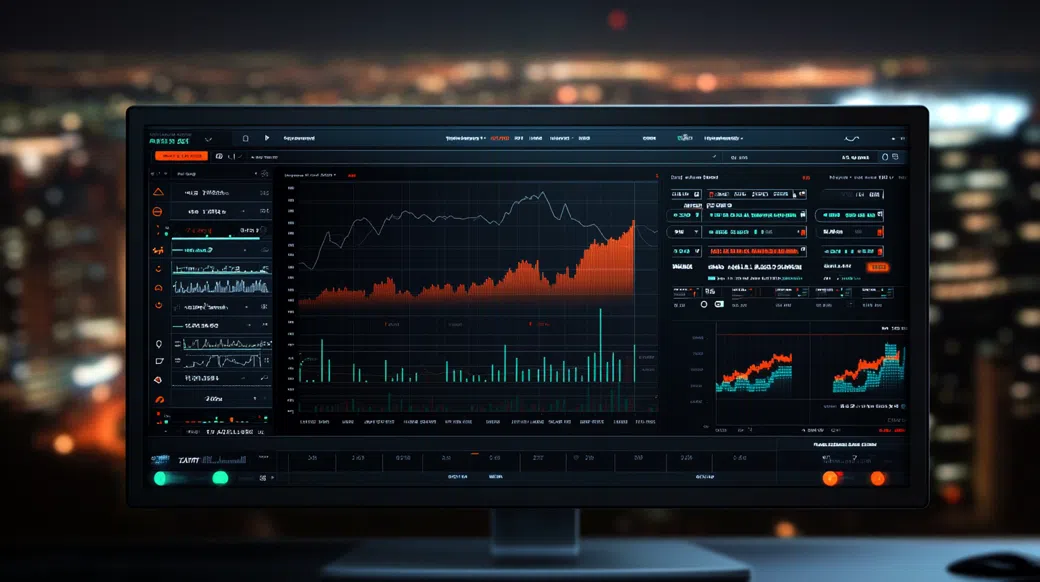
Klavipregio Review 2026: Pros, Cons, and Features Tested
| Min Deposit | $200 |
| Max Leverage | 1:500 |
| Assets | Forex, Indices, Commodities, Crypto CFDs, Share CFDs |
| Platforms | WebTrader (browser) + iOS/Android mobile apps |
Built like a multi-asset CFD venue, Klavipregio suits traders who want broad market access and high leverage, but who can live with an offshore dispute path and fewer formal safeguards than a top-tier regulator would enforce. I ran a small, verified test account, and the tiering was simple: a spread-only Standard option and a tighter-spread Pro/Raw-style option with commission. The lineup is Forex-first but not narrow—indices and metals felt like the “daily drivers,” with crypto CFDs for volatility. The WebTrader is clean and security prompts are consistent, while the biggest drawback is that you’re trusting policy and process more than strict statutory oversight. For the current onboarding flow, start at Klavipregio.
Pros
- Two clear pricing lanes (spread-only vs. raw + commission) for different trade frequencies
- Solid multi-asset coverage for a single-margin account (FX, indices, metals, crypto CFDs)
- Mobile and WebTrader share watchlists and positions, reducing platform friction
Cons
- Operates under an offshore registration model, so escalations and compensation schemes are limited
- Education depth is light; you’ll rely on your own playbook and risk model
- Dormant accounts can accrue an inactivity charge after a period of no trading
Is Klavipregio Legit and Safe?
Klavipregio looked operational and trade-capable in my checks—orders filled, KYC was enforced, and a test withdrawal completed—so I would not label it a Klavipregio scam. The caveat is structural: it runs under offshore regulation, which typically means fewer formal remedies if a dispute turns ugly.
My account documents pointed to registration under the Seychelles FSA framework, and that matters because “offshore” changes the enforcement geometry: higher leverage is easier to offer, but investor compensation programs and regulator-led mediation are thinner than FCA/ASIC-style regimes. I did a basic red-flag sweep: no weird “guaranteed profit” claims inside the client area, no aggressive bonus pop-ups pushed during deposit, and no trophy-wall of unverifiable awards shoved into the trading flow. On the protection side, the provider required photo ID plus proof of address before withdrawals, and the legal pages referenced segregated client funds language (good to see, though it’s not the same as audited segregation under a Tier-1 rulebook). Remember the product risk: CFDs are leveraged instruments; most retail accounts lose money, and a margin call can arrive fast when volatility spikes.
Supported Countries & Restricted Regions
The broker generally accepts clients across parts of Asia, MENA, LATAM, and non-EU Europe, while the USA and sanctioned locations are blocked. Availability is not uniform—local rules and the broker’s risk policy can tighten without much notice.
| Region | Status | Leverage Cap |
|---|---|---|
| Southeast Asia (selected countries) | Accepted | Up to 1:500 |
| MENA (selected countries) | Accepted | Up to 1:500 |
| Latin America | Accepted | Up to 1:500 |
| Non-EU Europe (selected) | Accepted | Up to 1:200 |
| USA | Restricted | Not offered |
| Sanctioned jurisdictions | Restricted | Not offered |
In practice, eligibility is enforced through a mix of signup declarations, IP/location checks, and KYC review before funding or payout. If you travel or hold dual residency, expect the platform to re-verify at withdrawal.
Tradable Assets and Markets
Rather than trying to be “everything,” the platform leans into liquid CFDs you can margin efficiently—good for systematic risk control, less ideal for investors seeking real ownership. I found the instrument list focused on the names traders actually click during London and New York sessions.
- Indices: Major contracts like US500 and NAS100 alongside Europe staples such as GER40 for macro-driven trading.
- Forex: 40+ pairs across majors/minors, with a few higher-spread exotics for those who can model the risk.
- Commodities: XAU/USD and XAG/USD plus energy (WTI/Brent) for inflation and rate-cycle narratives.
- Crypto CFDs: BTC and ETH pairs with weekend pricing, positioned for volatility rather than “buy-and-hold.”
These are CFDs, not spot holdings: you’re trading price exposure with leverage, not receiving shareholder voting rights, not withdrawing on-chain coins, and not collecting dividends in the traditional sense. Treat it like a margin product, because it is one.
Klavipregio Trading Fees and Spreads
The cost structure is split: Standard accounts bake fees into the spread, while the Pro/Raw-style tier targets tighter pricing with a per-lot commission. On my test, pricing landed in the “typical offshore CFD broker” band—competitive enough for intraday strategies, but not the absolute cheapest if you’re hunting institutional-grade routing.
| Asset | Spread/Fee | Market Average Comparison |
|---|---|---|
| EUR/USD (Standard) | From 1.6 pips | In line |
| EUR/USD (Raw/ECN) | From 0.2 pips + $7 round-turn/lot | Slightly better than average for raw tiers |
| Bitcoin (BTC/USD) | From $35 (variable) | In line |
| Gold (XAU/USD) | From $0.30 | In line to slightly better |
| US500 Index | From 0.8 points | In line |
Non-spread costs that matter over weeks, not minutes: overnight swap/financing applies to most CFD positions, and crypto typically carries weekend financing as well. After 90 days of inactivity, I saw an inactivity fee listed at $10 per month, which can quietly erode small balances. Funding in a non-USD base can introduce conversion costs via your card issuer or the broker’s rate; model it if you deposit KRW/EUR and trade USD-margined instruments.
Klavipregio Trading Platforms and Tools
WebTrader stability was the first thing I tried to break: repeated session refreshes, tab switching, and order panel reloads stayed consistent, and the platform didn’t “forget” chart layouts. Order types covered the basics I expect for CFD risk control—market, limit, stop, and editable SL/TP on open positions—though you won’t get the deep plugin ecosystem that comes with MT4/MT5. Execution during a normal liquidity window (NY/London overlap) felt predictable, with no odd re-quotes when I scaled a position in two steps.
Klavipregio App: Mobile Trading Experience
The Klavipregio app mirrors the web layout closely, which helps when you’re managing positions on a commute. Klavipregio login on my device supported biometric unlock, and I could deposit, modify stops, and close trades from the same menu without hunting. Quotes updated smoothly, push notifications worked for price alerts, and one-tap close is there for damage control; the main quirk is that indicator customization is slimmer on mobile than desktop.
Charting, Tools & Research
Charting covers the usual indicator set (MA, RSI, MACD, Bollinger) with enough drawing tools to mark structure and risk levels. You also get an economic calendar plus a lightweight news feed—useful for timing, not for deep research. If you live inside custom indicators or want strategy testing, you’ll feel the ceiling versus MT5/cTrader-style environments.
Klavipregio Account Opening & Minimum Deposit
From the signup screens, the workflow was minimal: email, password, and a short profile that read like standard AML gating (residency, experience, source-of-funds prompts). KYC required a government-issued photo ID and a proof of address dated within three months; my verification cleared the same business day after I uploaded both files. A small security note I appreciated: the client area nudged me to enable stronger authentication before initiating payouts.
- Minimum Deposit: $200 (this is the Klavipregio minimum deposit I saw for card funding)
- Funding Methods: Visa/Mastercard, bank wire, regional e-wallets, and crypto (BTC, USDT)
- Demo Account: $10,000 virtual balance, useful for mapping margin behavior and testing order rules
- Account Types: Standard (spread-only) and Pro/Raw-style (lower spread + $7 round-turn commission)
I funded by card to keep the test reproducible, then used USDT later to compare confirmation speed—both posted cleanly in the ledger. For anyone security-minded, treat the first withdrawal as part of onboarding: it’s where identity checks and bank/card name matching tend to bite. If you want to validate the current flow yourself, open the portal via Klavipregio and start with demo before touching leverage.
Klavipregio Customer Support Review
My support test was intentionally boring: I asked live chat to clarify how swap/overnight fees are displayed per symbol and whether the raw tier changes financing. The agent came back in roughly three minutes with the navigation path to the contract specs and explained that swaps remain instrument-driven, not account-driven. I also filed an email ticket about withdrawal sequencing (KYC-first vs. payout-first); the reply landed in about nine hours with a method-by-method timeline and a reminder that name mismatches can delay cards.
Coverage is what you’d expect for a CFD desk: 24/5 live chat and email, with weekends quieter outside crypto. Language support depends on staffing, and phone help wasn’t prominently offered in my region, so assume chat-first unless your jurisdiction shows a local number. Relative to peers in the same offshore bracket, the support quality felt more “procedural” than salesy, which I’ll take.
Ready to Explore Klavipregio?
Before committing real margin, use the demo to verify spreads at your trading hours, then confirm your country eligibility and withdrawal rail. If you’re the type who audits every fee line item, read the contract specs and swap tables first—small details compound quickly with leverage.
Visit KlavipregioKlavipregio Review FAQ
Is Klavipregio good for beginners?
It can be, but only if you treat it like a risk-management exercise first. The interface is approachable and the $10,000 demo helps you learn margin and stop placement without real loss. The bigger beginner hazard is leverage (up to 1:500), which can turn a small mistake into a fast drawdown.
Can I trade crypto on Klavipregio?
Yes, crypto is available as CFDs, with majors like BTC and ETH. That means you’re trading price movements and financing, not buying coins you can withdraw to an on-chain wallet. Weekend pricing and financing are part of the package, so size positions accordingly.
Is Klavipregio a scam?
No, based on my 2026 test it behaved like a functioning broker: KYC checks were applied and a withdrawal completed after verification. The more accurate framing is “offshore risk,” not “scam risk”—your protections and escalation options are thinner than with a Tier-1 licensed firm. Always assume CFDs can produce rapid losses and never deposit money you can’t afford to lose.
Is Klavipregio available in the USA?
No, it’s restricted for US residents. The signup and compliance flow is designed to block jurisdictions with incompatible CFD rules. If you have mixed residency, expect additional checks.
How long does a Klavipregio withdrawal take?
Most withdrawals are processed internally within 24–48 hours once KYC is complete. After that, delivery depends on the rail: cards typically take 2–5 business days, bank wires 3–7 business days, and crypto often arrives the same day. In my test, the main delays were compliance checks, not the payout button itself.
What is the Klavipregio minimum deposit?
The minimum deposit is $200 for card funding on the account I opened. Bank wire or crypto rails may have different minimums depending on network and bank constraints. If you’re testing execution, consider starting with the minimum and withdrawing once to validate the full cycle.
Does Klavipregio have a mobile app?
Yes, there are iOS and Android apps alongside the browser-based WebTrader. You can manage orders, adjust SL/TP, and handle deposits/withdrawals from mobile, with biometric login supported on compatible devices. Indicator depth is thinner than desktop, but trade management is solid.
Final Verdict: Should You Use Klavipregio in 2026?
Overall Score: 4.0/5
My takeaway is pragmatic: Klavipregio delivers the core trading loop—fund, trade, manage margin, withdraw—without obvious gimmicks, and the raw+commission tier is credible for active traders who actually care about effective spread. Offshore registration (Seychelles FSA) remains the non-negotiable risk variable, so I’d keep position sizing conservative and treat the first payout as a trust test. If you’re evaluating it, use Klavipregio with a demo-first workflow and remember CFDs are leveraged products; capital is at risk.
Best for: self-directed CFD traders who want WebTrader + mobile convenience and can model leverage risk. Avoid if: you require Tier-1 regulation, formal compensation schemes, or platform ecosystems like confirmed MT5/cTrader.