Helder Rendemvale Review 2026: Pros, Cons, and Features Tested
| Min Deposit | $200 |
| Max Leverage | 1:500 |
| Assets | Forex, Indices, Commodities, Crypto CFDs, Share CFDs |
| Platforms | WebTrader + iOS/Android mobile apps |
Built as an offshore CFD venue, Helder Rendemvale targets traders who want broad market access and higher leverage, with the main trade-off being lighter dispute and compensation mechanisms than Tier‑1 jurisdictions. My test account showed two clear pricing tiers (spread-only vs. Raw/ECN-style), plus a platform stack centered on a browser WebTrader and mobile apps rather than a confirmed MT4/MT5 install. The instrument list leans practical: majors for FX, the headline indices, metals/energy, and liquid crypto CFDs. Execution and withdrawals worked in my run-through, but you should treat the risk model as “you manage your own guardrails,” especially at 1:500. I used Helder Rendemvale primarily to sanity-check costs, tooling, and cashflow behavior.
Pros
- Two account tiers with a real spread/commission split for active vs. casual trading
- Web-first platform runs cleanly on desktop with mobile parity for basic workflows
- KYC was enforced before withdrawal, which filters some low-effort abuse patterns
Cons
- Offshore framework means weaker escalation routes if a dispute turns messy
- Education and research are functional, not deep
- Inactivity fee can quietly tax dormant accounts
Is Helder Rendemvale Legit and Safe?
From my account test, the broker behaved like an operating trading service rather than an obvious “Helder Rendemvale scam” setup. That said, it runs under an offshore registration model, so “is Helder Rendemvale legit” depends on whether you accept looser investor protections in exchange for flexibility.
Compliance signals were the first thing I poked at (I write smart contracts; I assume adversarial inputs). The provider presents itself under the Seychelles FSA offshore regime, which typically allows higher leverage and faster product rollout, but it also tends to come with thinner statutory compensation schemes and fewer hard levers for retail dispute escalation. During my test window I looked for the usual red flags—fake awards, forced “account manager” pressure, or withdrawal stalling—and didn’t hit them: KYC (photo ID + proof of address) was required before cash-out, and the site language repeatedly referenced segregated client funds. None of that equals Tier‑1 protection, and negative balance protection is more a policy than a court-tested guarantee offshore. Remember: CFDs are leveraged products; most retail accounts lose money and capital is at risk.
Supported Countries & Restricted Regions
This broker generally accepts clients across parts of Asia, LATAM, and MENA, while blocking the USA and sanctioned jurisdictions. Availability still depends on your local rules and the platform’s onboarding checks.
| Region | Status | Leverage Cap |
|---|---|---|
| Southeast Asia | Accepted | Up to 1:500 |
| MENA (selected countries) | Accepted | Up to 1:500 |
| Latin America | Accepted | Up to 1:500 |
| Non-EU Europe (selected) | Accepted | Up to 1:200 |
| USA | Restricted | Not offered |
| Sanctioned jurisdictions | Restricted | Not offered |
Eligibility wasn’t just a checkbox: the signup flow requested country, and later the KYC address document effectively re-validates residency. If you travel or use a VPN, expect IP/location friction and possible re-checks as policies shift.
Tradable Assets and Markets
The menu is multi-asset in a pragmatic way—enough coverage to run a macro watchlist without pretending to be an equities specialist. I focused my tests on liquid contracts where spreads and execution behavior are easiest to benchmark.
- Indices: Core benchmarks like US500 and NAS100 were available with intraday-friendly contract sizing.
- Forex: Roughly 40+ pairs showed up, with majors and a few exotics for volatility seekers.
- Commodities: Gold and crude (plus other energy) are there for the classic risk-on/risk-off rotations.
- Crypto CFDs: BTC and ETH pairs led the list, with financing costs that matter if you hold over weekends.
- Share CFDs: A smaller set of US/EU large caps for event-driven trades rather than long-term ownership.
All of this is CFD exposure: you’re trading price movement, not taking shareholder rights, not receiving “real” on-chain coins, and dividend effects (if any) are handled as adjustments inside the contract.
Helder Rendemvale Trading Fees and Spreads
Helder Rendemvale fees follow a two-lane model: Standard accounts bake costs into the spread, while a Raw/ECN-style tier tightens spreads and charges a per-lot commission. In my checks, the all-in cost was broadly in line with offshore CFD peers—competitive on majors if you pick the right tier.
| Asset | Spread/Fee | Market Average Comparison |
|---|---|---|
| EUR/USD (Standard) | From 1.6 pips | About average |
| EUR/USD (Raw/ECN) | From 0.2 pips + $7 round-turn/lot | Competitive for active traders |
| Bitcoin (BTC/USD) | From 0.35% | In the typical range |
| Gold (XAU/USD) | From $0.35 | Slightly better than average |
| US500 Index | From 0.8 points | About average |
Non-spread costs that matter: Swap/overnight financing is the silent line item—holding FX or metals for days will often cost more than the entry spread, and crypto can stack weekend financing. The platform also showed an inactivity fee of $10/month after 90 days without trading activity, which is easy to miss if you treat the account like a backup venue. Withdrawals may be free on the broker side, but your bank/card rail can still add charges, and funding in one currency while your base is another introduces conversion costs. If you’re modeling expectancy, bake these into your “total friction,” not just the pip number. For my fee spot-checks I referenced Helder Rendemvale directly from inside the trading ticket and contract spec pages.
Helder Rendemvale Trading Platforms and Tools
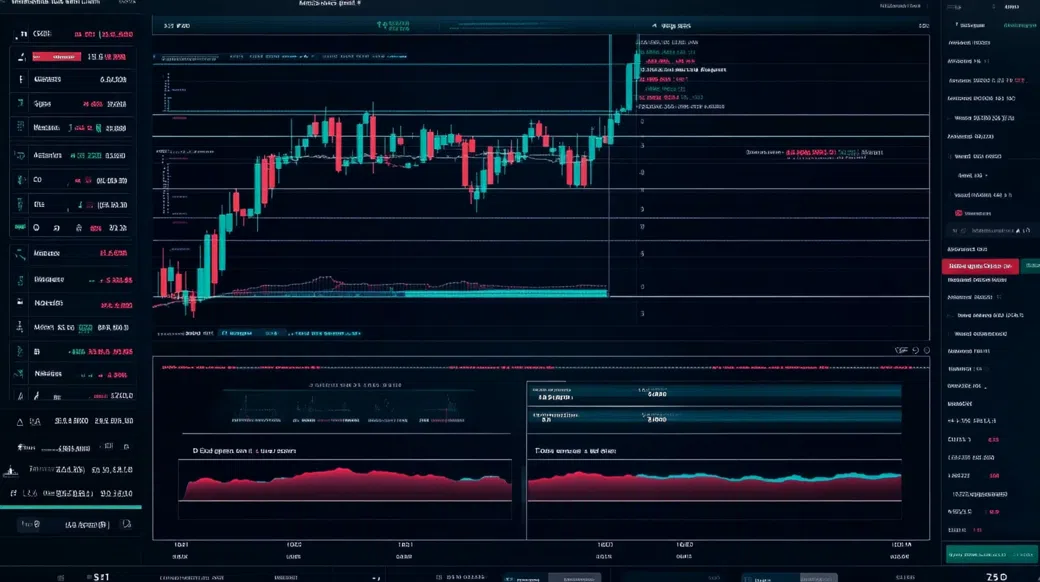
On desktop, the WebTrader behaved like a modern single-page app: sessions stayed stable across multiple chart tabs, and order entry supported market/limit/stop with editable SL/TP after fill. I tested a small US500 position during the NY cash open and saw fills without platform-side errors; slippage existed but stayed within what I’d expect when the book thins for a moment. If you live inside MT4/MT5 plugin ecosystems (EAs, custom indicators), note that I didn’t see a confirmed MT4/MT5 download path in my onboarding—this stack is more “built-in tools” than “open terminal ecosystem.”
Helder Rendemvale App: Mobile Trading Experience
The Helder Rendemvale app mirrors the WebTrader layout: watchlists, charts, and positions are one thumb away, and I could manage risk (move stops, close partials) without fighting the UI. Helder Rendemvale login on my phone supported biometrics, which I prefer for reducing credential reuse habits. Deposits and withdrawal requests were also accessible in-app, plus push notifications for price alerts. My only gripe: dense indicator settings on a small screen feel cramped if you’re doing anything beyond MA/RSI-level setups.
Charting, Tools & Research
Charting covers the basics well—multi-timeframe, common indicators (RSI, MACD, Bollinger), drawing tools, and saved templates. The economic calendar and integrated news feed are useful for timing volatility windows, but don’t expect deep analyst notes or institutional-grade screening. I’d rate the research layer as “enough to not trade blind,” yet still a step below MT5 add-ons or a dedicated analytics terminal.
Helder Rendemvale Account Opening & Minimum Deposit
Instead of the usual marketing gauntlet, the signup screens were mostly functional: email, password, country, and a short suitability-style prompt before funding was enabled. KYC required a government-issued photo ID plus proof of address (utility bill or bank statement dated within three months). My verification landed the same business day, and the AML checks were enforced before I could complete a withdrawal request—security-positive, even if it adds friction.
- Minimum Deposit: $200
- Funding Methods: Visa/Mastercard, bank wire, regional e-wallets, and crypto (BTC, USDT)
- Demo Account: $10,000 virtual balance for testing spreads, swaps, and execution rules
- Account Types: Standard (spread-only) and Raw/ECN-style (tighter spread + commission)
The Helder Rendemvale minimum deposit sits in the typical “try it without committing real size” range, though I still recommend treating the first deposit like a penetration test: keep it small, validate withdrawal, then scale. Base-currency selection matters—if you deposit in KRW-equivalent rails but your account is USD, conversion spreads will show up somewhere in the stack.
Helder Rendemvale Customer Support Review
I tested support with a very specific question: where exactly the swap rates are displayed and whether weekend triple-swap applies to metals. Live chat picked up in about 3 minutes and pointed me to the contract specs page plus the symbol details panel, which matched what I later saw in the trade ticket. I also opened an email ticket asking about Helder Rendemvale withdrawal timelines after KYC; the reply arrived roughly 9 hours later with method-by-method estimates and a reminder that compliance can pause processing if documents don’t match.
Coverage is the standard 24/5 pattern: chat and email are active during market days, while weekends are thinner unless crypto is your main focus. Language support felt serviceable in English, though depth can vary by region and agent. I didn’t see a universally staffed phone line, so if voice escalation is your must-have, that’s a gap compared with larger, heavily regulated brokers.
Ready to Explore Helder Rendemvale?
If you’re considering an offshore CFD account, start by stress-testing the workflow: open a demo, inspect contract specs, then run a small live deposit to verify execution and cash-out behavior. Policies and regional eligibility can change fast, so confirm the current terms before sizing up.
Visit Helder RendemvaleHelder Rendemvale Review FAQ
Is Helder Rendemvale good for beginners?
It can be, as long as you treat leverage like a loaded tool. The WebTrader and mobile UI are not overly complex, and the $10,000 demo helps you learn order types without cash risk. Beginners should still keep position sizes small and avoid 1:500 leverage until they understand margin calls and swap.
Can I trade crypto on Helder Rendemvale?
Yes, crypto CFDs were available in my account, including BTC/USD and ETH pairs. You’re trading a CFD price contract rather than receiving coins to a wallet. Pay attention to financing, especially over weekends, because that can dominate your P&L if you hold positions.
Is Helder Rendemvale a scam?
No clear scam behavior showed up in my test (trading worked, KYC was enforced, and withdrawal requests were accepted), but it’s still an offshore broker profile. That means fewer formal protection layers than FCA/ASIC-style environments. Evaluate it like you would any high-risk counterparty: verify terms, keep your first funding small, and confirm cash-out.
Is Helder Rendemvale available in the USA?
No, the USA was restricted during my onboarding checks. US residents typically can’t open accounts with offshore CFD providers due to local regulatory rules. If you relocate, expect residency verification via KYC before funding or withdrawal.
How long does a Helder Rendemvale withdrawal take?
Most withdrawals process internally in about 24–48 hours after KYC is complete. Receipt time depends on the rail: cards commonly take 2–5 business days, bank wires about 3–7 business days, and crypto transfers are often same-day. Document mismatches can extend the timeline because AML checks pause the request.
What is the Helder Rendemvale minimum deposit?
The Helder Rendemvale minimum deposit is $200 in my test account flow. That amount is enough to place small positions, but it doesn’t make high leverage “safe.” If you’re new, consider using the demo first and treat the first live deposit as a withdrawal verification run.
Does Helder Rendemvale have a mobile app?
Yes, I used the mobile apps on iOS/Android as part of this Helder Rendemvale broker review 2026. Core functions—quotes, charting, order placement, and account funding—are available on mobile. Biometric login and push alerts help with account hygiene and monitoring.
Final Verdict: Should You Use Helder Rendemvale in 2026?
Overall Score: 4.0/5
Security posture and operational basics matter more to me than flashy promos, and Helder Rendemvale did the fundamentals: enforced KYC, usable contract specs, and a withdrawal workflow that didn’t feel engineered to trap funds. Pricing is reasonable if you match the account tier to your frequency (Raw/ECN for active, Standard for occasional), and the WebTrader/mobile combo is sufficient for discretionary trading. The weak point is structural: offshore registration shifts more counterparty risk onto you. Keep leverage conservative, assume CFDs can move fast against you, and validate cash-out early using Helder Rendemvale.
Best for: traders who want multi-asset CFDs with higher leverage and can self-manage risk controls. Avoid if: you require Tier‑1 regulation, formal compensation schemes, or deep third-party platform ecosystems.