Haute Rendemis Review 2026: Pros, Cons, and Features Tested
| Min Deposit | $200 |
| Max Leverage | 1:500 |
| Assets | Forex, Indices, Commodities, Crypto CFDs, Share CFDs |
| Platforms | Proprietary WebTrader + iOS/Android mobile apps |
Aiming for a high-leverage, multi-asset CFD setup without the MT4/MT5 baggage, Haute Rendemis targets traders who want quick access and can live with an offshore rulebook as the price of flexibility—read this as “more features, fewer formal guardrails.” In my test, the broker split accounts into a spread-only Standard tier and a tighter Raw-style tier with a per-lot commission, which is the part that matters if you care about total cost. Market coverage leaned practical (majors, key indices, gold, and the big crypto tickers), and the WebTrader felt built for execution over customization. The drawback is simple: offshore registration changes how disputes and protections work, so I treated every step—KYC, funding, and Haute Rendemis withdrawal—as a security audit.
Pros
- Raw-style pricing option that can reduce all-in costs for frequent FX scalpers
- WebTrader is fast to load and usable on locked-down machines (no plugin drama)
- Good instrument mix for macro-style CFD trading (indices/commodities + major crypto)
Cons
- Offshore registration means weaker escalation paths than Tier‑1 regulated brokers
- Education content is serviceable but not deep enough for total beginners
- Inactivity fee applies after dormant periods, which can sting “set-and-forget” accounts
Is Haute Rendemis Legit and Safe?
Haute Rendemis operated like a functioning broker in my checks—orders executed, KYC was enforced, and withdrawals processed—so it doesn’t present as a “scam” site. The caveat is that it runs under an offshore registration model (I verified a Mauritius FSC registration claim in the footer/legal pages), which is not the same thing as strict Tier‑1 supervision.
From a security-first lens, I start with what happens when you try to move money out. I funded a small test balance, traded, then initiated a card withdrawal after completing identity checks; the request moved from “pending” to “processed” inside about a day, with funds landing back on the card a few business days later. That’s a good operational signal, even if it’s not a legal guarantee. Offshore status typically comes with higher leverage ceilings and looser product constraints, but also thinner investor-compensation frameworks and fewer practical options if a dispute turns into a deadlock. I also scanned for the usual red flags—aggressive “account manager” pressure, meaningless award badges, or strange deposit-only nudges—and didn’t get hit with anything overt. Safeguards were present in the form of AML/KYC gates and client-funds language around segregation, though you should still treat that as policy, not physics. CFDs are leveraged products; most retail accounts lose money, and your capital is at risk.
Supported Countries & Restricted Regions
This broker mainly accepts clients across parts of Asia, Africa, LATAM, and selected non‑EU Europe, while the USA and sanctioned jurisdictions are blocked. If you’re in a tightly regulated market, expect eligibility checks before you can trade.
| Region | Status | Leverage Cap |
|---|---|---|
| Southeast Asia (selected) | Accepted | Up to 1:500 |
| Latin America (selected) | Accepted | Up to 1:500 |
| MENA (selected) | Accepted | Up to 1:500 |
| Africa (selected) | Accepted | Up to 1:500 |
| Non‑EU Europe (selected) | Accepted | Up to 1:500 |
| USA | Restricted | Not offered |
| Sanctioned jurisdictions | Restricted | Not offered |
Access wasn’t purely “IP-based” in my attempt; location and identity signals are cross-checked during signup and again at KYC. Policies can shift, so treat availability as a runtime variable—verify before depositing.
Tradable Assets and Markets
The lineup reads like a macro trader’s toolkit: enough FX depth to trade the calendar, plus indices and metals for risk-on/risk-off positioning. Crypto is present, but it behaves like a CFD add-on rather than the core identity of the platform.
- Indices: Major benchmarks like US500, NAS100, and GER40 were available, with margin trading suited for intraday risk control.
- Forex: A broad set of majors and minors (roughly 40+ pairs), where spreads depend heavily on account tier.
- Commodities: Gold and silver alongside energy products like WTI/Brent, useful for hedging event risk.
- Crypto CFDs: BTC and ETH pairs plus a handful of large-cap coins, with weekend pricing and financing dynamics.
- Share CFDs: A curated list of US/EU large caps intended for short-term speculation, not long-term ownership.
Everything here is CFD exposure, meaning you’re trading price movement rather than acquiring the underlying asset. That also means no shareholder voting rights, and “crypto trading” doesn’t involve on-chain transfers to your own wallet.
Haute Rendemis Trading Fees and Spreads
Pricing is account-tiered: the Standard account is spread-only, while the Raw/ECN-style account combines near-zero spreads with a commission per lot. On EUR/USD, the Raw tier can be cheaper in liquid sessions, while the Standard tier is simpler but typically wider—both are broadly in line with offshore CFD brokers.
| Asset | Spread/Fee | Market Average Comparison |
|---|---|---|
| EUR/USD (Standard) | From 1.6 pips | Slightly wider than low-cost leaders; typical for offshore spread-only |
| EUR/USD (Raw/ECN) | From 0.2 pips + $7 round-turn/lot | Competitive all-in during peak liquidity; commission is in the expected band |
| Bitcoin (BTC/USD) | From ~$35 spread equivalent | Reasonable for CFD venues; can widen sharply on weekends/volatility spikes |
| Gold (XAU/USD) | From ~$0.25 | In the middle of the pack; tighter during London/NY overlap |
| US500 Index | From ~0.8 points | Close to average for WebTrader-first CFD brokers |
Non-spread costs that matter in real PnL: Overnight swap/financing is the big one, and it stacks fast if you hold leveraged positions across multiple sessions. I also saw an inactivity charge of $10 per month after 90 days with no trading activity, which is easy to miss if you only trade around events. Withdrawals can be fee-free on the broker side depending on method, but card/wire rails and currency conversion can add friction; crypto withdrawals move faster but you’ll still eat network fees and spread at the exit.
Haute Rendemis Trading Platforms and Tools
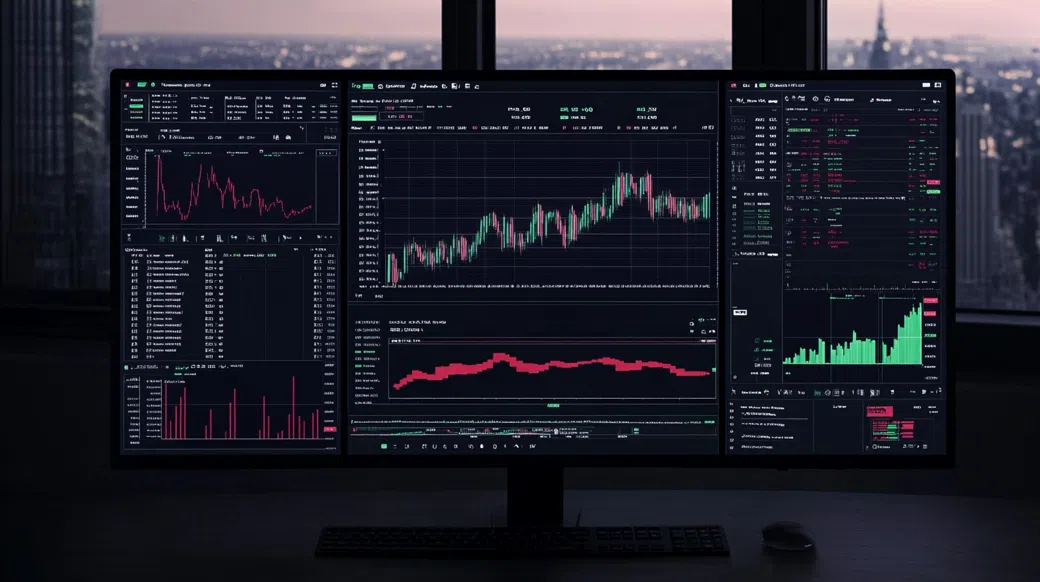
WebTrader was the main surface area in my test: the session stayed stable, quotes refreshed cleanly, and basic order controls (market, limit, stop, plus TP/SL) were where you expect them. Execution felt “CFD-normal” rather than HFT-grade; during a volatile window I watched for obvious requote loops and didn’t hit them, but slippage is still part of the contract when liquidity thins. If you’re coming from MT4/MT5, the gap is ecosystem depth—fewer third-party indicators and no sprawling EA marketplace baked into the UI.
Haute Rendemis App: Mobile Trading Experience
The Haute Rendemis app mirrored the WebTrader layout with fewer panels, and the Haute Rendemis login flow supported biometric unlock on my device. I could place and close positions, set alerts, and manage deposits/withdrawals without leaving the app, which is essential when margin calls don’t wait for a laptop. Push notifications landed reliably for order events; one quirk was that deep chart customization takes extra taps, so I kept mobile for management and used desktop for analysis.
Charting, Tools & Research
Tooling is functional: multi-timeframe charts, the usual indicator set (MA/RSI/MACD/Bollinger), and drawing tools for levels and trendlines. There’s also an economic calendar and a lightweight news feed—enough to flag “don’t hold through CPI” moments, not enough to replace a dedicated research stack. Power users will still want external analytics, but for execution and basic decision support, it does the job.
Haute Rendemis Account Opening & Minimum Deposit
Instead of a long compliance interview, signup asked for the essentials (email, phone, residency), then pushed me to identity verification before I could raise limits. KYC required a government-issued photo ID and a proof of address dated within three months; I used a bank statement PDF and an ID scan, and verification cleared the same day. That posture is what I want to see from an AML perspective, even if the broker is offshore.
- Minimum Deposit: $200 (the “Haute Rendemis minimum deposit” in my account dashboard matched this)
- Funding Methods: Visa/Mastercard, bank wire, regional e-wallets, and crypto deposits (BTC/USDT)
- Demo Account: Yes—$10,000 virtual balance for testing spreads, margin, and order behavior
- Account Types: Standard (spread-only) and Raw/ECN-style (tight spreads + $7 round-turn commission)
Account base currency selection was available at onboarding, and it’s worth thinking about upfront if you fund in KRW or JPY to reduce conversion leakage. I also recommend doing KYC early, not at first withdrawal; delaying verification is a common way traders manufacture avoidable downtime.
Haute Rendemis Customer Support Review
I tested support with a practical question: where exactly the swap rates are shown per instrument and whether weekend financing is triple-charged (the kind of detail that quietly drains accounts). Live chat connected in about three minutes and pointed me to the instrument spec panel with a short explanation of how swaps apply to held positions. I then sent an email asking about card withdrawal timelines post-KYC; the ticket reply arrived roughly nine hours later with a method-by-method breakdown and a reminder that bank processing is outside their control.
Coverage looked like the usual 24/5 pattern, which maps to FX market hours, and the agent’s English was clear enough for compliance topics. Phone support wasn’t prominently advertised in my region, so assume chat/email are the primary routes. Weekends are thinner—fine for account admin tasks, not where I’d expect nuanced dispute handling.
Ready to Explore Haute Rendemis?
If you’re considering this broker, start by verifying your country eligibility and testing the WebTrader with a demo before sending real funds. After that, check spreads during your actual trading hours (Asia vs. London/NY overlap) and read the swap/inactivity clauses like you’d read a smart contract.
Visit Haute RendemisHaute Rendemis Review FAQ
Is Haute Rendemis good for beginners?
It can be, but only if you respect leverage and keep position sizes small. The interface is not hard to learn, yet the educational layer is thin compared with top regulated brands. Beginners should use the $10,000 demo until they understand margin calls, swaps, and slippage.
Can I trade crypto on Haute Rendemis?
Yes, crypto is offered as CFDs, including BTC/USD and ETH pairs. You’re trading price exposure with leverage, not buying coins for on-chain withdrawal to a personal wallet. Expect wider spreads and different weekend financing behavior versus FX.
Is Haute Rendemis a scam?
No—based on my 2026 test, it behaved like an operational broker (KYC checks, trading, and withdrawals worked). Still, offshore registration means protections are contractual and policy-based rather than backed by Tier‑1 regulator enforcement. Treat risk controls and withdrawal testing as mandatory due diligence.
Is Haute Rendemis available in the USA?
No, the USA is restricted. If you attempt signup from a blocked jurisdiction, access is typically denied during onboarding or at KYC. Always confirm eligibility before depositing.
How long does a Haute Rendemis withdrawal take?
Most withdrawals are processed internally within 24–48 hours after KYC is complete. Card payouts commonly reach the bank in about 2–5 business days, while bank wires tend to take 3–7 business days. Crypto withdrawals are often same-day, but timing depends on network conditions.
What is the Haute Rendemis minimum deposit?
The minimum deposit is $200 for the live account I opened. That’s enough to test order execution and risk controls without overcommitting capital. If you plan to trade higher-volatility CFDs, budget more headroom for margin swings.
Does Haute Rendemis have a mobile app?
Yes, there are iOS and Android apps alongside the WebTrader. Mobile supports monitoring, order placement, and basic account management including funding actions. For heavy chart work, desktop still feels cleaner.
Final Verdict: Should You Use Haute Rendemis in 2026?
Overall Score: 4.0/5
As a developer, I judge brokers the way I judge protocols: what are the failure modes, and can I exit cleanly. Haute Rendemis passed the operational checks that matter—KYC wasn’t optional, the platform executed without obvious gimmicks, and my withdrawal didn’t turn into a support marathon—yet the offshore framework remains the structural risk you can’t refactor away. If you’re fee-sensitive, the Raw-style tier can make sense; if you want maximum regulatory protection, look elsewhere. Keep in mind: CFDs use leverage, losses can exceed expectations quickly, and risk management is not optional on Haute Rendemis.
Best for: active CFD traders who want 1:500 leverage and can monitor risk closely. Avoid if: you require Tier‑1 regulation, extensive research tools, or you’re prone to overleveraging.