Fiel_Mercovia Trading Platform Alternatives 2026: Reliable Options for Online Traders
Code has a way of teaching humility: if the assumptions are wrong, the system fails loudly. Trading platforms fail quietly—through fees you didn’t model, execution you can’t reproduce, or a “regulatory address” that doesn’t map to meaningful oversight. That’s the lens I’m using here. Fiel_Mercovia looks like the common offshore CFD setup: a proprietary WebTrader plus mobile app, a menu centered on forex and CFDs, and marketing that tends to spotlight high leverage (often around 1:500) rather than hard operational guarantees. Publicly observed patterns for this category also include a minimum deposit around $250 and typical EUR/USD spreads in the neighborhood of ~2.0 pips on a standard-style account.
None of that automatically makes a platform “bad,” but it does change the threat model. With an offshore/unregulated framework (commonly associated with jurisdictions such as Seychelles FSA), the protections many US/EU traders implicitly expect—segregated-client-funds rules with frequent audits, strong complaint channels, or investor compensation schemes—can be thinner or simply different. That’s why people search for Fiel_Mercovia alternatives: not to chase more features, but to reduce operational risk while keeping the instruments they actually trade (FX, indices, commodities, and sometimes crypto CFDs).
Disclaimer: This article is for informational purposes only and does not constitute investment advice. CFDs and other leveraged products carry a high risk of loss and may not be suitable for all investors.
Key Takeaways (TL;DR)
- For US/EU traders, regulatory jurisdiction changes the entire safety profile—FCA/ASIC/CySEC/NFA oversight typically brings stronger guardrails than offshore CFD providers.
- Compare cost using “all-in round-turn” logic (spread + commission + swaps), not headline leverage; 2.0 pips vs. raw+commission can materially change scalping results.
- If you switch, open and KYC-verify the new account first, then withdraw using the original funding route to avoid AML friction.
What Is Fiel_Mercovia and How Does Its Trading Platform Work?
From a trader’s perspective, Fiel_Mercovia behaves like a CFD-first broker rather than a true multi-asset venue. The product mix is typically oriented around forex pairs, index/commodity CFDs, and often crypto CFDs—useful for short-term speculation, but not the same as owning underlying assets. In offshore setups (frequently linked to the Seychelles FSA umbrella), the execution model often resembles a market-maker or hybrid structure: you get a streamlined ticket and quick onboarding, but you may have less transparency into how orders are routed, how slippage is handled, and what “best execution” actually means in practice. That trade-off is exactly why many traders compare platforms like Fiel_Mercovia against more heavily supervised brokers.
Fiel_Mercovia Web Trading Platform: Core Features and Tools
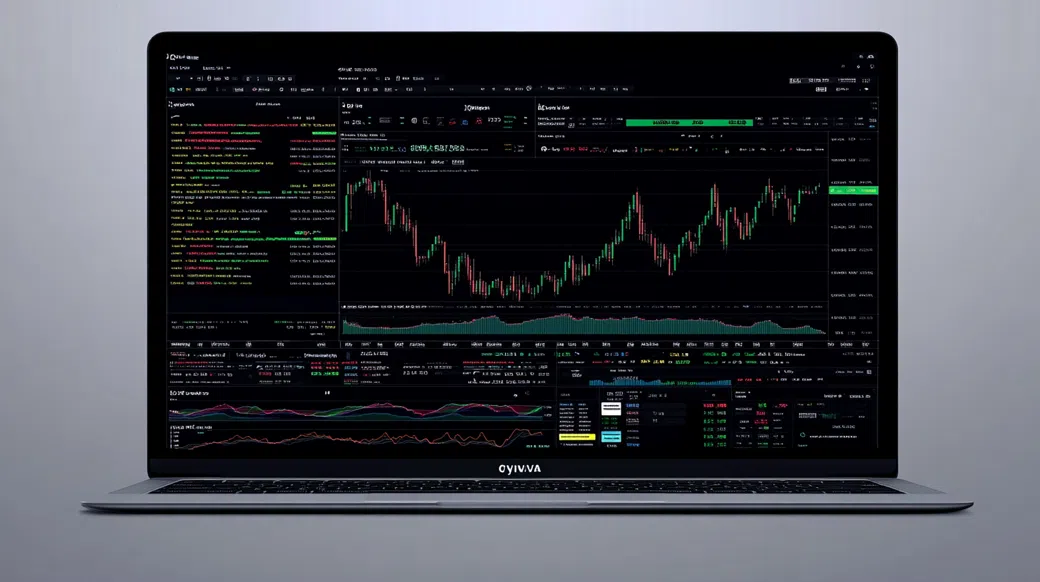
The platform stack is usually a proprietary WebTrader with a matching iOS/Android app—good enough for manual trading, lighter on automation. Expect standard charting with a practical set of indicators, basic drawing tools, and common order types (market, limit, stop; sometimes trailing stops depending on the build). Where these platforms can feel constrained is workflow depth: multi-chart layouts, advanced conditional orders, and strategy tooling often lag behind MT4/MT5 or cTrader ecosystems. Mobile parity tends to be decent for monitoring and closing risk, but the account dashboard and reporting can be thin for serious journaling—think “positions and P/L” over “audit-grade” exports.
Trading Fees, Spreads, and Account Types at Fiel_Mercovia
Costs are the part most traders underestimate because they’re spread across multiple lines: spread, swap/overnight financing, and sometimes withdrawal or inactivity charges. For this category, a standard-style account frequently lands around ~2.0 pips on EUR/USD (variable), while “raw/ECN-style” tiers—when offered—tend to advertise 0.0–0.4 pips plus a round-turn commission in the ~$5–$8 range. Swaps matter if you hold positions past rollover; offshore CFD providers can apply financing terms that are hard to benchmark unless you test them over time. If you’re building a strategy that targets small average wins, fees become your biggest non-obvious failure mode.
When Do Traders Start Looking for Fiel_Mercovia Alternatives?
Regulatory perimeter is the first alarm bell I look at, because it determines what recourse exists when something breaks. That alone pushes many traders toward Fiel_Mercovia alternatives, especially in the US/EU where complaint handling, capital rules, and segregation requirements are more standardized. The next trigger is usually reproducibility: if you can’t model execution (fills, slippage, requotes) or export clean history, you can’t verify whether a strategy is failing—or the venue is. Add leverage up to 1:500 and you get a system that can liquidate you fast when volatility spikes.
- Need MT4/MT5 or cTrader for an EA/robot workflow, but the current WebTrader can’t run automated strategies or custom indicators reliably.
- Trading volume grows and the effective round-turn cost (spread + commission + swaps) becomes the main drag, especially on EUR/USD around ~2.0 pips.
- Deposits are easy, but withdrawals require repeated checks or limited payment rails—creating timing risk when you need funds off-platform.
- Strategy requires real stocks/ETFs or exchange-traded products, not equity CFDs that don’t confer shareholder rights.
How to Choose a Reliable Alternative to the Fiel_Mercovia Trading Platform
I treat broker selection like choosing a dependency for production: you want clear governance, predictable failure modes, and a paper trail. For alternatives to the Fiel_Mercovia trading platform, build a shortlist and then try to falsify each candidate—verify licensing, test execution, and read the legal docs the way you’d read a smart contract audit: looking for edge cases, not marketing.
Regulation, Safety, and Investor Protection
Start with regulators that actually supervise retail conduct: FCA (UK), ASIC (Australia), CySEC (EU), and NFA/CFTC (US). Under the FCA, eligible clients may fall under the FSCS compensation scheme (up to £85,000); under CySEC, the ICF can apply (up to €20,000). These schemes aren’t a profit guarantee—they’re a last-resort safety net. Also check whether the broker states segregated client funds and negative balance protection for retail accounts where required.
Available Markets and Instruments
Write down what you truly need: FX majors/minors, index CFDs, commodities, or a path to real stocks/ETFs. Many brokers similar to Fiel_Mercovia are CFD-heavy; that’s fine for short-term hedging or directional bets, but it’s not the same as owning the underlying asset. If you want options, futures, or bonds, you’re usually looking at a multi-asset venue (and often a more complex onboarding/KYC process). The “best” platform is the one that matches your strategy surface area.
Trading Costs: Spreads, Commissions, and Other Fees
Use a single metric: expected round-turn cost per trade. A raw account with 0.1–0.3 pips plus a $6–$8 round-turn commission can beat a 1.5–2.5 pip spread account once you trade enough volume. Then model swap/overnight fees if you hold for days, because financing can dominate P/L in carry-like strategies. Finally, scan for inactivity and withdrawal charges—small individually, ugly in aggregate.
Platforms, Tools, and Execution Quality
Platform choice is less about aesthetics and more about what you can verify. MT4/MT5 and cTrader have deep ecosystems for indicators, EAs, and logging; proprietary platforms can be simpler but sometimes opaque. Ask how the broker executes: market maker vs STP/ECN/DMA. Those labels are not magic, but they hint at how conflicts are managed and where slippage can occur. If a venue can’t explain its execution policy clearly, treat that as a signal.
Support, Education, and Overall User Experience
Support matters most when it’s 2 a.m. and margin is tight. Look for 24/5 coverage aligned to FX hours, multiple channels (chat/email/phone), and documented response targets. EU/UK brokers often provide more structured education and risk tools, while pro-focused firms may prioritize platform stability and reporting. Mobile parity is also practical: you want to reduce risk quickly without fighting the UI.
Fiel_Mercovia and Different Asset Classes: When Alternatives May Be Better
Fiel_Mercovia Forex and CFD Trading
On FX/CFDs, the most important difference isn’t the instrument list (30–50 FX pairs and a handful of indices/commodities is common); it’s the execution and cost profile you can measure. With offshore-style pricing around ~2.0 pips on EUR/USD for standard accounts, short-horizon strategies have a higher hurdle rate. Regulated FX/CFD specialists such as Pepperstone or OANDA tend to offer clearer documentation around execution, plus platform options like MT4/MT5/cTrader or robust proprietary tooling. Leverage is another split: high ceilings (like 1:500) can look attractive, but they compress your error budget—one volatility spike, and margin calls come fast. For traders who care about reproducibility, logging, and consistent fills, regulated options vs Fiel_Mercovia often become the rational trade.
Fiel_Mercovia Stock and ETF Trading
If your end goal is long-term exposure to companies or sectors, CFD-only equity access is a different product. With stock CFDs, you don’t get shareholder voting rights, and costs can show up as financing plus wider spreads, especially outside liquid US mega-caps. Multi-asset brokers like Interactive Brokers and Saxo Bank are built for real listed markets: you can access stocks and ETFs directly (often alongside options/futures), and the reporting is typically stronger for tax and audit needs. This is where many top substitutes for Fiel_Mercovia separate themselves: not by offering “more tickers,” but by providing actual exchange connectivity and a structure designed for custody and corporate actions rather than pure derivatives exposure.
Fiel_Mercovia Crypto Trading
Crypto on offshore CFD platforms is usually price exposure, not ownership. You’re trading a derivative: no on-chain withdrawal, no self-custody, and no ability to use the asset in DeFi or staking. That’s not inherently wrong—crypto CFDs can be useful for hedging or shorting—but it’s a different risk bucket than holding spot coins. Regulated CFD firms such as IG (jurisdiction-dependent) and Plus500 commonly provide crypto CFD access with clearer retail risk disclosures and stronger controls around client onboarding and AML. If your priority is security, the question becomes: do you need tradable volatility, or do you need the asset? Your platform choice should follow that answer.
Best Fiel_Mercovia Alternatives for 2026: Comparison of Top Trading Platforms
Interactive Brokers (IBKR): Key Facts and How It Compares to Fiel_Mercovia
Regulation: SEC/FINRA (US), FCA (UK), IIROC (Canada) (entity depends on region)
Markets: Stocks, ETFs, options, futures, bonds, FX (multi-asset access)
Fees: Varies by product and venue; FX spreads are typically competitive with commissions depending on schedule
Platform: Trader Workstation (TWS), IBKR mobile, Client Portal; API access
Best For: Audit-trail-first traders who want real markets and APIs
Pepperstone: Key Facts and How It Compares to Fiel_Mercovia
Regulation: FCA, ASIC, CySEC, DFSA (entity depends on region)
Markets: FX and CFDs (indices, commodities; crypto CFDs where permitted)
Fees: Standard spreads often around ~1.0–1.2 pips on EUR/USD; Raw-style pricing commonly ~0.0–0.3 pips + commission (~$6–$8 round-turn)
Platform: MT4, MT5, cTrader (availability varies by entity)
Best For: Systematic FX traders needing MT/cTrader tooling
Saxo Bank: Key Facts and How It Compares to Fiel_Mercovia
Regulation: FCA, MAS, DFSA (entity depends on region)
Markets: Stocks, ETFs, bonds, options, futures, FX, and CFDs (broad multi-asset)
Fees: Pricing varies by tier and product; FX spreads often start around ~0.6–1.0 pips depending on account tier
Platform: SaxoTraderGO, SaxoTraderPRO
Best For: Multi-asset portfolio builders who still trade tactically
OANDA: Key Facts and How It Compares to Fiel_Mercovia
Regulation: CFTC/NFA (US), FCA (UK), ASIC (Australia), IIROC (Canada) (entity depends on region)
Markets: FX (primary) and CFDs in some jurisdictions
Fees: Typically spread-based; EUR/USD often around ~1.0–1.6 pips on standard pricing (varies by region and conditions)
Platform: OANDA web/mobile platforms; MT4 support in many regions
Best For: Risk-controlled FX trading with strong regulatory footprint
IG: Key Facts and How It Compares to Fiel_Mercovia
Regulation: FCA, ASIC, MAS (entity depends on region)
Markets: CFDs across FX, indices, commodities, shares; spread betting in the UK (where eligible)
Fees: Mostly spread-based; major FX pairs often priced competitively (exact spreads vary by market conditions)
Platform: IG Trading Platform; MT4 in supported regions
Best For: Macro-driven CFD traders who want broad market coverage
Trading 212: Key Facts and How It Compares to Fiel_Mercovia
Regulation: FCA, CySEC, FSC Bulgaria (entity depends on region)
Markets: Stocks and ETFs (investing), plus CFDs (region-dependent)
Fees: Investing accounts often emphasize low explicit commissions; CFD costs are primarily spread/financing-based (varies by instrument)
Platform: Proprietary web and mobile platform
Best For: Simplicity-first investors mixing ETFs with light CFD use
Comparison Summary
| Platform | Regulation | Main Markets | Typical Costs | Best For |
|---|---|---|---|---|
| Interactive Brokers (IBKR) | SEC/FINRA, FCA, IIROC | Stocks/ETFs/options/futures/bonds/FX | Product-based pricing; competitive FX commissions/spreads by schedule | Audit-trail-first traders who want real markets and APIs |
| Pepperstone | FCA, ASIC, CySEC, DFSA | FX + CFDs (indices/commodities; crypto CFDs where permitted) | ~1.0–1.2 pip Standard; ~0.0–0.3 pip + ~$6–$8 RT (Raw-style) | Systematic FX traders needing MT/cTrader tooling |
| Saxo Bank | FCA, MAS, DFSA | Multi-asset: stocks/ETFs/options/futures/FX/CFDs | Tiered pricing; FX often ~0.6–1.0 pips depending on tier | Multi-asset portfolio builders who still trade tactically |
| OANDA | CFTC/NFA, FCA, ASIC, IIROC | FX (plus CFDs in some regions) | Spread-based; EUR/USD often ~1.0–1.6 pips (region-dependent) | Risk-controlled FX trading with strong regulatory footprint |
| IG | FCA, ASIC, MAS | CFDs on FX/indices/commodities/shares; UK spread betting | Primarily spread-based; majors often competitively priced | Macro-driven CFD traders who want broad market coverage |
| Trading 212 | FCA, CySEC, FSC Bulgaria | Stocks/ETFs + CFDs (region-dependent) | Investing: low explicit commissions; CFDs: spread + financing | Simplicity-first investors mixing ETFs with light CFD use |
How to Safely Move from Fiel_Mercovia to Another Broker
Switching brokers is operational work, not a vibe check. Treat it like migrating a production contract: you stage the new environment, validate assumptions with small test flows, then cut over. The sharp edge here is leverage—if you leave positions open while you’re moving funds, a fast market can force liquidation at the worst possible time. Plan the sequence, document everything, and don’t rush withdrawals.
- Confirm the new broker’s license on the regulator’s public database (FCA Register, ASIC Connect, CySEC directory, or NFA BASIC), matching the legal entity name—not just the brand.
- Open the new account and complete KYC (ID + proof of address) before you touch the old setup; many approvals clear within about one business day, but outliers happen.
- Flatten exposure on Fiel_Mercovia by closing open positions or hedging elsewhere; assume you cannot “transfer” CFD positions between brokers.
- Withdraw funds using the same payment route used for the deposit when possible; AML rules often force refunds back to the source before other methods are allowed.
- Export trade history, statements, and fee reports for taxes and dispute evidence; store them offline in a tamper-evident way (hashing PDFs is simple and effective).
Ready to Explore Fiel_Mercovia?
If you’re benchmarking competitors to Fiel_Mercovia, the fastest way to reduce guesswork is to compare onboarding, platform tooling, and fee schedules side by side—then verify eligibility for your country before funding. Keep the first deposit small until execution and withdrawals behave the way the documents claim.
Visit Fiel_MercoviaFAQ: Fiel_Mercovia Alternatives and Trading Platforms
What is the best alternative to Fiel_Mercovia in 2026?
The best pick depends on whether you need real multi-asset access or mostly FX/CFDs. For “real markets + reporting + APIs,” Interactive Brokers is hard to beat; for FX execution and MT4/MT5/cTrader workflows, Pepperstone is a common upgrade path. If your priority is broad CFD coverage with strong oversight, IG is a frequent choice in the UK/EU where available. Those are the best Fiel_Mercovia alternatives 2026 for many US/EU-focused traders, but the right answer is strategy-specific.
Is Fiel_Mercovia a safe broker/platform?
Safety hinges on regulation, custody rules, and enforcement—areas where offshore frameworks generally offer fewer standardized protections than FCA/ASIC/CySEC/NFA-supervised brokers. Fiel_Mercovia is commonly characterized as offshore/unregulated in the sense that it is not a top-tier US/EU regulator-licensed venue, and traders should factor that into counterparty risk. Even if the platform functions smoothly day to day, leverage (often marketed around 1:500) can amplify losses quickly, especially during news-driven volatility.
Can I trade stocks, futures, or crypto with Fiel_Mercovia?
With brokers similar to Fiel_Mercovia, you typically see forex and CFDs as the core, sometimes including crypto CFDs and equity-index CFDs. Real stocks/ETFs and exchange-traded futures are often not the focus; if stocks are present, they’re frequently offered as CFDs rather than direct ownership. For direct access to stocks/ETFs/futures, platforms like Interactive Brokers or Saxo are usually a better fit than Fiel_Mercovia.
What should I check before switching from Fiel_Mercovia to another platform?
Before switching, verify the new broker’s exact legal entity on the regulator’s register, then read the execution policy and fee schedule like you’re reviewing an API spec. Confirm how withdrawals work (including same-source refund rules), whether negative balance protection applies for your jurisdiction, and what platforms are supported (MT4/MT5/cTrader vs proprietary). Finally, test with a small deposit to observe spreads, slippage, and support responsiveness under real market conditions—your goal is to validate, not to hope.
About the Author: Samuel White is a Seoul-based smart contract developer who approaches trading platforms the way he approaches software dependencies: verify the trust boundary, measure execution, and assume edge cases will happen. He writes about broker structure, market microstructure, and operational safety for traders who prefer facts, logs, and reproducible workflows over headlines.