
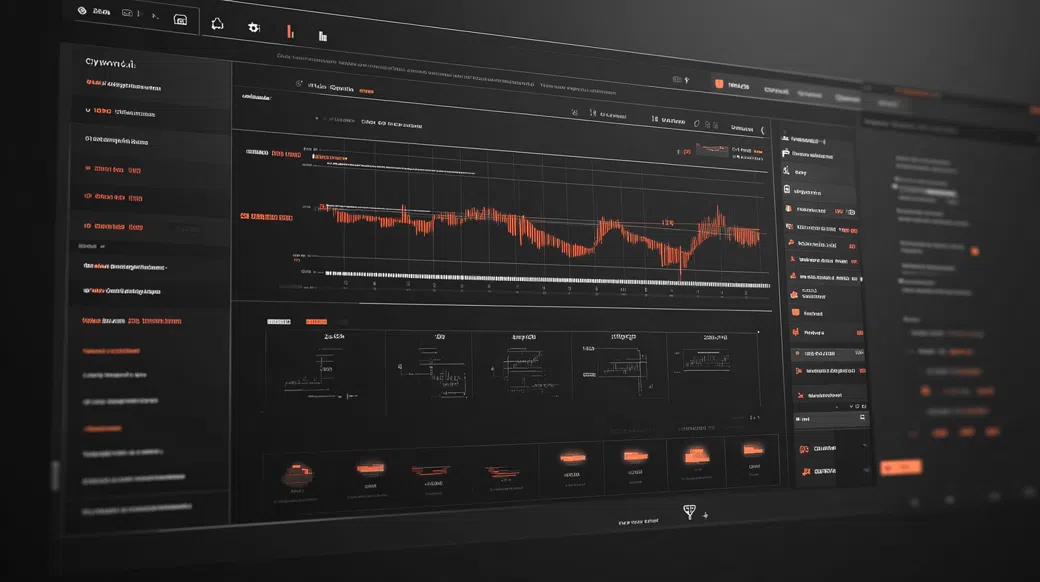
Douve Fondença Trading Platform Alternatives 2026: Reliable Options for Online Traders
Code doesn’t care about branding, and neither should your capital. If you’re evaluating Douve Fondença, you’re likely looking at a CFD-first broker setup: a proprietary WebTrader, a mobile app, a menu of FX pairs, indices, commodities, and some crypto CFDs. That toolkit can be “enough” for short-term speculation, but the deeper you go—bigger size, more automation, stricter compliance needs—the gaps get expensive. Execution details (market maker vs STP/ECN), withdrawal friction, and legal jurisdiction matter more than a glossy dashboard.
For 2026, the practical question isn’t “which platform has more buttons,” but “which venue minimizes avoidable risk.” Offshore or lightly supervised providers often advertise high leverage (think 1:500) and low onboarding friction, yet that convenience can arrive with trade-offs: weaker investor protections, less transparent conflict-of-interest controls, and fewer credible escalation paths when something breaks. That’s where Douve Fondença alternatives become a risk-management decision, not a feature comparison.
This guide focuses on regulated, US/EU-friendly options and the checks I’d run if I were reviewing a smart contract audit: verify identities (regulatory registers), confirm custody rules (segregated client funds), and measure cost using round-turn math—not marketing spreads. CFDs are leveraged products; small pricing differences compound quickly when you trade actively.
Disclaimer: This article is for informational purposes only and does not constitute investment advice. Trading CFDs and other leveraged products involves significant risk of loss and may not be suitable for all investors.
Key Takeaways (TL;DR)
- If you need real stocks/ETFs (not equity CFDs), prioritize multi-asset venues like Interactive Brokers or Saxo Bank over CFD-only stacks.
- Compare brokers using round-turn costs (spread + commission + swaps), not maximum leverage or “from 0.0” headlines.
- Do KYC and test a new platform with a small deposit before withdrawing everything; position transfers between brokers typically don’t exist.
What Is Douve Fondença and How Does Its Trading Platform Work?
From what’s publicly typical for this category, Douve Fondença looks like an offshore-style CFD broker operating under a Seychelles FSA framework rather than a top-tier retail regime. The product mix usually targets short-term traders: FX pairs (roughly a few dozen), index and commodity CFDs, and a curated list of crypto CFDs. That profile fits users who want fast account opening and high leverage, but it’s not the same thing as a multi-asset brokerage with exchange membership, DMA routing, and well-defined investor protection. In other words, it behaves more like “platforms like Douve Fondença” than like a full custody-and-clearing broker.
Douve Fondença Web Trading Platform: Core Features and Tools
The platform stack is commonly a proprietary WebTrader with basic-to-mid charting plus iOS/Android apps. Expect standard order tickets (market/limit/stop), common indicators, and drawing tools that work for discretionary trading. Where proprietary terminals often show their edges: limited strategy automation, fewer advanced order types, and less transparency around execution quality (slippage, requotes, depth-of-market). Mobile parity is usually decent for monitoring and quick actions, but active risk work—position sizing, multi-chart layouts, tagging trades—tends to be more constrained than on MT5/cTrader or institutional platforms.
Trading Fees, Spreads, and Account Types at Douve Fondença
Fee schedules in this offshore CFD segment typically revolve around a spread-first model. A realistic baseline for EUR/USD on a Standard-style account is around 2.0 pips, with higher effective cost during volatile sessions. Some brokers in the same segment advertise a “Raw/ECN” tier at ~0.0–0.4 pips plus a round-turn commission in the ballpark of $6, but the true number you feel is spread + commission + slippage. Add swaps/overnight financing for held positions, and watch for non-trading charges such as withdrawal or inactivity fees. Minimum deposit is commonly around $250, and maximum leverage can reach 1:500—which increases both opportunity and blow-up speed.
When Do Traders Start Looking for Douve Fondença Alternatives?
Security signals show up before performance does. The moment a broker’s legal perimeter feels vague—offshore oversight, unclear complaint channels, or thin documentation on custody—many traders start mapping Douve Fondença alternatives that sit under FCA/ASIC/CySEC/NFA rules. Cost is another trigger, but it’s rarely the first one I notice; reliability failures are louder than an extra 0.3 pip. Region restrictions also matter: US residents are usually blocked, and that alone forces a change in venue.
- You want MT4/MT5 or cTrader for EAs, backtesting, and reproducible workflows, and a proprietary WebTrader can’t match that toolchain.
- Your strategy is sensitive to slippage (news spikes, scalping), and fills look inconsistent across sessions or instruments.
- You need a regulator with enforceable rules and compensation structures (FSCS/ICF) rather than an offshore dispute process.
- Withdrawals require repeated “verification loops,” or timelines feel open-ended compared with what you see at regulated firms.
How to Choose a Reliable Alternative to the Douve Fondença Trading Platform
Think of this as an architecture review: define your threat model, then choose the platform that reduces the largest risks first. For brokers similar to Douve Fondença, the sharpest differentiator is not leverage or UI; it’s whether the firm sits in a jurisdiction that enforces client-money rules and meaningful audits. After that, you match tools and costs to your strategy—because a “cheap” spread is irrelevant if execution is messy.
Regulation, Safety, and Investor Protection
Start with regulator quality and verify it on the regulator’s own register (FCA, ASIC, CySEC, NFA). FCA-regulated UK entities can fall under FSCS protection (up to £85,000), while CySEC firms can be covered by the ICF (up to €20,000), subject to eligibility rules. Also check whether the broker states segregated client funds, negative balance protection (EU/UK retail), and clear legal entity naming—small inconsistencies here are big signals.
Available Markets and Instruments
List what you actually intend to trade: FX and index CFDs, or real equities and ETFs, or options/futures. Offshore CFD brokers often stop at CFDs; that means no shareholder rights, no direct exchange access, and sometimes fewer risk tools for portfolio hedging. Multi-asset venues (Interactive Brokers, Saxo) can cover stocks/ETFs/options/futures alongside FX, which matters if you want to diversify away from pure leveraged CFDs.
Trading Costs: Spreads, Commissions, and Other Fees
Spreads are only one line item. Use round-turn cost as your unit: spread (in pips) + commission (if any) + expected slippage, then add swap/overnight fees for holds. A Standard account at ~2.0 pips on EUR/USD can be materially more expensive than a Raw model at ~0.0–0.4 pips plus ~$6 round-turn once you scale volume. Finally, scan for “quiet” fees: inactivity, conversion, and withdrawal charges.
Platforms, Tools, and Execution Quality
Platform choice is capability choice. MT4/MT5 and cTrader enable EAs, custom indicators, and repeatable trade logs; proprietary terminals vary wildly. Ask how orders are routed: market maker vs STP/ECN/DMA. That execution model influences slippage behavior, rejection rates, and whether the broker can be the direct counterparty to your trade. If you’re moving away from Douve Fondença, consider running the same small test script—time-to-fill, partial fills, spread expansion—across candidates before committing size.
Support, Education, and Overall User Experience
Support quality becomes visible during the worst moments: margin calls, platform outages, deposit/withdrawal exceptions. Check hours (24/5 vs limited windows), language coverage, and escalation paths. Education is optional, but operational docs are not—clear margin rules, swap tables, and contract specs should be easy to find. Mobile parity matters too: if you manage risk on the move, you want full order controls, not a “view-only” app.
Douve Fondença and Different Asset Classes: When Alternatives May Be Better
Douve Fondença Forex and CFD Trading
FX and CFDs are the center of gravity here: roughly 30–50 FX pairs, major indices, a handful of commodities, and leverage that can reach 1:500. The trade-off is that high leverage compresses your error tolerance; a small adverse move can trigger a margin call faster than many traders model. Regulated FX/CFD specialists such as Pepperstone or OANDA generally provide more transparent platform ecosystems (MT4/MT5/cTrader or mature proprietary stacks), clearer disclosures, and—depending on account type—lower all-in trading costs. For active trading, execution quality often matters more than headline spreads: fewer rejections, predictable slippage, and consistent liquidity during session transitions can improve real outcomes even if the quoted spread difference looks small.
Douve Fondença Stock and ETF Trading
If your plan includes “owning” stocks or ETFs, pay attention to what you’re actually buying. Many offshore CFD brokers only offer equity exposure as CFDs, which means you hold a derivative contract with the broker—not the underlying shares—and you typically don’t get voting rights or the same corporate action handling as a real brokerage account. This is where alternatives to the Douve Fondença trading platform diverge sharply: Interactive Brokers is built around exchange access (stocks, ETFs, options, futures) with institutional-grade routing, while Saxo Bank offers broad multi-asset coverage with strong tooling for portfolio-style trading. Even if you still trade CFDs, having a venue that supports real securities can reduce the need to force everything into leverage products.
Douve Fondença Crypto Trading
Crypto on offshore CFD venues is usually crypto CFDs—price exposure without on-chain ownership, no withdrawals to a wallet, and no ability to use the asset in DeFi or self-custody. That can be fine if your goal is short-term hedging, but it’s not a substitute for holding the token. Among regulated options, IG and Plus500 commonly provide crypto CFDs (availability depends on jurisdiction), giving traders a more supervised framework than many offshore competitors to Douve Fondença. Still, risk remains: crypto CFD spreads can widen aggressively, weekend gaps can be brutal, and leverage amplifies every mistake. If you want self-custody, that’s a different category entirely and not solved by CFD brokers.
Best Douve Fondença Alternatives for 2026: Comparison of Top Trading Platforms
Interactive Brokers (IBKR): Key Facts and How It Compares to Douve Fondença
Regulation: SEC/FINRA (US), FCA (UK), IIROC (Canada)
Markets: Stocks, ETFs, options, futures, bonds, FX (availability varies by region)
Fees: FX pricing can be tight for larger tickets; equities typically per-share/commission models depending on venue and plan
Platform: Trader Workstation (TWS), IBKR Mobile, Client Portal; APIs for advanced users
Best For: Multi-asset traders who want exchange access and APIs
Pepperstone: Key Facts and How It Compares to Douve Fondença
Regulation: FCA (UK), ASIC (Australia), CySEC (EU), DFSA (Dubai)
Markets: FX, index/commodity CFDs (product scope depends on entity)
Fees: EUR/USD often ~0.0–0.3 pips on Razor/Raw-style pricing + commission (commonly ~ $6–$7 round-turn); Standard-style spreads often ~1.0+ pip
Platform: MT4, MT5, cTrader (plus integrations depending on region)
Best For: Systematic FX traders running MT5/cTrader workflows
Saxo Bank: Key Facts and How It Compares to Douve Fondença
Regulation: FCA (UK), MAS (Singapore), DFSA (Dubai)
Markets: Stocks, ETFs, options, futures, FX, bonds, CFDs (varies by jurisdiction)
Fees: Pricing depends on tier; FX spreads can be competitive on larger accounts; custody/market access fees may apply for certain products
Platform: SaxoTraderGO, SaxoTraderPRO
Best For: Portfolio builders who want strong risk tools and research
OANDA: Key Facts and How It Compares to Douve Fondença
Regulation: CFTC/NFA (US), FCA (UK), ASIC (Australia), IIROC (Canada)
Markets: FX (core), CFDs in certain regions (not US); some crypto CFD availability varies by jurisdiction
Fees: Typically spread-based; EUR/USD often around ~1.0–1.6 pips on standard pricing, with execution quality a key differentiator
Platform: OANDA web/mobile, MT4 (availability varies)
Best For: US-eligible traders prioritizing regulatory clarity
IG: Key Facts and How It Compares to Douve Fondença
Regulation: FCA (UK), ASIC (Australia), MAS (Singapore)
Markets: CFDs across indices, FX, commodities; shares/ETFs offerings depend on region; crypto CFDs where permitted
Fees: Spread-based for many CFDs; EUR/USD commonly around ~0.6–1.2 pips depending on account and market conditions
Platform: IG proprietary web platform, mobile apps; MT4 available in some regions
Best For: Active CFD traders who want a mature, regulated venue
Plus500: Key Facts and How It Compares to Douve Fondença
Regulation: FCA (UK), CySEC (EU), ASIC (Australia), MAS (Singapore)
Markets: CFDs on FX, indices, commodities, shares (CFDs), crypto CFDs where allowed
Fees: Predominantly spread-based; typical FX spreads are usually wider than raw-commission models, with overnight funding costs for holds
Platform: Plus500 proprietary WebTrader and mobile app
Best For: Simplicity-first traders who don’t need MT4/MT5
Comparison Summary
| Platform | Regulation | Main Markets | Typical Costs | Best For |
|---|---|---|---|---|
| Interactive Brokers (IBKR) | SEC/FINRA, FCA, IIROC | Stocks/ETFs/options/futures/bonds/FX | Commission schedules vary; FX often tight for larger sizes | Multi-asset traders who want exchange access and APIs |
| Pepperstone | FCA, ASIC, CySEC, DFSA | FX + major CFD markets | Raw: ~0.0–0.3 pip + ~$6–$7 round-turn; Standard ~1.0+ pip | Systematic FX traders running MT5/cTrader workflows |
| Saxo Bank | FCA, MAS, DFSA | Multi-asset including real stocks/ETFs and derivatives | Tiered pricing; spreads/commissions depend on product and account level | Portfolio builders who want strong risk tools and research |
| OANDA | CFTC/NFA, FCA, ASIC, IIROC | FX (core); CFDs outside US | Often spread-based; EUR/USD roughly ~1.0–1.6 pips typical | US-eligible traders prioritizing regulatory clarity |
| IG | FCA, ASIC, MAS | CFDs across FX/indices/commodities; crypto CFDs where permitted | Spread-based; EUR/USD often ~0.6–1.2 pips depending on conditions | Active CFD traders who want a mature, regulated venue |
| Plus500 | FCA, CySEC, ASIC, MAS | CFDs across FX/indices/commodities/shares; crypto CFDs where allowed | Spread-based; costs vary by instrument plus overnight funding | Simplicity-first traders who don’t need MT4/MT5 |
How to Safely Move from Douve Fondença to Another Broker
Migrations fail in the boring parts: identity checks, funding rails, and open exposure. Treat the switch like a controlled deployment—verify the new venue first, then move capital in stages. If you’re exiting an offshore CFD setup, assume nothing about timelines, and remember: leverage magnifies operational mistakes as much as market moves. The goal is continuity of access and clean records, not speed.
- Confirm the new broker’s license on the regulator’s official register (FCA Register, ASIC Connect, CySEC database, or NFA BASIC), matching the legal entity name—not just the brand.
- Open the new account and complete KYC/AML (ID + proof of address) before you touch your existing balance; verification often clears quickly, but exceptions happen.
- Flatten exposure on the old account: close open CFD positions rather than expecting any transfer mechanism between brokers.
- Export statements, trade history, and funding records for tax and dispute purposes; take screenshots of key balances and open/close confirmations.
- Withdraw from Douve Fondença using the same payment method you used to deposit where possible—AML controls frequently route refunds back to the source.
Ready to Explore Douve Fondença?
If you’re still evaluating account terms, compare the platform stack, execution rules, and regional eligibility side-by-side before funding. Read the legal entity details, then test with small size so you can observe spreads, swaps, and order handling under real conditions.
Visit Douve FondençaFAQ: Douve Fondença Alternatives and Trading Platforms
What is the best alternative to Douve Fondença in 2026?
The best choice depends on whether you need exchange-traded assets or mainly FX/CFDs. For multi-asset access (real stocks/ETFs/options/futures), Interactive Brokers or Saxo Bank are strong picks; for FX/CFD focus with MT4/MT5/cTrader, Pepperstone is often a better fit. This article’s “best Douve Fondença alternatives 2026” list is intentionally mixed so you can match venue to strategy.
Is Douve Fondença a safe broker/platform?
Douve Fondença appears consistent with an offshore/unregulated-style CFD broker profile (often associated with jurisdictions like Seychelles), which generally provides weaker investor protection than FCA/ASIC/CySEC/NFA frameworks. That doesn’t automatically mean fraud, but it does mean fewer formal safeguards such as compensation schemes and stricter client-money supervision. If safety is your top constraint, prioritize regulated options vs Douve Fondença and verify the legal entity directly with the regulator.
Can I trade stocks, futures, or crypto with Douve Fondença?
Douve Fondença is typically positioned around FX and CFDs, with crypto exposure often offered as crypto CFDs rather than on-chain ownership. Real stocks/ETFs and exchange-traded futures are commonly not the focus in this broker category, or may be provided only as CFDs. If you need real securities or futures routing, platforms like Douve Fondença are usually the wrong tool—Interactive Brokers or Saxo are closer to that requirement.
What should I check before switching from Douve Fondença to another platform?
Before switching, verify regulation on the official register, confirm client-fund segregation, and read the margin/negative-balance rules for your region. Next, compare all-in trading costs (spread + commission + swaps) and test execution with small size to observe slippage. Finally, download statements and ensure your withdrawal path matches your deposit method to avoid AML delays.
About the Author: Samuel White is a Seoul-based smart contract developer who approaches trading platforms the way he approaches production code: assume failure modes, verify claims, and reduce trust dependencies. He writes from the perspective of an experienced trader and technical reviewer, focusing on execution, custody safeguards, and regulator-enforced protections over marketing narratives.






