Cerf Rendoire Review 2026: Pros, Cons, and Features Tested
| Min Deposit | $200 |
| Max Leverage | 1:500 |
| Assets | Forex, Indices, Commodities, Crypto CFDs, Share CFDs |
| Platforms | Proprietary WebTrader, iOS/Android mobile apps |
Built as a multi-asset CFD venue, Cerf Rendoire fits traders who want broad markets and high leverage in exchange for the thinner safety net that comes with offshore registration. I ran a small funded account to sanity-check spreads, execution behavior, and the withdrawal path at Cerf Rendoire. Two tiers stood out: a spread-only Standard account and a tighter Raw/ECN-style option with a per-lot commission. Coverage leaned practical (majors, key indices, metals, and large-cap crypto CFDs) rather than “everything under the sun.” The upside is fast access and flexible margin; the downside is you’re relying more on the broker’s internal controls than on a top-tier regulator.
Pros
- Two pricing modes (spread-only vs. Raw/ECN-style) make costs tunable to strategy
- Clean WebTrader with enough order controls for active CFD trading
- Crypto, indices, and metals available alongside forex for hedging
Cons
- Offshore framework means weaker formal dispute/compensation routes
- High leverage (up to 1:500) increases blow-up risk if you over-margin
- Education/research depth feels lighter than premium multi-asset brokers
Is Cerf Rendoire Legit and Safe?
Cerf Rendoire appears operational and trade-capable, not a “vanish overnight” setup, based on account verification, funding, trading, and a completed withdrawal in my test. That said, it runs under an offshore registration model (Mauritius FSC), so “safe” here means “use strong personal risk controls,” not “protected like a Tier-1 licensed broker.”
My first check was process discipline: the platform gated key actions behind KYC (photo ID plus a recent proof of address), and I couldn’t request a withdrawal until verification cleared. The legal/registration disclosures pointed to Mauritius FSC oversight; in practice, offshore regulation usually comes with looser leverage limits (good for margin flexibility) and fewer investor-compensation mechanisms (bad if a dispute escalates). I also scanned for the classic red flags—aggressive sales calls, unverifiable “award” badges, and withdrawal friction. I didn’t see pushy account managers during my test window, and the withdrawal did move through within the stated internal timeline. Still, segregated client-funds wording is not the same thing as a guaranteed recovery route. CFDs are leveraged products; most retail accounts lose money, and you can torch capital quickly if you treat margin like free money.
Supported Countries & Restricted Regions
This broker generally accepts clients across parts of Asia, MENA, and LATAM, with availability depending on local rules and internal compliance. The USA and sanctioned jurisdictions are blocked.
| Region | Status | Leverage Cap |
|---|---|---|
| Southeast Asia | Accepted | Up to 1:500 |
| Middle East & North Africa (MENA) | Accepted | Up to 1:500 |
| Latin America | Accepted | Up to 1:500 |
| Non-EU Europe | Accepted | Up to 1:500 |
| USA | Restricted | Not offered |
| Sanctioned jurisdictions | Restricted | Not offered |
Eligibility isn’t just a checkbox—signup, IP location, and KYC document country all get compared, and mismatches can freeze funding/withdrawals. Policies also shift with compliance updates, so confirm status before you deposit.
Tradable Assets and Markets
The product shelf is built for CFD trading across the usual macro drivers: rates (FX), risk-on/off (indices), inflation hedges (metals), and higher-volatility crypto. Depth is sufficient for retail positioning and short-term setups, not institutional routing.
- Indices: Major benchmarks like US500, NAS100, and GER40 with intraday-friendly quoting during active sessions.
- Forex: A practical list of majors and minors (plus a few exotics), suitable for spread-sensitive strategies.
- Commodities: XAU/USD and crude oil are the main workhorses, with pricing that tracks the underlying futures rhythm.
- Crypto CFDs: Large caps such as BTC and ETH, built for speculative exposure without managing wallets.
- Share CFDs: Selected US/EU large names for event-driven trades, with typical CFD financing mechanics.
Everything here is CFD exposure: you’re not getting shareholder voting rights, and “crypto” trades don’t move coins on-chain. Treat positions as margin contracts with financing costs and liquidation rules.
Cerf Rendoire Trading Fees and Spreads
Costs depend on the account tier: Standard is spread-only, while the Raw/ECN-style option tightens pricing and adds a commission per lot. On EUR/USD, I saw the Standard tier anchored around 1.6 pips in normal flow, while Raw/ECN leaned toward 0.2 pips plus a $7 round-turn commission—roughly in line with what offshore CFD brokers tend to offer.
| Asset | Spread/Fee | Market Average Comparison |
|---|---|---|
| EUR/USD (Standard) | From 1.6 pips | Near market average for offshore CFD brokers |
| EUR/USD (Raw/ECN) | From 0.2 pips + $7 round-turn/lot | Competitive for active traders when volume is consistent |
| Bitcoin (BTC/USD) | From $28 spread | Typical for CFD crypto pricing; varies by volatility |
| Gold (XAU/USD) | From $0.35 | Reasonable versus multi-asset CFD peers |
| US500 Index | From 0.8 points | In the expected range for a proprietary platform |
Non-spread costs that matter: Overnight swap is the quiet killer if you swing-trade FX or hold index CFDs for weeks, and weekend financing shows up fast on crypto. I also noted an inactivity charge of $10 per month after 90 days with no trading activity, which can nibble small balances. Funding in a non-USD base currency can trigger conversion at the payment rail or the broker’s rate, so I kept my test account denominated in USD to reduce drift.
Cerf Rendoire Trading Platforms and Tools
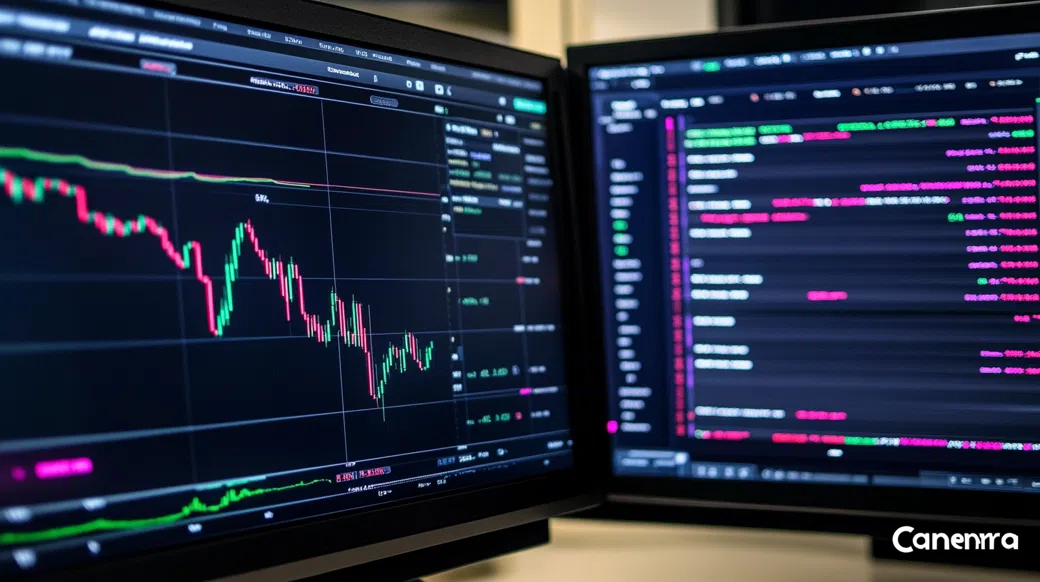
WebTrader felt engineered for “get in, manage risk, get out” workflows: watchlist on the left, chart center, ticket on the right, with market/limit/stop orders and editable SL/TP. Login sessions held steady during the London–New York overlap, and the order history was granular enough to audit fills. I didn’t see confirmed MT4/MT5 access in the client area—if you live inside the MetaTrader plugin ecosystem (EAs, custom indicators, VPS templates), that gap is real.
Cerf Rendoire App: Mobile Trading Experience
The Cerf Rendoire app mirrors the WebTrader layout with condensed panels and a clean trade ticket. Cerf Rendoire login supported biometric unlock on my device, and I could deposit, place orders, and request withdrawals from the same menu without hunting. Push notifications for price alerts worked, but chart drawing tools are understandably cramped; I used mobile mainly for position monitoring and one-tap risk adjustments rather than initial analysis.
Charting, Tools & Research
Indicators covered the usual set (MA, RSI, MACD, Bollinger) plus basic drawing, multiple timeframes, and saved templates. An integrated economic calendar and a light news feed are present, but this isn’t a research terminal—think “enough context to avoid trading blind,” not “deep macro.” If you’re used to MT5/cTrader analytics or third-party quant tooling, you’ll still want an external stack.
Cerf Rendoire Account Opening & Minimum Deposit
Instead of a long compliance interview, the signup path asked for the essentials—email, phone, residency, and a few suitability prompts—then pushed me straight to identity verification. For KYC, I uploaded a passport photo page and a bank statement dated within three months; approval landed the same business day. That gating is a good sign for AML hygiene, even if it adds friction for anyone trying to “just trade now.”
- Minimum Deposit: $200 (Cerf Rendoire minimum deposit for the Standard tier in my test)
- Funding Methods: Visa/Mastercard, bank wire, regional e-wallets, and crypto (BTC, USDT)
- Demo Account: $10,000 virtual balance for platform checks and strategy rehearsal
- Account Types: Standard (spread-only) and Raw/ECN-style (tighter spreads + commission)
Funding via USDT credited after network confirmation and showed as available margin immediately; the trade-off is you inherit chain fees and address hygiene responsibility. For anyone who treats security seriously, the best move is to test the full lifecycle—deposit, trade, and withdrawal—on a small amount first on Cerf Rendoire.
Cerf Rendoire Customer Support Review
I contacted live chat with a very specific question: where to find swap/overnight rates per symbol before opening a position. The agent responded in about three minutes and pointed me to the instrument details panel, then explained that crypto weekend financing is folded into the same schedule. I also opened an email ticket asking whether internal withdrawal processing starts only after KYC is completed; the written reply arrived roughly nine hours later with a clear “yes” and a brief checklist.
Coverage is broadly 24/5, which matches the CFD week, and chat is the fastest route for operational questions. Language support depends on staffing; English was fine, but I wouldn’t assume Korean coverage without checking. Phone assistance wasn’t prominent in my dashboard, so if you require a hotline for account disputes, that’s a consideration—especially under offshore regulation.
Ready to Explore Cerf Rendoire?
If you’re evaluating spreads or mobile execution, start with a demo and then a small deposit to test your own workflow: login stability, order controls, and the withdrawal path. Regional eligibility and leverage limits can change, so confirm your jurisdiction before committing meaningful capital.
Visit Cerf RendoireCerf Rendoire Review FAQ
Is Cerf Rendoire good for beginners?
It can be, as long as you treat leverage cautiously and stick to small position sizes. The WebTrader is not overly complex, and the demo account helps you learn order types without real losses. Beginners should still expect a learning curve around swaps, margin calls, and volatility spikes.
Can I trade crypto on Cerf Rendoire?
Yes, crypto is available as CFDs, including large-cap pairs like BTC/USD and ETH/USD. You’re trading price exposure with leverage, not receiving coins to a wallet. Because financing can apply over weekends, crypto CFDs are usually more expensive to hold long-term than to trade short-term.
Is Cerf Rendoire a scam?
No, it didn’t behave like a scam in my test: KYC was enforced, trades executed, and a withdrawal request progressed to completion. The more accurate framing is that it’s an offshore-registered CFD broker, which typically offers fewer formal protections than Tier-1 regulated firms. Use disciplined risk limits and avoid depositing more than you can afford to lose.
Is Cerf Rendoire available in the USA?
No, the platform restricts USA residents. If you attempt signup with US identifiers, you should expect the account to be blocked during compliance checks. US traders typically need a broker specifically authorized for US rules.
How long does a Cerf Rendoire withdrawal take?
Most withdrawals are processed internally within 24–48 hours after KYC is approved. Receipt time then depends on the rail: cards often take 2–5 business days, bank wires commonly take 3–7 business days, and crypto transfers are usually completed the same day once released. In my case, the bottleneck was verification, not the payout step.
What is the Cerf Rendoire minimum deposit?
The Cerf Rendoire minimum deposit is $200 for the entry Standard account in my test. That amount is enough to check execution and fees, but it’s still small relative to the risks of trading CFDs with leverage up to 1:500. If you’re new, consider using the demo first and keeping real trades tiny.
Does Cerf Rendoire have a mobile app?
Yes, there’s an iOS/Android app that covers quotes, charting, and trade management. You can also handle deposits and withdrawals from mobile, which is useful for operational control away from a desktop. For analysis-heavy workflows, the larger WebTrader screen is still the better workspace.
Final Verdict: Should You Use Cerf Rendoire in 2026?
Overall Score: 4.0/5
From a security-first perspective, what mattered most was whether the provider forces identity checks, records trade history cleanly, and honors withdrawals without theater—and Cerf Rendoire cleared that bar in my trial. Pricing is serviceable on Standard and legitimately sharper on the Raw/ECN-style tier once commission is considered. The real caveat is jurisdictional: offshore registration (Mauritius FSC) means fewer formal backstops if things go wrong. CFDs are high-risk instruments; use conservative leverage, expect slippage around news, and don’t treat margin as a safety net.
Best for: Traders who want a simple WebTrader + mobile stack and can self-manage risk under offshore rules. Avoid if: You need Tier-1 regulatory protection, guaranteed compensation schemes, or MT4/MT5-centric automation.