Cedar Assetgrove Review 2026: Pros, Cons, and Features Tested
| Min Deposit | $200 |
| Max Leverage | 1:500 |
| Assets | Forex, Indices, Commodities, Crypto CFDs, Share CFDs |
| Platforms | WebTrader (browser), iOS app, Android app |
Built for margin-first CFD traders, Cedar Assetgrove targets people who want multi-asset access and high leverage, with the headline trade-off being an offshore framework and fewer formal dispute paths than top-tier regulated venues. In my Cedar Assetgrove review run, I saw two main pricing tiers (spread-only vs. tighter spread plus commission) and a product list that leans into FX and index CFDs while still offering crypto and metals. The stack is centered on a proprietary WebTrader plus mobile apps rather than a heavyweight MT4/MT5 ecosystem. Execution felt consistent enough for small size testing, but the safety story depends heavily on your own risk controls and withdrawal discipline.
Pros
- Two-tier pricing (Standard and Raw/ECN-style) gives a clear path from casual to active trading
- Solid CFD menu across FX, indices, metals, and major crypto pairs
- Mobile and web platforms cover the basics: charting, watchlists, and quick risk controls
Cons
- Offshore registration means weaker investor protections than Tier-1 regulators
- Extra costs can accumulate (swaps, conversions, and an inactivity charge after dormancy)
- Platform ecosystem is narrower if you rely on MT4/MT5 indicators and automation
Is Cedar Assetgrove Legit and Safe?
Cedar Assetgrove looked operational rather than a “vanish-with-your-deposit” operation, but it sits in an offshore registration setup, so “safe” is not the same as “Tier-1 regulated.” I was able to complete KYC, place trades, and withdraw—yet you should treat protections as lighter than FCA/ASIC-style regimes.
From a compliance lens, the account area referenced a Mauritius FSC registration model, which typically allows higher leverage (here up to 1:500) but does not come with the same compensation schemes or complaint escalation routes you’d expect in stricter jurisdictions. My red-flag scan focused on things that are easy to falsify: “award” badges, unrealistic profit claims, and withdrawal friction. I didn’t see aggressive bonus pushing during onboarding, and the dashboard nudged me to complete identity checks before higher withdrawal limits—good AML hygiene even if it’s partly self-protective. The provider also used segregated-funds language in its legal pages, though offshore wording is not a guarantee of how funds are handled day to day. Remember: CFDs are leveraged products; most retail accounts lose money, and you can hit a margin call fast if sizing is sloppy.
Supported Countries & Restricted Regions
The broker primarily accepts clients across parts of Asia, MENA, and selected non-EU Europe, while the USA and sanctioned jurisdictions are blocked.
| Region | Status | Leverage Cap |
|---|---|---|
| Southeast Asia (selected countries) | Accepted | Up to 1:500 |
| MENA (selected countries) | Accepted | Up to 1:500 |
| Non-EU Europe (selected countries) | Accepted | Up to 1:200 |
| LATAM (selected countries) | Accepted | Up to 1:500 |
| Sub-Saharan Africa (selected countries) | Accepted | Up to 1:500 |
| USA | Restricted | Not offered |
| Sanctioned jurisdictions | Restricted | Not offered |
Eligibility isn’t just a checkbox: IP location, document country, and payment rail have to align during KYC. I’d re-check the current country list at signup because access rules can shift with compliance policy updates.
Tradable Assets and Markets
The catalog is broad enough for a “one login” CFD workflow, but it’s still oriented toward liquid, headline instruments rather than deep, exchange-like coverage.
- Indices: Major benchmarks like US500, NAS100, and GER40 are available for macro-style trading and session-based strategies.
- Forex: A majors-first list with minors and a sprinkle of higher-spread exotics; good for testing different volatility regimes.
- Commodities: Metals such as XAU/USD and energy products like WTI/Brent for inflation and risk-off hedging themes.
- Crypto CFDs: Large-cap coins (BTC, ETH) and a few big names beyond that, priced as CFDs rather than spot.
The important detail: you’re trading CFDs, not owning the underlying. That means no shareholder voting, no on-chain withdrawals for crypto, and “dividends” on share CFDs are usually handled as cash adjustments rather than true ownership rights.
Cedar Assetgrove Trading Fees and Spreads
Pricing is split into a Standard account (spread-only) and a Raw/ECN-style account (tighter spread plus commission). On small-lot testing, the all-in cost on Raw/ECN made more sense for frequent entries, while Standard felt better suited to occasional trades. Overall, the fee design is typical for offshore CFD brokers—competitive on paper, but you still need to factor swaps and conversion costs.
| Asset | Spread/Fee | Market Average Comparison |
|---|---|---|
| EUR/USD (Standard) | From 1.6 pips | In line |
| EUR/USD (Raw/ECN) | From 0.2 pips + $7 round-turn/lot | Competitive for active trading |
| Bitcoin (BTC/USD) | From $35 spread (variable) | In line to slightly higher during volatility |
| Gold (XAU/USD) | From $0.30 (30 cents) | In line |
| US500 Index | From 0.8 points | In line |
Non-spread costs that mattered in my ledger: overnight swap/financing on FX and indices, and weekend financing effects that can show up on crypto CFDs. The platform also applied a $10/month inactivity fee after 90 days of no trading activity, which is easy to miss if you “park” an account. Finally, funding in one currency and trading in another introduces conversion costs—especially noticeable if you top up by card and your base currency doesn’t match the account denomination.
Cedar Assetgrove Trading Platforms and Tools
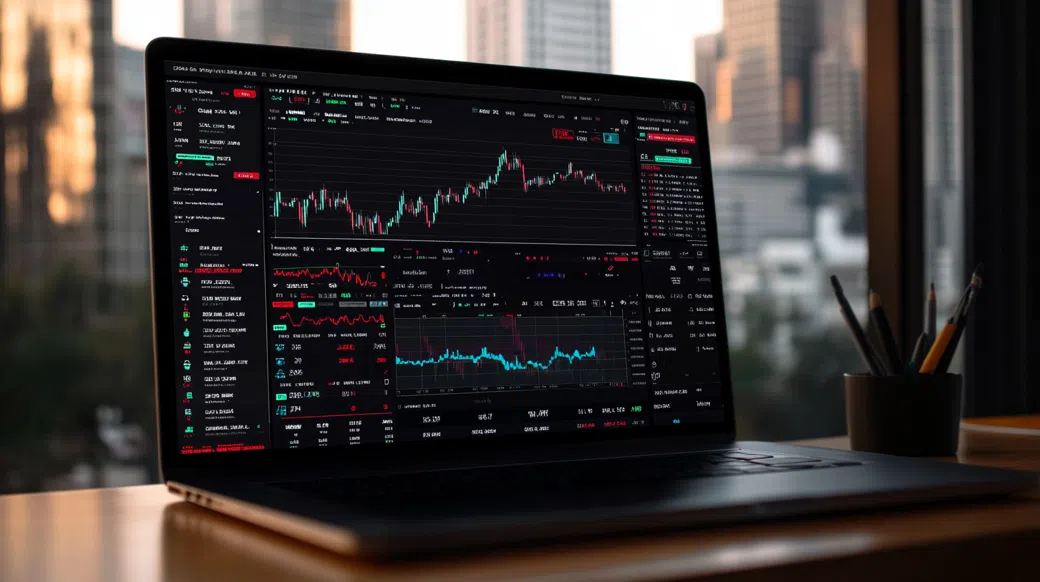
On desktop, the WebTrader loaded reliably across multiple sessions and didn’t choke on basic multi-chart layouts. Order tickets supported market and pending orders with stop-loss/take-profit controls, and I could see margin usage update in near real time after position changes. If you’re coming from MT4/MT5, the gap is less about “can it trade” and more about ecosystem: fewer community indicators, fewer automation paths, and less plug-and-play tooling for quant workflows.
Cedar Assetgrove App: Mobile Trading Experience
The Cedar Assetgrove app is functional for monitoring and risk management: real-time quotes, position edits, and one-tap close were all where I expected them to be. Cedar Assetgrove login on mobile supported biometric unlock on my device, which is a small but meaningful security win if you’re trading from public networks. Deposits and withdrawals were reachable inside the app, though I still prefer initiating withdrawals on desktop to reduce fat-finger errors when selecting rails.
Charting, Tools & Research
Charting covered the standard indicator set (MA, RSI, MACD, Bollinger) plus basic drawing tools and multi-timeframe views. There’s an economic calendar and a lightweight news feed, enough to sanity-check event risk before scaling size. Still, don’t expect the depth of a full MT5/cTrader research stack; this is a trading UI, not a research terminal.
Cedar Assetgrove Account Opening & Minimum Deposit
Instead of a long questionnaire, the signup flow asked for the essentials (email, phone, basic identity fields) and then pushed me into KYC quickly. Verification required a government-issued photo ID and a proof of address dated within three months; my documents cleared the same business day. That’s a good sign for AML, but it also means you should have clean paperwork ready before you attempt a larger withdrawal.
- Minimum Deposit: $200 (this is the Cedar Assetgrove minimum deposit I had to meet to fund the live account)
- Funding Methods: Visa/Mastercard, bank wire, regional e-wallets, and cryptocurrencies like BTC and USDT
- Demo Account: $10,000 virtual balance for testing order flow and margin behavior without funding risk
- Account Types: Standard (spread-only) and Raw/ECN-style (commission + tighter spreads)
One practical note: the portal made it easy to toggle between account types, but the base currency choice matters if you’re funding from abroad. I also recommend enabling 2FA immediately and keeping API-style reuse passwords out of the equation—treat this like a hot wallet, not a savings account.
Cedar Assetgrove Customer Support Review
I tested support by asking live chat how swap rates are displayed per symbol and whether weekend financing is tripled on FX. The agent came back in about 3 minutes with the menu path inside the platform and a reminder that rates can change daily; the answer was operationally useful even if it wasn’t “quant-grade.” I followed up by email requesting clarification on withdrawal cut-off times, and the ticket response arrived in roughly 9 hours with method-specific timing and KYC prerequisites.
Coverage ran on a 24/5 rhythm, which matches the CFD market week and is broadly fine for most traders. Language depth felt region-dependent, and I didn’t see a universally advertised phone line—more common in larger brokers with heavier compliance staffing. If you trade crypto CFDs over weekends, expect support to be thinner outside the weekday cycle.
Ready to Explore Cedar Assetgrove?
If you’re considering this broker, start by checking your regional eligibility, then use a demo to validate spreads and order behavior during your usual trading hours. After that, a small live deposit can help you test the full loop—especially the withdrawal process—before committing meaningful capital.
Visit Cedar AssetgroveCedar Assetgrove Review FAQ
Is Cedar Assetgrove good for beginners?
It can be, but only if you treat leverage as a tool—not a default setting. The WebTrader and mobile UI are learnable, and the demo helps you practice without funding risk. Beginners should stay small, understand margin calls, and avoid holding CFD positions through major news until they’ve built discipline.
Can I trade crypto on Cedar Assetgrove?
Yes, crypto is offered via CFDs, typically covering majors like BTC and ETH. You’re speculating on price movement rather than taking custody of coins, so there’s no on-chain transfer. Watch weekend financing and volatility-driven spread expansion.
Is Cedar Assetgrove a scam?
No, my test account functioned end-to-end (KYC, trading, and withdrawal), which is not consistent with a classic scam pattern. The real caveat is jurisdiction: it operates under an offshore registration model, so protections and dispute escalation are thinner than Tier-1 regulation. Use tight risk limits and verify withdrawals early.
Is Cedar Assetgrove available in the USA?
No, the USA is restricted. That aligns with how many offshore CFD brokers avoid U.S. regulatory requirements. If you’re in the U.S., you’ll need a locally compliant venue instead.
How long does a Cedar Assetgrove withdrawal take?
Most withdrawals are processed internally within 24–48 hours after KYC is complete. Receipt time depends on the rail: cards commonly take 2–5 business days, wires around 3–7 business days, and crypto can arrive the same day. In my Cedar Assetgrove withdrawal test, the timeline matched the stated window for the method I used.
What is the Cedar Assetgrove minimum deposit?
The Cedar Assetgrove minimum deposit is $200. That level is typical for international CFD brokers that want a bit of buffer for margin requirements. If you’re testing, I’d still start with the minimum and validate spreads, swaps, and withdrawals first.
Does Cedar Assetgrove have a mobile app?
Yes, there are iOS and Android apps alongside the browser-based WebTrader. The mobile experience supports monitoring, trade management, and account actions like funding. I recommend enabling biometric access and keeping device security tight since trading apps are high-value targets.
Final Verdict: Should You Use Cedar Assetgrove in 2026?
Overall Score: 4.0/5
For traders who think in spreads, margin, and risk limits (not marketing), Cedar Assetgrove lands as a capable offshore CFD venue with a clean enough execution feel on small size and a sensible two-tier fee setup. My withdrawal loop completed without drama, and the platform stack is usable across web and mobile, even if it won’t replace an MT5 automation toolbox. The catch is governance: offshore registration shifts more responsibility onto you—position sizing, event-risk planning, and early withdrawal testing. If you trade CFDs, assume leverage can magnify losses and protect capital first. For the full platform flow, see Cedar Assetgrove.
Best for: active CFD traders who want Raw/ECN-style pricing and can manage leverage responsibly. Avoid if: you require Tier-1 regulation, formal compensation schemes, or deep MT4/MT5 plugin ecosystems.