Cèdre Placivect Trading Platform Alternatives 2026: Reliable Options for Online Traders
My default instinct as a smart contract developer is to threat-model first, optimize later. Trading platforms deserve the same treatment: map the trust boundaries (custody, payments, execution, dispute resolution), then decide where your capital should live. Cèdre Placivect appears to sit in the offshore CFD-broker segment, where you typically get a proprietary WebTrader, mobile apps, high leverage (commonly around 1:500), and a relatively small menu of FX pairs, indices, commodities, and crypto CFDs. That setup can be workable for short-term CFD exposure, but it also concentrates risk in places retail traders can’t easily audit: regulator oversight, client-money segregation practices, and the mechanics of withdrawals.
That’s why Cèdre Placivect alternatives matter in 2026—especially for US/EU traders who are used to stronger rulebooks and clearer recourse. If your strategy depends on predictable execution (slippage control), platform tooling (MT4/MT5/cTrader for automation), or broader instruments (real stocks/ETFs instead of stock CFDs), you’ll quickly hit the ceiling of a basic WebTrader stack. And if the broker operates under an offshore framework (for example, Seychelles FSA is a common domicile in this category), the safety model changes: more responsibility sits on you to verify terms, fees, and operational behavior in real time.
Disclaimer: This article is for informational purposes only and does not constitute investment advice. CFDs and other leveraged products can move against you quickly and may result in losses exceeding expectations.
Key Takeaways (TL;DR)
- For higher trust and broader markets, prioritize tier-1 regulated venues (FCA/ASIC/CySEC/NFA) with clear client-money rules and, where applicable, investor compensation schemes like FSCS (£85,000) or ICF (€20,000).
- Compare total round-turn trading cost (spread + commission + swaps) rather than headline leverage; a “cheap” spread can be offset by commissions or financing.
- Migration works best in a two-account overlap: KYC the new broker first, export records, then withdraw using the original funding rail to avoid AML friction.
What Is Cèdre Placivect and How Does Its Trading Platform Work?
From the outside, Cèdre Placivect looks like a CFD-first brokerage offering access to leveraged FX and CFDs rather than a full multi-asset custody account. In this segment the operating pattern is usually “broker-as-venue”: you trade contracts with the provider (often a market maker or hybrid model), not directly on an exchange. The audience is typically retail traders who want quick onboarding, smaller starting balances (often around $250 minimum), and high leverage up to about 1:500. For traders comparing brokers similar to Cèdre Placivect, the key distinction is not the instrument list—it’s who stands behind the rules when something goes wrong.
Cèdre Placivect Web Trading Platform: Core Features and Tools
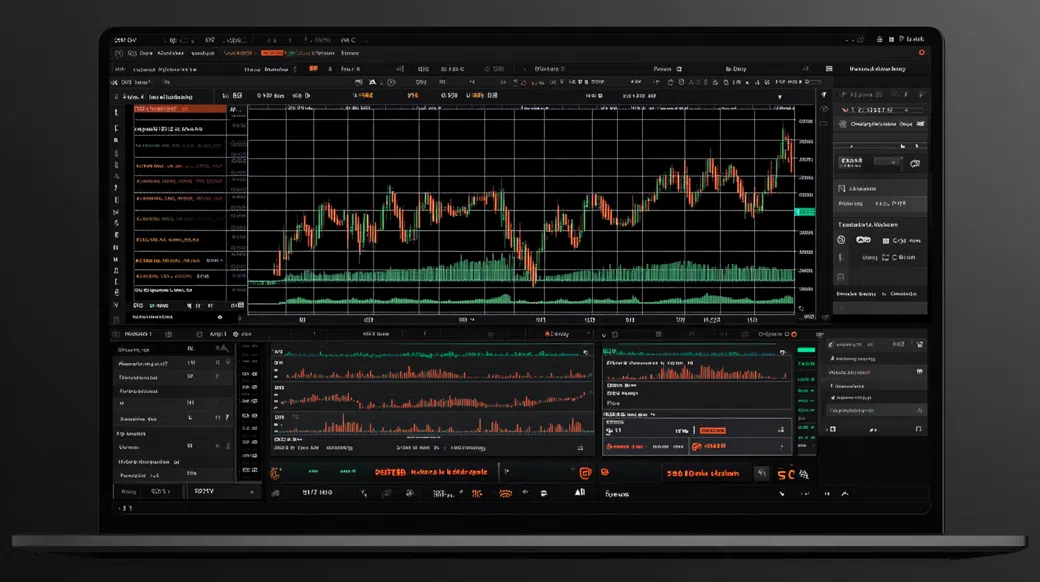
The platform stack is commonly a proprietary WebTrader with a companion iOS/Android app—enough to place orders, monitor margin, and run basic chart analysis. Expect standard timeframes, a moderate library of indicators, and drawing tools that cover the essentials (trendlines, Fibonacci, support/resistance marks). Order types are usually market/limit/stop with optional take-profit and stop-loss, but advanced controls (server-side trailing stops, custom order scripting) can be limited. Mobile tends to mirror the web experience, which is convenient, yet power users may miss deeper workspace customization and the ecosystem you get with MT4/MT5/cTrader.
Trading Fees, Spreads, and Account Types at Cèdre Placivect
Costs in offshore CFD offerings usually come packaged as a “Standard” spread model and, sometimes, a tighter-spread account with a separate commission. A realistic expectation for EUR/USD on a standard tier is around 2.0 pips in typical conditions. If a raw/ECN-style tier exists, you may see quoted spreads near 0.0–0.4 pips plus a commission around $6 round-turn, but the effective cost still depends on fills and slippage. Add swaps/overnight financing if you hold positions, and read withdrawal terms carefully—fees and processing rules vary widely across competitors to Cèdre Placivect.
When Do Traders Start Looking for Cèdre Placivect Alternatives?
Security triggers the switch more often than people admit. If you can’t independently validate the rule set—regulator supervision, complaint channels, and how client funds are segregated—every other feature becomes secondary. That’s the practical core behind Cèdre Placivect alternatives: moving from “trust me” to “verify on a public register.” Leverage around 1:500 can amplify small mistakes into fast drawdowns, and the platform layer matters too: a basic WebTrader can be fine for discretionary trades, yet fragile for automation, advanced order logic, or multi-asset workflows.
- Your strategy needs MT4/MT5 or cTrader for EAs/algos, and the current WebTrader can’t replicate that toolchain.
- Withdrawal processing starts to feel rule-heavy (method restrictions, extra documents, timing that doesn’t match the posted policy).
- You want real stocks/ETFs with custody rights, not stock CFDs with financing costs and no shareholder privileges.
- Spread + swap math stops making sense for your holding period (e.g., 2.0-pip EUR/USD plus overnight fees erodes edge).
How to Choose a Reliable Alternative to the Cèdre Placivect Trading Platform
Think like an engineer: define failure modes, then select controls. For alternatives to the Cèdre Placivect trading platform, I treat regulation as the base layer, execution quality as the performance layer, and platform tooling as the productivity layer. A broker can look “cheap” until you account for slippage, financing, and the time cost of support loops.
Regulation, Safety, and Investor Protection
Start with the regulator’s public database: FCA Register (UK), ASIC Connect (Australia), CySEC register (Cyprus/EU), or NFA BASIC (US). Those frameworks typically require segregated client funds and specific conduct rules. In the UK, eligible clients can fall under the FSCS with coverage up to £85,000; in Cyprus, the ICF can cover up to €20,000 depending on circumstances. If you’re evaluating regulated options vs Cèdre Placivect, confirm the exact legal entity you’ll onboard with—group names can mask different subsidiaries.
Available Markets and Instruments
Match instruments to your intent. FX/CFDs are fine for short-duration macro bets, but long-horizon investing usually fits real stocks/ETFs with transparent custody. Options and futures matter if you hedge systematically rather than “stop-loss and hope.” Many platforms like Cèdre Placivect emphasize CFDs; multi-asset brokers (for example, Interactive Brokers or Saxo) can add exchange access, which changes both transparency and the set of risks you’re exposed to.
Trading Costs: Spreads, Commissions, and Other Fees
Ignore single-number marketing and compute round-turn cost: spread + commission (if any) plus the average slippage you observe. Then layer swaps/overnight financing for holds. Two brokers can both show “tight spreads” while one charges higher commissions or wider swaps. If you trade frequently, a 0.5-pip difference can dominate outcomes faster than most people expect. That’s a key reason best Cèdre Placivect alternatives 2026 lists separate “FX scalping” brokers from “multi-asset custody” brokers.
Platforms, Tools, and Execution Quality
Platform choice is not aesthetics—it’s capability. MT4/MT5 support an automation ecosystem; cTrader is strong for execution and advanced order handling; proprietary apps can be clean but closed. Execution model matters: market maker pricing can be stable but conflicts must be managed; STP/ECN/DMA routing can reduce dealing-desk risk but still produces slippage during volatility. I also watch for negative balance protection where required and for clear margin call/liquidation rules.
Support, Education, and Overall User Experience
Test support like you test an API: create a small, bounded question, time the response, and check whether it matches the written policy. Look for 24/5 coverage at minimum for FX, and for language support that fits your region (US/EU traders often need English-first, documentation-heavy answers). Education content is optional; operational clarity is not. A good UX includes clean KYC status, transparent fee pages, and mobile parity that doesn’t hide risk controls.
Cèdre Placivect and Different Asset Classes: When Alternatives May Be Better
Cèdre Placivect Forex and CFD Trading
For FX and index CFDs, the offshore model tends to compete on leverage and onboarding speed: a $250 minimum deposit and leverage around 1:500 are typical, with EUR/USD often pricing near 2.0 pips on a standard setup. The trade-off shows up in execution visibility. You can’t easily prove whether fills are internalized, how often slippage occurs, or whether price improvement exists. FX/CFD specialists like Pepperstone and IC Markets are commonly used by active traders because they combine recognizable regulation (FCA/ASIC/CySEC depending on entity) with MT4/MT5/cTrader stacks and pricing structures that are easier to model (raw spreads plus commission). That’s not “free money”—it’s simply fewer unknowns when your edge is thin.
Cèdre Placivect Stock and ETF Trading
If your goal is owning shares, dividends, voting rights, and straightforward tax reporting, a CFD-first venue is structurally mismatched. Stock CFDs can track price, but you’re paying financing on holds and you don’t hold the underlying asset. This is where multi-asset venues outclass offshore CFD platforms: Interactive Brokers offers broad exchange access (stocks, ETFs, options, futures, bonds) with a tooling ecosystem built for portfolio-grade workflows; Saxo Bank similarly targets multi-asset investors and advanced traders who want one account for listed and OTC products. For US/EU readers, that shift—from derivative exposure to direct market access—often reduces “platform risk” even though market risk remains.
Cèdre Placivect Crypto Trading
Crypto on CFD platforms is usually synthetic exposure: you speculate on price without on-chain ownership, meaning no withdrawals to a wallet and no control of private keys. That’s acceptable for short-term directional trades, but it’s not the same as holding BTC/ETH in self-custody. If you want regulated derivative access, brokers like IG and Plus500 offer crypto CFDs in certain jurisdictions (eligibility varies), and their risk disclosures and constraints tend to be clearer under tier-1 supervision. Also note the mechanical risk: crypto CFD spreads can widen sharply during fast markets, and margin can cascade into liquidation if you’re over-levered.
Best Cèdre Placivect Alternatives for 2026: Comparison of Top Trading Platforms
Interactive Brokers (IBKR): Key Facts and How It Compares to Cèdre Placivect
Regulation: SEC/FINRA (US), FCA (UK), IIROC (Canada) via relevant entities
Markets: Stocks, ETFs, options, futures, bonds, FX, funds
Fees: FX spreads typically from ~0.1–0.6 pips equivalent depending on venue/liquidity; commissions vary by product and region
Platform: Trader Workstation (TWS), IBKR Desktop, mobile, APIs
Best For: Security-first multi-asset traders who want exchange access
Pepperstone: Key Facts and How It Compares to Cèdre Placivect
Regulation: FCA (UK), ASIC (Australia), CySEC (Cyprus), DFSA (Dubai) via relevant entities
Markets: FX and CFDs (indices, commodities, some crypto CFDs depending on region)
Fees: Standard spreads often ~1.0–1.3 pips on EUR/USD; Raw accounts often ~0.0–0.3 pips + commission (~$6–$7 round-turn typical)
Platform: MT4, MT5, cTrader, TradingView integrations (availability varies)
Best For: MT4/MT5/cTrader users optimizing for execution and tooling
Saxo Bank: Key Facts and How It Compares to Cèdre Placivect
Regulation: FCA (UK), MAS (Singapore), DFSA (Dubai) via relevant entities
Markets: Stocks, ETFs, bonds, FX, options, futures, CFDs
Fees: FX spreads commonly from ~0.6–1.2 pips depending on tier; commissions apply on many listed instruments
Platform: SaxoTraderGO, SaxoTraderPRO
Best For: Portfolio builders who want listed markets plus FX in one place
IC Markets: Key Facts and How It Compares to Cèdre Placivect
Regulation: ASIC (Australia), CySEC (Cyprus), FSA Seychelles (group-level, entity dependent)
Markets: FX and CFDs (indices, commodities, crypto CFDs depending on region)
Fees: Raw spreads often ~0.0–0.3 pips on EUR/USD + commission (~$6–$7 round-turn typical); Standard accounts commonly ~1.0+ pip
Platform: MT4, MT5, cTrader
Best For: High-frequency FX traders who measure cost per round-turn
IG: Key Facts and How It Compares to Cèdre Placivect
Regulation: FCA (UK), ASIC (Australia), MAS (Singapore) via relevant entities
Markets: CFDs across FX, indices, commodities, shares (CFDs), crypto CFDs (where permitted)
Fees: FX spreads often from ~0.6–1.2 pips on major pairs depending on market conditions; financing applies on CFDs
Platform: IG web platform, mobile apps, MT4 (region/product dependent)
Best For: Macro CFD traders who want broad indices coverage under tier-1 rules
eToro: Key Facts and How It Compares to Cèdre Placivect
Regulation: FCA (UK), CySEC (Cyprus), ASIC (Australia) via relevant entities
Markets: Stocks (real and/or CFDs depending on region), ETFs, CFDs, crypto (availability and custody model vary)
Fees: Costs are often embedded in spreads; FX spreads commonly wider than raw-spread brokers (often ~1.0+ pip equivalent)
Platform: Proprietary web and mobile platform
Best For: Social/copy traders prioritizing simplicity over platform extensibility
Comparison Summary
| Platform | Regulation | Main Markets | Typical Costs | Best For |
|---|---|---|---|---|
| Interactive Brokers (IBKR) | SEC/FINRA, FCA, IIROC (entity-specific) | Stocks/ETFs, options, futures, bonds, FX | FX ~0.1–0.6 pip equiv; product commissions vary | Security-first multi-asset traders who want exchange access |
| Pepperstone | FCA, ASIC, CySEC, DFSA (entity-specific) | FX + CFDs | Raw ~0.0–0.3 pip + ~$6–$7 RT; Standard ~1.0–1.3 pips | MT4/MT5/cTrader users optimizing for execution and tooling |
| Saxo Bank | FCA, MAS, DFSA (entity-specific) | Multi-asset (listed + OTC/CFDs) | FX ~0.6–1.2 pips tiered; commissions on listed assets | Portfolio builders who want listed markets plus FX in one place |
| IC Markets | ASIC, CySEC (plus FSA Seychelles group-level; entity dependent) | FX + CFDs | Raw ~0.0–0.3 pip + ~$6–$7 RT; Standard ~1.0+ pip | High-frequency FX traders who measure cost per round-turn |
| IG | FCA, ASIC, MAS (entity-specific) | CFDs across FX/indices/commodities/shares | FX ~0.6–1.2 pips; financing on CFD holds | Macro CFD traders who want broad indices coverage under tier-1 rules |
| eToro | FCA, CySEC, ASIC (entity-specific) | Stocks/ETFs (region dependent), CFDs, crypto (varies) | Spread-based pricing; FX often ~1.0+ pip equivalent | Social/copy traders prioritizing simplicity over platform extensibility |
How to Safely Move from Cèdre Placivect to Another Broker
Switching brokers is less “account closure” and more “operational migration.” Treat it like rotating keys: keep continuity, minimize exposure, and preserve logs. Before you move size, decide what must not break (access to funds, tax records, execution settings), then walk through the process step-by-step. Leverage magnifies mistakes here too—closing positions in a hurry can crystallize losses you didn’t plan for.
- Confirm the new broker’s exact legal entity on the regulator’s site (FCA Register, ASIC Connect, CySEC register, or NFA BASIC) and screenshot the entry for your records.
- Open the new account and complete KYC early (ID + proof of address). Many brokers won’t process certain withdrawals or higher limits until verification clears.
- Flatten risk: close or reduce open leveraged positions before you initiate withdrawals so margin and liquidation rules can’t surprise you mid-transfer.
- Withdraw from Cèdre Placivect using the same funding rail you deposited with, since AML policies often force “return to source” flows before other methods are allowed.
- Export statements, trade history, and funding receipts for taxes and disputes; don’t assume the dashboard will stay accessible forever after you stop trading.
Ready to Explore Cèdre Placivect?
If you’re benchmarking Cèdre Placivect trading platform alternatives 2026, start by comparing onboarding requirements, fee schedules, and platform stack side-by-side. Regional eligibility and product availability can change by entity, so verify the specific branch you’d be assigned to before committing funds.
Visit Cèdre PlacivectFAQ: Cèdre Placivect Alternatives and Trading Platforms
What is the best alternative to Cèdre Placivect in 2026?
The best choice depends on whether you need exchange-traded assets or mainly FX/CFDs. For broad, security-oriented market access, Interactive Brokers is hard to beat; for FX execution with MT4/MT5/cTrader, Pepperstone and IC Markets are common picks. My shortlist of Cèdre Placivect alternatives splits cleanly into “multi-asset custody” (IBKR, Saxo) and “CFD/FX specialists” (Pepperstone, IC Markets, IG).
Is Cèdre Placivect a safe broker/platform?
From a risk perspective, Cèdre Placivect appears to fit an offshore/unregulated profile (commonly associated with jurisdictions like the Seychelles FSA category), which typically provides less investor protection than FCA/ASIC/CySEC/NFA frameworks. That doesn’t automatically mean fraud, but it does mean fewer external controls and weaker recourse routes if a dispute occurs. If safety is your priority, regulated options vs Cèdre Placivect are easier to verify on public registers and often come with stricter client-money rules.
Can I trade stocks, futures, or crypto with Cèdre Placivect?
On brokers in this segment, stocks and crypto are usually offered as CFDs (price exposure) rather than direct ownership, and exchange-listed futures are often not offered in a true multi-asset sense. Forex and CFD indices/commodities are typically the core, with crypto CFDs sometimes included. If you need real stocks/ETFs or futures, platforms like Cèdre Placivect are usually a poor fit compared with Interactive Brokers or Saxo.
What should I check before switching from Cèdre Placivect to another platform?
Verify regulation on the official register, then read the broker’s client money policy, margin rules, and negative balance protection terms. Next, model your costs using round-turn metrics (spread + commission + swaps) and test execution with small size before migrating full capital. Finally, export your statements and confirm withdrawal method constraints at Cèdre Placivect so AML “return to source” rules don’t stall your move.
About the Author: Samuel White is a Seoul-based smart contract developer who approaches trading infrastructure like software: define the trust model, validate the interfaces, and assume adversarial conditions. He focuses on execution mechanics, custody risk, and verifiable regulation rather than headlines or hype.