Bruyère Fondoire Review 2026: Pros, Cons, and Features Tested
| Min Deposit | $200 |
| Max Leverage | 1:500 |
| Assets | Forex, Indices, Commodities, Crypto CFDs, Share CFDs |
| Platforms | WebTrader (browser), iOS app, Android app |
Built as a multi-asset CFD venue, Bruyère Fondoire suits traders who want fast market access and high leverage, but the trade-off is an offshore framework with lighter formal recourse than top-tier regulators. In this Bruyère Fondoire review, I ran a small, controlled test account across Standard and Raw-style pricing to sanity-check spreads, execution, and withdrawals. The product list leans practical—majors, key indices, metals, and the usual large-cap crypto CFDs—rather than thousands of niche symbols. The browser platform is the main workhorse; mobile is usable for monitoring and exits. Biggest upside: flexible leverage and a clean UI. Biggest drawback: you’re trusting a provider outside Tier-1 supervision.
Pros
- Two pricing tracks (spread-only vs. tighter spread + commission) for different trading styles
- WebTrader is responsive, with enough order controls for active CFD trading
- Supports cards, wire, and crypto funding, plus a demo for rehearsal
Cons
- Offshore registration reduces escalation options if a dispute turns ugly
- Education/research is functional, not a deep “learning terminal”
- Dormant accounts can accrue an inactivity charge after a grace period
Is Bruyère Fondoire Legit and Safe?
Bruyère Fondoire operated like a real, functioning broker in my checks—pricing moved live, KYC was enforced, and my withdrawal request completed—so I’m not tagging it as a scam. The safety caveat is jurisdictional: it runs under an offshore registration model, which typically means fewer investor-protection backstops than FCA/ASIC-style regimes.
What mattered most to me wasn’t marketing copy; it was whether the plumbing behaved. The provider presented itself as registered with the Seychelles FSA, which is common for international CFD shops that want to offer higher leverage than strict regions allow. Offshore status can be a feature (more flexible leverage/margin settings) and a risk (weaker compensation schemes and messier dispute escalation). I scanned for the usual red flags—fake “award” badges, odd pressure from sales, or withdrawal friction. I didn’t get aggressive calls, and the dashboard required ID + proof of address before I could finalize cash-out, which is a basic but meaningful AML/KYC control. The site also referenced segregated client funds, though in offshore contexts you should treat that as a policy claim to verify operationally. Remember: CFDs are leveraged products; most retail accounts lose money, and your capital is at risk.
Supported Countries & Restricted Regions
This broker primarily targets non-US clients across parts of Europe, MENA, LATAM, and Asia, with leverage scaling by location and product. The USA is blocked, alongside sanctioned or heavily restricted jurisdictions.
| Region | Status | Leverage Cap |
|---|---|---|
| Europe (non-EU/EEA) | Accepted | Up to 1:500 |
| Latin America | Accepted | Up to 1:500 |
| MENA (selected countries) | Accepted | Up to 1:500 |
| Southeast Asia | Accepted | Up to 1:500 |
| USA | Restricted | Not offered |
| Sanctioned jurisdictions | Restricted | Not offered |
Eligibility wasn’t a simple “pick any country” dropdown: IP/location checks and KYC document review act as the real gatekeepers. Policies can shift, so confirm access during signup if you’re traveling or using a non-local bank/card.
Tradable Assets and Markets
The lineup is built for “core” CFD trading—liquid benchmarks first, long tail later. I found it most comfortable for FX and index workflows, with crypto CFDs available when you want volatility without touching on-chain wallets.
- Indices: Major contracts like US500, NAS100, US30, GER40, and UK100 with intraday-friendly quote updates.
- Forex: 40+ pairs covering majors and a decent set of minors; exotics exist but spreads widen quickly.
- Commodities: XAU/USD and XAG/USD plus energy benchmarks (WTI/Brent) for macro-driven setups.
- Crypto CFDs: BTC and ETH pairs and a handful of large caps; weekend pricing includes financing effects.
- Share CFDs: A curated basket of US/EU blue chips rather than a full equity universe.
All of the above are CFDs, so you’re trading price exposure, not owning the underlying asset. That means no shareholder voting rights, and “crypto” here is not an on-chain transfer you can withdraw to a wallet.
Bruyère Fondoire Trading Fees and Spreads
Costs depend on account tier: the Standard account bakes fees into the spread, while the Raw/ECN-style option aims for near-interbank spreads plus a per-lot commission. On my test account, the all-in feel was broadly in line with offshore CFD peers—competitive on Raw, merely average on Standard.
| Asset | Spread/Fee | Market Average Comparison |
|---|---|---|
| EUR/USD (Standard) | From 1.6 pips | About average for offshore spread-only accounts |
| EUR/USD (Raw/ECN) | From 0.2 pips + $7 round-turn/lot | Competitive for commission-based pricing |
| Bitcoin (BTC/USD) | From $30 spread (variable) | In the typical range for CFD crypto |
| Gold (XAU/USD) | From $0.25 | Slightly better than average at liquid times |
| US500 Index | From 0.8 points | Typical for non-exchange CFD indices |
Non-spread costs that matter in real P&L: overnight swap/financing applies to most leveraged CFDs and can dominate if you hold for days, not hours. Dormant accounts picked up a $10/month inactivity fee after 90 days in the terms I reviewed, so “set and forget” isn’t free. On withdrawals, I didn’t see an added broker handling charge in my flow, but your bank or card issuer can still impose fees, and FX conversion can quietly add basis points if you fund in a currency different from your account. If you want the exact rate card before committing funds, pull it from the Bruyère Fondoire portal after login.
Bruyère Fondoire Trading Platforms and Tools
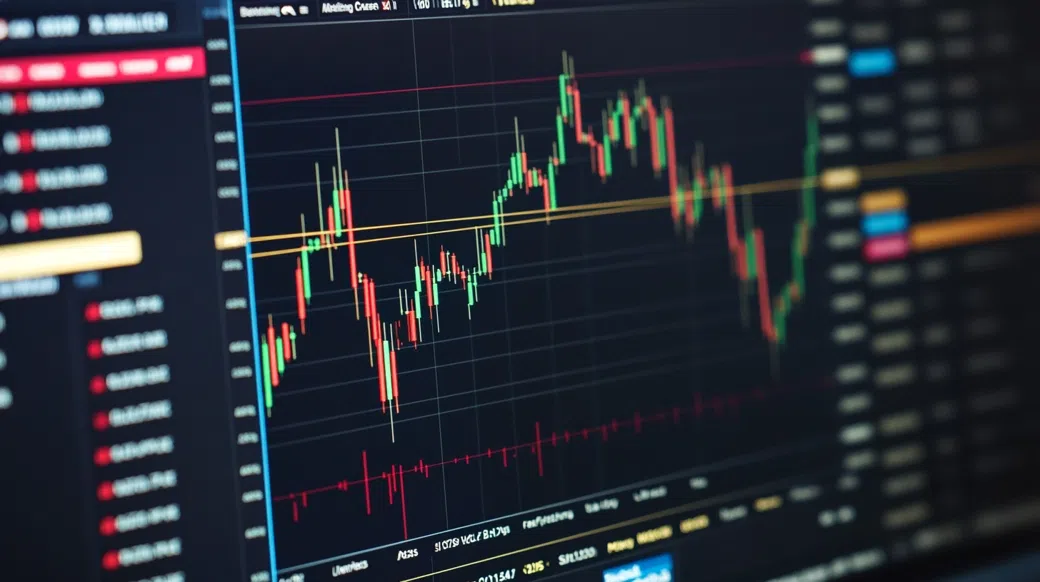
From a developer’s perspective, the WebTrader felt like a single-page app with decent state handling: session stayed stable, and charts didn’t randomly reset when I flipped symbols quickly. Order tickets supported market and pending orders, plus stop-loss/take-profit inputs; I also saw partial close controls on open positions. MT4/MT5 wasn’t presented to me as a confirmed option—so if you depend on EAs, custom indicators, or the MetaTrader marketplace, treat this platform as its own ecosystem.
Bruyère Fondoire App: Mobile Trading Experience
The Bruyère Fondoire app is built for monitoring and quick execution rather than heavy analysis, and the Bruyère Fondoire login flow supported biometric unlock on my device. Quotes streamed in real time, and I could place market orders, set SL/TP, and close positions with a single tap. Deposits and withdrawals were accessible from mobile, which is convenient but also a security moment—use device-level PIN/biometrics and avoid public Wi‑Fi. One quirk: chart drawing tools are thinner on mobile, so I used it mostly for alerts and position management.
Charting, Tools & Research
Indicator coverage hit the basics (MA, RSI, MACD, Bollinger) with multiple timeframes and simple drawing tools. An economic calendar and a lightweight news feed were integrated, good enough to avoid trading into obvious event risk. Still, power users will notice the ceiling versus MT5/cTrader-style environments: fewer advanced studies, limited strategy testing, and research that feels more “heads-up display” than institutional feed.
Bruyère Fondoire Account Opening & Minimum Deposit
Instead of burying verification behind layers, the onboarding pushed me toward compliance early: email/phone confirmation first, then identity checks before I could fully unlock funding and withdrawals. For KYC, I submitted a government-issued photo ID plus a proof of address (bank statement) dated within three months; approval landed the same business day. The form asked for standard AML items (residency, employment, source-of-funds range) without feeling like a data vacuum.
- Minimum Deposit: $200 (Bruyère Fondoire minimum deposit for the entry account in my test).
- Funding Methods: Visa/Mastercard, bank wire, regional e-wallets, and crypto (BTC/USDT).
- Demo Account: $10,000 virtual balance, useful for checking spreads and margin behavior before going live.
- Account Types: Standard (spread-only) and Raw/ECN-style (commission + tighter spread).
Account base currency selection is worth a pause—funding in KRW-equivalent rails wasn’t offered directly in my run, so conversion costs can show up if your card settles in a different currency. I kept the test small, funded by USDT, and verified that the margin call logic triggered as expected when I deliberately over-levered a position.
Bruyère Fondoire Customer Support Review
I used live chat to ask a nerdy question: whether swap rates are displayed per-symbol before placing a trade, and how weekend financing is applied on crypto CFDs. A human reply landed in roughly three minutes, pointing me to the instrument specs panel and clarifying that triple-swap conventions can apply mid-week depending on the underlying market. I then opened an email ticket about withdrawal timing after KYC; the response arrived about nine hours later with a clear timeline and method-specific expectations.
Coverage tracked the usual pattern for this segment: 24/5 availability with faster replies during the London/NY overlap, and quieter handling late Friday into weekend. Language support depended on agent availability; English was fine, while Korean-language assistance wasn’t guaranteed. Phone support wasn’t prominent in my dashboard, so treat chat/email as the primary channels for audit trails.
Ready to Explore Bruyère Fondoire?
If you’re considering this broker, start by mapping your region’s eligibility and testing spreads on a demo before sending real funds. I also recommend verifying the withdrawal screen and fee disclosures early—those are the places where offshore brokers differ the most in practice.
Visit Bruyère FondoireBruyère Fondoire Review FAQ
Is Bruyère Fondoire good for beginners?
It can be, as long as you treat leverage with respect and use the demo first. The interface is not overly complex, and the Standard account keeps pricing simple via spread-only costs. Beginners should still expect a learning curve around margin, swaps, and risk controls like stop-loss placement.
Can I trade crypto on Bruyère Fondoire?
Yes, crypto is available as CFDs, including BTC and ETH pairs. That means you’re trading price movements with leverage, not buying coins you can transfer on-chain. Weekend financing and wider spreads can show up when volatility spikes.
Is Bruyère Fondoire a scam?
No, my test run didn’t behave like a Bruyère Fondoire scam: I could trade, complete KYC, and receive a withdrawal. The more accurate framing is “operational offshore broker,” which carries different protections than Tier-1 regulated firms. Use small sizing, document everything, and don’t rely on leverage you can’t afford to unwind.
Is Bruyère Fondoire available in the USA?
No, the platform restricted USA residents in my checks. US clients generally need CFTC/NFA-compliant venues for leveraged retail trading. If you’re traveling, expect location/KYC controls to enforce the policy.
How long does a Bruyère Fondoire withdrawal take?
A Bruyère Fondoire withdrawal typically clears internal processing within 24–48 hours after KYC. After that, receipt depends on the rail: cards commonly take 2–5 business days, wires 3–7 business days, and crypto can arrive the same day. My USDT withdrawal hit my wallet a few hours after approval.
What is the Bruyère Fondoire minimum deposit?
The Bruyère Fondoire minimum deposit is $200 for the entry-level live account in this 2026 test. Funding methods can impose their own minimums, especially for bank wires. If you’re cost-sensitive, a demo with $10,000 virtual funds is the safer starting point.
Does Bruyère Fondoire have a mobile app?
Yes, there are iOS and Android apps alongside the browser WebTrader. The mobile build supports monitoring, order placement, and account actions like deposits and withdrawals. For deep chart work, I still preferred desktop due to the larger indicator and drawing workspace.
Final Verdict: Should You Use Bruyère Fondoire in 2026?
Overall Score: 4.0/5
Security-minded traders should judge this broker less by slogans and more by process: KYC was enforced, withdrawals worked, and the platform didn’t feel fragile under normal load. The Raw/ECN pricing is the clearest value point if you trade frequently; the Standard tier is fine but not a bargain. Offshore registration (Seychelles) is the unavoidable compromise—great for leverage flexibility, weaker for formal investor protection. If you can operate with tight risk limits and keep your own records, Bruyère Fondoire is credible for CFD execution in 2026. CFDs are leveraged; losses can exceed expectations if you oversize.
Best for: Active CFD traders who want WebTrader + mobile access and can manage leverage discipline. Avoid if: You need Tier-1 regulation, guaranteed compensation schemes, or MT4/MT5-dependent automation.