Barc Valnorbury Trading Platform Alternatives 2026: Reliable Options for Online Traders
Code tells you the truth faster than headlines. When I evaluate a broker, I treat it like a dependency in a production system: check provenance, permissions, and failure modes. Barc Valnorbury sits in the offshore CFD/FX segment where the surface area is typically a proprietary WebTrader, high leverage, and a product list dominated by forex and CFDs. That can be workable for short-term speculation, but it also increases the importance of operational controls—segregated client funds, regulator oversight, and clean withdrawal rails—because you’re trusting an intermediary with both pricing and custody.
For traders comparing Barc Valnorbury to other venues, the core question isn’t “What’s the maximum leverage?” It’s “What happens when something goes wrong?” Offshore frameworks (commonly the Seychelles FSA in this category) can mean fewer enforceable protections versus tier‑1 regimes like the FCA, ASIC, CySEC, or NFA. If you care about execution quality, audit trails, and predictable account operations, you’ll likely end up hunting for Barc Valnorbury alternatives that provide clearer regulation, stronger client-money rules, and platform stacks that support your workflow (MT4/MT5/cTrader or robust proprietary tools).
Below is a practical map of Barc Valnorbury trading platform alternatives 2026—built for a US/EU‑focused audience, but readable anywhere. I’ll compare costs (spread + commission as a round‑turn), execution model implications (market maker vs STP/ECN/DMA), and asset access (CFDs vs real shares). Security comes first. Profit comes second.
Disclaimer: This article is for informational purposes only and does not constitute investment advice. CFDs and other leveraged products carry a high risk of loss and may not be suitable for all investors.
Key Takeaways (TL;DR)
- Offshore CFD brokers can offer high leverage (often around 1:500), but tier‑1 regulation can matter more than leverage when disputes or withdrawal friction appear.
- Cost comparisons should use round‑turn trading cost (spread + commission), not just “from 0.0 pips” headlines that exclude fees and slippage.
- If you want real stocks/ETFs (not stock CFDs), a multi‑asset broker like IBKR or Saxo is usually a cleaner fit than a CFD-first venue.
What Is Barc Valnorbury and How Does Its Trading Platform Work?
On the wire, Barc Valnorbury looks like a CFD-first broker: forex pairs, index/commodity CFDs, and often crypto CFDs, delivered through a browser platform and mobile app. Public-facing setups in this segment commonly operate under an offshore registration (here, we’ll treat it as Seychelles FSA–style oversight consistent with many similar providers) and focus on fast onboarding and simplified product access rather than deep market access. The typical user profile is a retail trader seeking leveraged exposure, not an investor trying to custody assets or route orders to lit exchanges. USA residents are usually excluded, and other restricted or sanctioned jurisdictions can be blocked to meet AML constraints.
Barc Valnorbury Web Trading Platform: Core Features and Tools
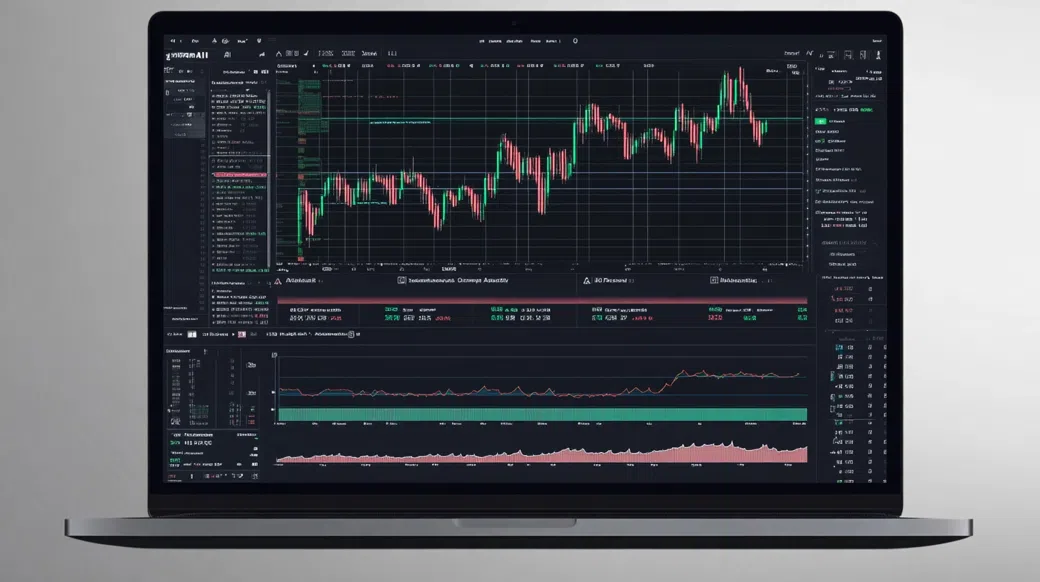
The platform stack is usually a proprietary WebTrader with a companion iOS/Android app. Expect functional charting with a moderate indicator set, basic drawing tools, and standard order tickets (market/limit/stop; sometimes trailing stops). Execution “feels” acceptable for discretionary trading, but without transparent routing you can’t easily reason about slippage distribution the way you can on DMA/STP venues. Mobile parity is typically decent for monitoring, but advanced workflows—multi-chart layouts, strategy testing, or systematic execution—tend to be constrained compared with MT4/MT5/cTrader ecosystems.
Trading Fees, Spreads, and Account Types at Barc Valnorbury
Fees in competitors to Barc Valnorbury often follow a two-tier pattern: a standard account with wider spreads and a “raw/ECN-style” account with tighter spreads plus commission. For comparison, a typical EUR/USD spread on a standard setup in this segment is around 2.0 pips, with a minimum deposit commonly around $250. If a raw option exists, pricing may be roughly 0.0–0.4 pips plus about $7 round-turn commission per standard lot. Also model the non-obvious line items: swap/overnight financing, possible inactivity charges, and withdrawal fees that can show up as fixed charges or payment-rail costs.
When Do Traders Start Looking for Barc Valnorbury Alternatives?
Withdrawals and enforceable protections are the usual breaking points, not the UI. If your broker lives offshore, you may have fewer levers when a dispute hits—especially around execution disputes, margin events, or payout timing. That’s why Barc Valnorbury alternatives come up most often after a trader tries to scale size, automate execution, or move from “testing” to “serious capital.” Leverage cuts both ways; a 1:500 environment magnifies not only P/L but also the damage from slippage, re-quotes, and sudden margin calls.
- You need MT4/MT5 or cTrader to run an EA, copy logic, or a rules-based strategy that a proprietary WebTrader doesn’t support.
- Your plan requires transparent execution expectations (STP/ECN/DMA) because you’re sensitive to slippage on news spikes or thin liquidity hours.
- You’re paying a ~2.0 pip EUR/USD spread on a standard account and want to benchmark a raw+commission model using round-turn cost.
- You want real-share investing (stocks/ETFs with ownership rights), not stock CFDs with financing costs and no shareholder entitlements.
How to Choose a Reliable Alternative to the Barc Valnorbury Trading Platform
I treat broker selection like choosing a signing key: trust is earned through verifiable controls. Start by mapping your strategy to failure cases—execution under stress, counterparty risk, and operational predictability. Then pick the smallest set of features you truly need (markets, platforms, margin rules) and validate them against regulation and real-world user constraints (region eligibility, KYC/AML throughput, funding/withdrawal rails). That’s the fastest way to filter platforms like Barc Valnorbury without getting distracted by marketing.
Regulation, Safety, and Investor Protection
Tier‑1 regulators (FCA, ASIC, CySEC, NFA/CFTC) set enforceable rules around client money, disclosures, and complaint handling. In the UK, FCA-regulated firms can fall under FSCS protection (up to £85,000, eligibility dependent). In the EU, CySEC oversight can connect to the ICF (up to €20,000, eligibility dependent). Segregated client funds is the baseline expectation; “segregated” should be described in the broker’s legal docs, not just a landing page.
Available Markets and Instruments
Decide whether you’re trading CFDs for tactical exposure or investing for ownership. FX/indices/commodities via CFD can be enough for many active traders, while long-term portfolios often want real stocks and ETFs. If you plan to use options or futures, you’re already in a different league—look for a broker that offers those instruments directly (not synthetic substitutes). Crypto is another fork: many regulated venues offer crypto CFDs, but that is exposure, not on-chain custody.
Trading Costs: Spreads, Commissions, and Other Fees
Stop comparing “from” spreads in isolation. Use a round‑turn cost-of-trade view: spread (in pips) + commission (per lot) + expected slippage. For a scalper doing, say, 100 standard lots/month, the difference between 2.0 pips and a 0.2‑pip raw spread plus $7 round-turn can dominate your expectancy. Add swap/overnight fees if you hold positions past rollover, and watch for inactivity or funding charges that quietly punish low-frequency accounts.
Platforms, Tools, and Execution Quality
Platform choice is really tooling choice. MT4/MT5 and cTrader support automation, custom indicators, and a large ecosystem; proprietary terminals can be cleaner but less extensible. Execution model matters: market makers internalize flow; STP/ECN and DMA models route differently and can change how slippage behaves. Measure by logs: order timestamps, rejection reasons, fill prices during volatility, and whether stop orders behave as expected under fast markets.
Support, Education, and Overall User Experience
Operational UX beats flashy UX. Look for predictable support hours aligned with your trading window, fast ticket resolution, and clear KYC/AML communication. Education is optional, but documentation quality isn’t: margin rules, negative balance protection (where applicable), swap calculations, and corporate actions should be explained precisely. Also check mobile parity—if you manage risk on the go, you need full position controls, not a “view-only” app.
Barc Valnorbury and Different Asset Classes: When Alternatives May Be Better
Barc Valnorbury Forex and CFD Trading
Forex and CFDs are the core fit for a Barc Valnorbury-style venue: expect roughly 30–50 FX pairs, 8–15 index CFDs, and a small menu of commodities. The leverage ceiling (often marketed around 1:500) looks attractive, but high leverage is not free—margin calls arrive faster, and execution quality becomes a first-order variable. Regulated alternatives like Pepperstone and IG tend to offer more transparent pricing structures (standard vs raw accounts) and mature platform support (MT4/MT5/cTrader or robust proprietary systems). If your edge depends on tight entries, the relevant metric is not “max leverage,” but the combined effect of spread, commission, and slippage during your trading hours.
Barc Valnorbury Stock and ETF Trading
Stock/ETF access is where many offshore CFD brokers diverge from multi-asset institutions. In this segment, “stocks” are frequently delivered as stock CFDs—no shareholder voting, no direct custody, and financing costs that can stack up on longer holds. If you want to buy real shares or ETFs with exchange routing, Interactive Brokers (IBKR) is the reference implementation: broad global market access, options/futures availability, and tooling built for serious order management. Saxo Bank is another strong choice for multi-asset investors who want a unified account spanning stocks, ETFs, bonds, options, and FX. For many traders comparing regulated options vs Barc Valnorbury, this single distinction—CFD exposure versus ownership—decides the platform.
Barc Valnorbury Crypto Trading
Crypto on CFD-first platforms is typically offered as crypto CFDs (often 10–30 coins), which means price exposure without on-chain withdrawal. That’s not inherently bad for short-term trading, but it’s a different risk model than holding crypto in a wallet: you’re taking broker counterparty risk and paying spread/financing rather than network fees. For regulated crypto CFDs, IG and Plus500 are commonly used in supported regions, with clearer disclosures and retail protections compared with offshore setups. If you specifically need spot crypto or self-custody, that’s outside the CFD broker category entirely; don’t confuse a CFD contract with ownership of the underlying asset.
Best Barc Valnorbury Alternatives for 2026: Comparison of Top Trading Platforms
Interactive Brokers (IBKR): Key Facts and How It Compares to Barc Valnorbury
Regulation: SEC/FINRA (US), FCA (UK), IIROC (Canada) (entity depends on region)
Markets: Stocks, ETFs, options, futures, bonds, FX (availability varies by jurisdiction)
Fees: FX pricing is typically commission-based with tight spreads; stock/ETF commissions vary by plan and market
Platform: Trader Workstation (TWS), IBKR Desktop/Web, mobile; API access for automation
Best For: Multi-asset traders who want real market access and auditability
Pepperstone: Key Facts and How It Compares to Barc Valnorbury
Regulation: FCA, ASIC, CySEC, DFSA
Markets: FX and CFDs (indices, commodities; instrument set varies by entity)
Fees: Standard spreads often around ~1.0+ pip on EUR/USD; raw accounts can run ~0.0–0.3 pips plus commission (about $6–$8 round-turn)
Platform: MT4, MT5, cTrader, TradingView integration (where available)
Best For: Systematic FX traders using MT4/MT5/cTrader tooling
IG: Key Facts and How It Compares to Barc Valnorbury
Regulation: FCA, ASIC, MAS
Markets: CFDs (FX, indices, commodities, shares), spread betting (UK/IE where permitted)
Fees: Typical FX spreads often from ~0.6–1.2 pips (varies by pair and market conditions); financing applies on leveraged positions
Platform: IG proprietary platform, mobile apps; MT4 available in certain regions
Best For: Active CFD traders who prioritize a long-running regulated venue
Saxo Bank: Key Facts and How It Compares to Barc Valnorbury
Regulation: FCA, MAS, DFSA
Markets: Stocks, ETFs, bonds, options, futures, FX, CFDs (product set varies by jurisdiction)
Fees: Pricing varies by tier; FX spreads commonly start around ~0.6+ pips (and can improve with higher tiers/volume)
Platform: SaxoTraderGO, SaxoTraderPRO
Best For: Portfolio-oriented traders needing institutional-grade multi-asset coverage
OANDA: Key Facts and How It Compares to Barc Valnorbury
Regulation: CFTC/NFA (US), FCA, ASIC, IIROC
Markets: FX (core), CFDs in certain non-US regions (indices/commodities where available)
Fees: Typically spread-only pricing on major FX pairs; EUR/USD often around ~1.0+ pip depending on market conditions
Platform: OANDA web/mobile platforms; MT4 support (region-dependent)
Best For: FX-first traders who want US-eligible regulatory coverage
Trading 212: Key Facts and How It Compares to Barc Valnorbury
Regulation: FCA, CySEC, FSC Bulgaria
Markets: Stocks and ETFs (investing), CFDs (where permitted and enabled)
Fees: Investing accounts may be commission-free with FX conversion costs; CFD costs are primarily spread-based plus overnight financing
Platform: Proprietary web and mobile platforms
Best For: Mobile-centric investors mixing ETFs with occasional CFDs
Comparison Summary
| Platform | Regulation | Main Markets | Typical Costs | Best For |
|---|---|---|---|---|
| Interactive Brokers (IBKR) | SEC/FINRA, FCA, IIROC | Real stocks/ETFs, options, futures, bonds, FX | Commission-based; tight FX pricing; commissions vary by product/plan | Multi-asset traders who want real market access and auditability |
| Pepperstone | FCA, ASIC, CySEC, DFSA | FX + CFDs | Std ~1.0+ pip; Raw ~0.0–0.3 pip + ~$6–$8 round-turn | Systematic FX traders using MT4/MT5/cTrader tooling |
| IG | FCA, ASIC, MAS | CFDs across FX/indices/commodities/shares | FX spreads often ~0.6–1.2 pips; financing on leveraged holds | Active CFD traders who prioritize a long-running regulated venue |
| Saxo Bank | FCA, MAS, DFSA | Multi-asset (stocks/ETFs/options/futures/FX/CFDs) | Tiered pricing; FX often ~0.6+ pips (improves with tier/volume) | Portfolio-oriented traders needing institutional-grade multi-asset coverage |
| OANDA | CFTC/NFA, FCA, ASIC, IIROC | FX (plus some CFDs outside the US) | Mostly spread-only; EUR/USD often ~1.0+ pip | FX-first traders who want US-eligible regulatory coverage |
| Trading 212 | FCA, CySEC, FSC Bulgaria | Stocks/ETFs + CFDs (where enabled) | Investing: typically low explicit fees; CFDs: spread + overnight financing | Mobile-centric investors mixing ETFs with occasional CFDs |
How to Safely Move from Barc Valnorbury to Another Broker
Migration is a control-plane task: minimize time in an uncertain state, keep evidence, and avoid locking funds behind unresolved verification. Do the new account setup first, then unwind exposure, then move cash. Most losses during “switching brokers” aren’t market losses—they’re process failures: mismatched payment methods, missing tax records, or trading while your margin rules changed. If you’re exiting Barc Valnorbury, treat every step as reversible until the withdrawal lands.
- Confirm the new broker’s entity on the regulator’s public register (FCA Register, ASIC Connect, CySEC register, or NFA BASIC) and match the legal name, not just the brand.
- Open the new account and complete KYC/AML (ID + proof of address) before you touch funds on the old account; many verifications clear within about one business day, but delays happen.
- Freeze your strategy parameters (risk per trade, max leverage, margin buffers) and re-check them against the new broker’s product specs so you don’t trigger an accidental margin call.
- Close open positions on the old platform and re-enter on the new one if you still want exposure; assume positions cannot be transferred broker-to-broker.
- Withdraw using the same funding rail you used to deposit (common AML requirement), and keep screenshots/receipts of every request and status change until settlement completes.
- Export trade history, statements, and swap/financing records for taxes and dispute resolution; do it before you downgrade or close access.
- Start small on the new venue: a test deposit, a few low-size trades, and a deliberate slippage check around your usual session before scaling capital.
Ready to Explore Barc Valnorbury?
If you’re still evaluating the current platform, verify region eligibility, funding methods, and the exact account terms you’ll trade under (spreads, swap, leverage limits). Then compare those conditions against the regulated substitutes above so your choice is driven by controls and cost, not screenshots.
Visit Barc ValnorburyFAQ: Barc Valnorbury Alternatives and Trading Platforms
What is the best alternative to Barc Valnorbury in 2026?
The best alternative depends on whether you need real assets or leveraged CFDs. For real stocks/ETFs plus options/futures, Interactive Brokers (IBKR) is hard to beat on market access; for FX/CFDs with MT4/MT5/cTrader, Pepperstone is a common pick. If you want a long-established regulated CFD venue with strong tooling, IG is frequently shortlisted. This article’s “best Barc Valnorbury alternatives 2026” list is designed to cover those distinct needs.
Is Barc Valnorbury a safe broker/platform?
Barc Valnorbury appears consistent with an offshore CFD broker profile (often under a Seychelles FSA–style framework in this category), which generally provides fewer enforceable protections than FCA/ASIC/CySEC/NFA oversight. That doesn’t automatically mean fraud, but it does change your risk model around complaints, client-money protections, and dispute escalation. If security is your priority, prefer Barc Valnorbury alternatives with tier‑1 regulation, segregated client funds, and clearly documented negative balance protection where applicable.
Can I trade stocks, futures, or crypto with Barc Valnorbury?
With offshore CFD venues, stocks are often offered as stock CFDs rather than real shares, and futures are commonly not provided as exchange-traded contracts. Crypto exposure is frequently available as crypto CFDs (price exposure without on-chain ownership). If you require real stocks/ETFs or futures, consider multi-asset brokers like IBKR or Saxo; for regulated crypto CFDs in supported regions, IG or Plus500 can be relevant substitutes for Barc Valnorbury.
What should I check before switching from Barc Valnorbury to another platform?
Before switching, verify the new broker’s exact legal entity on the regulator’s register, then complete KYC so withdrawals and deposits don’t get stuck mid-transfer. Export your statements and trade logs from Barc Valnorbury, and close positions rather than assuming they can be moved. Finally, compare round‑turn costs (spread + commission + expected slippage) and confirm margin rules so you don’t accidentally increase risk during the transition.
About the Author: Samuel White is a Seoul-based smart contract developer who trades with an engineer’s bias: verify first, optimize second. He focuses on platform mechanics—execution, custody risk, and failure modes—because capital preservation is a feature, not a slogan.