
Apex London Review 2026: Pros, Cons, and Features Tested
| Min Deposit | $200 |
| Max Leverage | 1:500 |
| Assets | Forex, indices, commodities, crypto CFDs, share CFDs |
| Platforms | WebTrader + iOS/Android mobile apps |
Built like a typical offshore CFD venue, Apex London targets traders who want multi-asset exposure and higher leverage, but the trade-off is lighter investor protections than Tier‑1 jurisdictions. On my test account, the account tiers split cleanly into a spread-only Standard and a tighter-spread Raw/ECN-style option for frequent execution. Markets skew practical—majors, headline indices, gold, and the big crypto tickers—rather than a giant long tail. The stack is a browser-based terminal plus mobile apps, with enough tools for day-to-day risk work. The catch: you’ll do more of your own due diligence on policy, fees, and dispute paths. Apex London
Pros
- Two-tier pricing lets you choose spread-only vs. commission-based execution.
- Solid coverage of core CFDs (FX majors, gold, US indices, large-cap crypto).
- KYC was enforced before I could withdraw, which is better than “verify later” setups.
Cons
- Offshore registration means fewer formal escalation options if a dispute turns messy.
- MT4/MT5 ecosystem isn’t something I could confirm inside the client area.
- Dormant accounts can incur an inactivity charge after a period without trading.
Is Apex London Legit and Safe?
Apex London appears operational and legitimate in the narrow sense that the platform functions, executes trades, and processes withdrawals, but it sits in an offshore framework. That doesn’t make it a scam by default—yet it does mean you should treat “safety” as a controls-and-process question, not a regulator-backstop question.
From a security-first angle, I looked for boring signals: enforced identity checks, consistent policy language, and whether money can leave as easily as it comes in. The provider presents itself as registered through the Seychelles FSA model, which typically allows higher leverage but offers weaker compensation schemes than FCA/ASIC-style regimes and can make formal dispute escalation harder. During my test window I didn’t see aggressive “account manager” pressure, fake-looking award badges, or forced bonus flows; the UI mostly pushed standard risk warnings and funding rails. KYC/AML was not optional—uploading a passport photo page plus a utility bill dated within three months was required before withdrawal submission. The site also references segregated client funds (good to see, still worth verifying via terms). Final reminder: CFDs are leveraged products; most retail traders lose money, and margin calls can happen fast.
Supported Countries & Restricted Regions
This broker broadly accepts clients across parts of Asia, MENA, and Latin America, with availability depending on local rules and the broker’s own risk policy. The USA and sanctioned jurisdictions are blocked.
| Region | Status | Leverage Cap |
|---|---|---|
| Southeast Asia (selected countries) | Accepted | Up to 1:500 |
| MENA (non-sanctioned) | Accepted | Up to 1:500 |
| Latin America | Accepted | Up to 1:500 |
| Europe (non‑EU/EEA, selected) | Accepted | Up to 1:200 |
| USA | Restricted | Not offered |
| Sanctioned jurisdictions | Restricted | Not offered |
Eligibility wasn’t just a checkbox: country selection is tied to KYC, and the portal will request documents that match the region you claim. If your IP, ID, and proof-of-address disagree, expect the account to be paused until it’s reconciled.
Tradable Assets and Markets
The lineup is multi-asset in the “trade the headlines” sense: strong coverage of core instruments, lighter depth on niche names. If you mainly rotate between FX, metals, index CFDs, and the largest crypto pairs, you’ll feel at home.
- Indices: US500 and NAS100 were front-and-center, with GER40/UK100-style contracts also visible for session-based trading.
- Forex: Roughly 40+ pairs across majors and minors, plus a handful of exotics for those who understand the spread/rollover hit.
- Commodities: XAU/USD, XAG/USD, and crude benchmarks (WTI/Brent) are the main liquidity magnets here.
- Crypto CFDs: BTC/USD and ETH/USD are the obvious staples, with a small set of large-cap alts depending on region.
- Share CFDs: A curated list of US/EU blue-chip names intended for tactical positioning, not deep fundamental portfolios.
All of this is CFD exposure: you’re trading price movement with leverage, not acquiring shareholder rights or receiving on-chain crypto. Any “dividend” effect on share CFDs is typically handled as an adjustment rather than true ownership.
Apex London Trading Fees and Spreads
Costs are structured by account tier: Standard bakes fees into the spread, while the Raw/ECN-style account tightens spreads and adds a per-lot commission. On my test feed, the all-in pricing landed in the middle of the offshore CFD pack—competitive on majors if you pick the right tier, less special on some non-FX markets.
| Asset | Spread/Fee | Market Average Comparison |
|---|---|---|
| EUR/USD (Standard) | From 1.4 pips | In line with typical spread-only offshore accounts |
| EUR/USD (Raw/ECN) | From 0.2 pips + $7 round-turn/lot | Competitive if you trade size and value tighter quotes |
| Bitcoin (BTC/USD) | From $30 spread (varies with volatility) | Average for crypto CFDs; weekend pricing widens |
| Gold (XAU/USD) | From $0.30 | Reasonable versus peers during liquid hours |
| US500 Index | From 0.8 points | Close to market median for CFD index contracts |
Non-spread costs that matter: Overnight swap/financing is the real long-horizon bill, especially if you hold indices or commodities across multiple sessions. After 90 days of no activity, I saw an inactivity fee of $10/month listed in the account terms, which quietly punishes “parked” accounts. Withdrawals can also pick up third-party charges depending on rail (bank wires and FX conversion are the usual culprits), and crypto CFD positions often carry noticeable weekend financing when liquidity thins.
Apex London Trading Platforms and Tools
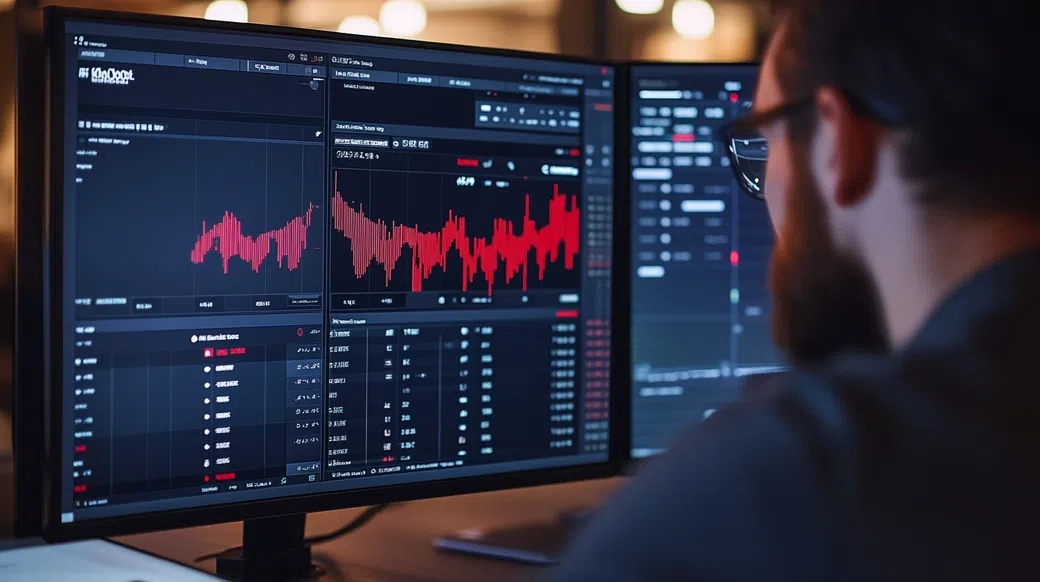
WebTrader was the main control surface in my test: browser login stayed stable across multiple sessions, and the terminal exposed the basics I care about—market/limit/stop orders, position-level SL/TP, and margin readouts that update without needing a refresh loop. Execution felt consistent on liquid FX during the London open; I still saw mild slippage when I poked at a fast BTC candle, which is normal for CFD routing under volatility. If you’re coming from MT4/MT5, the gap is less about “can I trade” and more about missing third-party indicators, EAs, and the massive community tooling layer.
Apex London App: Mobile Trading Experience
The Apex London app is functional rather than flashy: real-time quotes, watchlists, and one-tap position close worked without drama on Android, and biometric unlock reduced friction on repeated Apex London login checks. Order tickets mirrored the web layout, including SL/TP inputs and margin impact previews. Deposits and withdrawals are accessible from the same bottom-nav area, which is convenient, though I’d still avoid doing sensitive account changes on public Wi‑Fi.
Charting, Tools & Research
Charting includes the expected indicator set—MA, RSI, MACD, Bollinger—and enough drawing tools for structure and levels. An economic calendar and a lightweight news feed are integrated, but research depth is not where this platform tries to win; it’s closer to “trade-ready utilities” than a full analytics suite. For systematic traders, the limitation is clear: without a confirmed MT5/cTrader-style ecosystem, you’ll be building your own workflow outside the terminal.
Apex London Account Opening & Minimum Deposit
Instead of a long questionnaire, the signup flow asked for the essentials (email, phone, country, and a short profile), then immediately pushed me into identity verification. I submitted a passport plus a recent bank statement as proof of address; verification cleared the same business day, and the portal then unlocked full funding and withdrawal menus. From a security posture, that’s preferable to brokers that let you trade first and argue about AML later.
- Minimum Deposit: $200 (this is the Apex London minimum deposit I was prompted to meet before live trading).
- Funding Methods: Visa/Mastercard, bank wire, regional e-wallets, and cryptocurrencies like BTC/USDT depending on jurisdiction.
- Demo Account: $10,000 virtual balance—useful for checking spreads and margin behavior before risking capital.
- Account Types: Standard (spread-only) and Raw/ECN-style (tighter quotes + commission) aimed at active traders.
Base currency choices were limited on my profile, so watch for conversion fees if you fund in KRW and trade a USD-denominated account. For anyone testing policies, I’d recommend reading the withdrawal and dormancy clauses before depositing; Apex London makes those accessible inside the client portal once you’re logged in.
Apex London Customer Support Review
I tested support with a practical question: how swap rates are calculated on index CFDs and whether rates are visible before opening a position. Live chat replied in about 3 minutes with a clear pointer to the contract-spec page and a note that Wednesday triple-swap conventions apply on certain instruments; the explanation matched what I later saw in the specification sheet. I also emailed a withdrawal-timing question and received a ticket response in roughly 9 hours, which is acceptable for a non-emergency request.
Coverage follows the usual 24/5 pattern, aligned to market hours, with thinner staffing on weekends unless you’re dealing with crypto CFDs. Language support is region-dependent—English worked cleanly in my case—and phone availability looked limited, so expect chat/email to be the primary path. Relative to peers in the offshore CFD space, the support experience was competent, but it’s not a concierge desk.
Ready to Explore Apex London?
If you’re considering this broker, start by mapping your country eligibility, then run a demo to inspect spreads and margin behavior during your trading hours. After that, test a small deposit and a small withdrawal to validate the operational loop before scaling any position size.
Visit Apex LondonApex London Review FAQ
Is Apex London good for beginners?
It can be, as long as you treat leverage with respect and use the demo first. The interface is simple enough for first orders, but the offshore setup means you must read the fee and withdrawal rules carefully. Beginners should start small—$200 is the minimum deposit—and avoid high leverage until they can manage margin and stops.
Can I trade crypto on Apex London?
Yes, crypto is offered as CFDs, with BTC/USD and ETH/USD among the core markets. You’re speculating on price movement rather than receiving coins to a wallet. Keep an eye on weekend spreads and financing, which can be meaningfully higher than weekday conditions.
Is Apex London a scam?
No clear scam signals showed up in my test: trading, KYC, and withdrawal flows worked as expected. The bigger issue is jurisdiction—this is an offshore-registered broker (Seychelles FSA model), so protections and dispute escalation are not the same as Tier‑1 regulated firms. Use prudent sizing and validate the withdrawal loop early.
Is Apex London available in the USA?
No, the USA is restricted. If you attempt signup from a US profile, you’ll typically be blocked during country selection or later at KYC. Traders in the US should look for CFTC/NFA-compliant alternatives instead.
How long does a Apex London withdrawal take?
Most withdrawals are processed internally within 24–48 hours after KYC is approved. From there, delivery depends on method: cards often take 2–5 business days, wires can run 3–7 business days, and crypto transfers are frequently same-day. Timing can stretch if documents need re-checking or if banks add compliance holds.
What is the Apex London minimum deposit?
The Apex London minimum deposit is $200. That threshold applies to opening a live account and placing real-money trades. If you’re unsure, using the $10,000 demo first is a cleaner way to test pricing and execution.
Does Apex London have a mobile app?
Yes, there are iOS and Android apps alongside the WebTrader. You can monitor quotes, manage positions, and handle deposits/withdrawals from mobile. Biometric unlock is supported on compatible devices, which helps secure routine logins.
Final Verdict: Should You Use Apex London in 2026?
Overall Score: 4.0/5
My take after testing the onboarding, execution, and cash-out loop: Apex London is a usable offshore CFD venue with sensible core-market coverage and a pricing ladder that can fit both casual and higher-frequency traders. I liked the enforced KYC before withdrawal and the clean separation between Standard and Raw/ECN-style costs. What I can’t grant it is Tier‑1 “sleep well” status—offshore rules shift more responsibility to you. If you trade here, keep leverage conservative and treat CFDs as high-risk instruments where losses can exceed expectations. Apex London
Best for: traders who want WebTrader + mobile access, core CFDs, and optional commission pricing. Avoid if: you require top-tier regulation, guaranteed compensation schemes, or a full MT4/MT5 automation ecosystem.






